
A CordaSonora Production
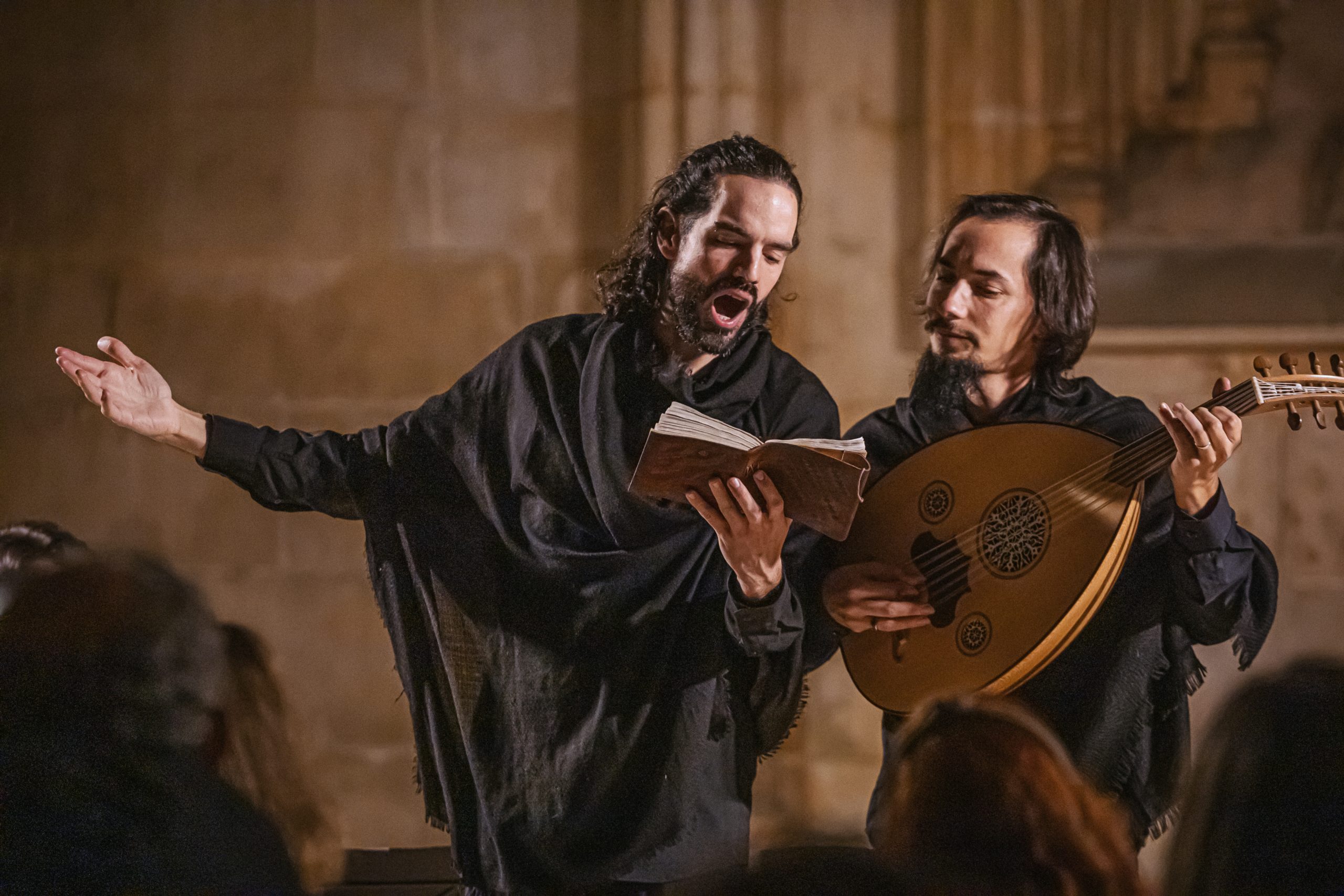
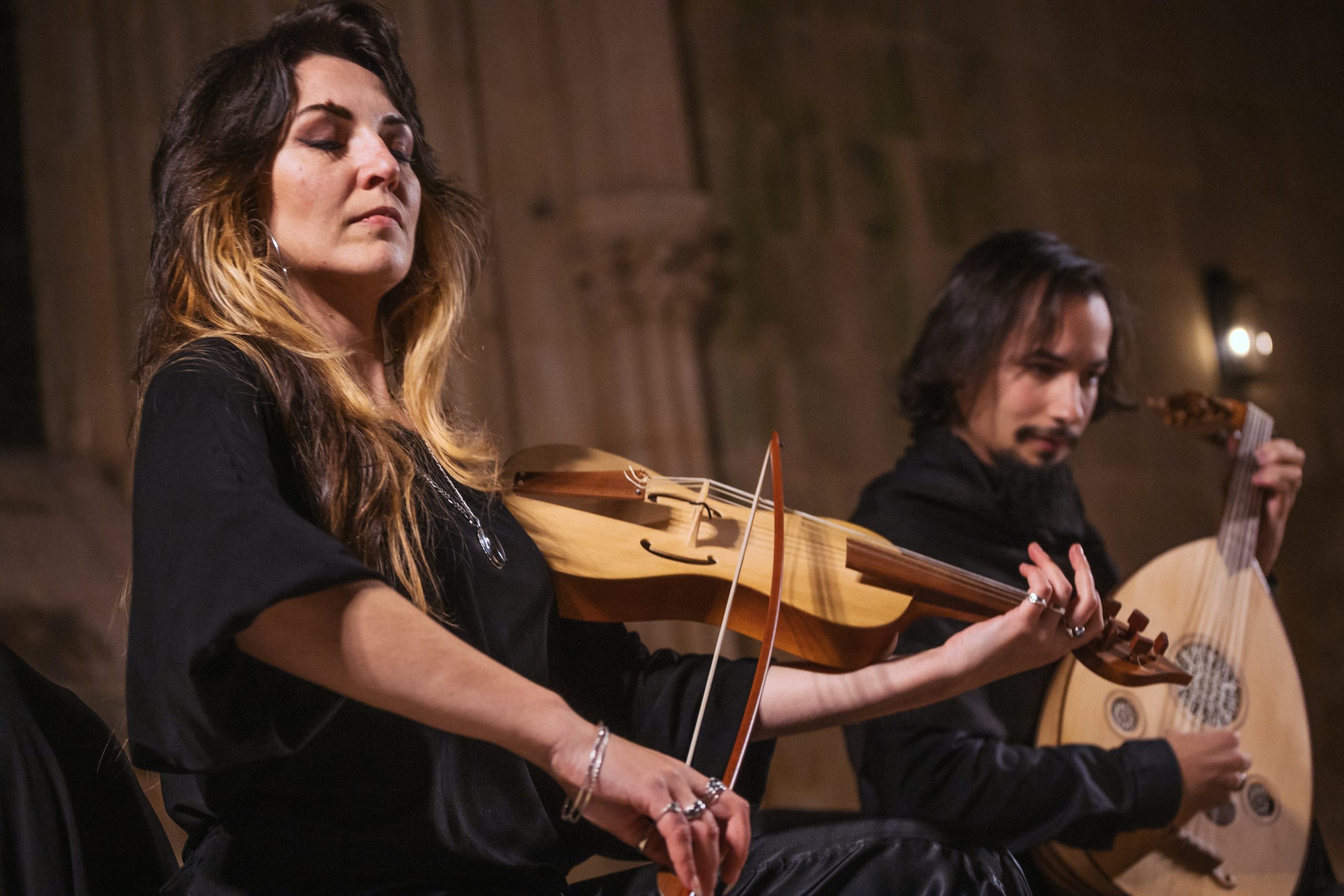
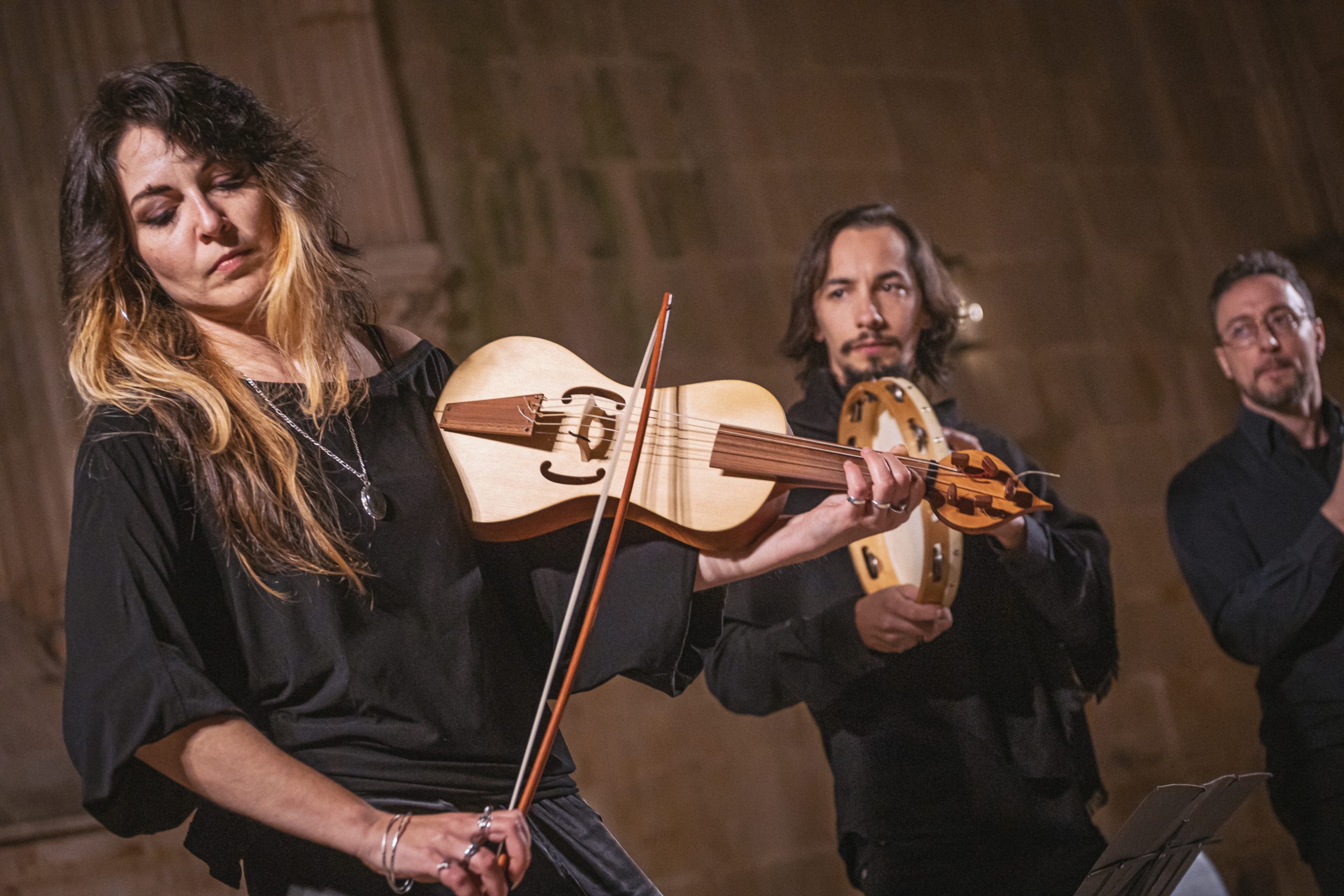
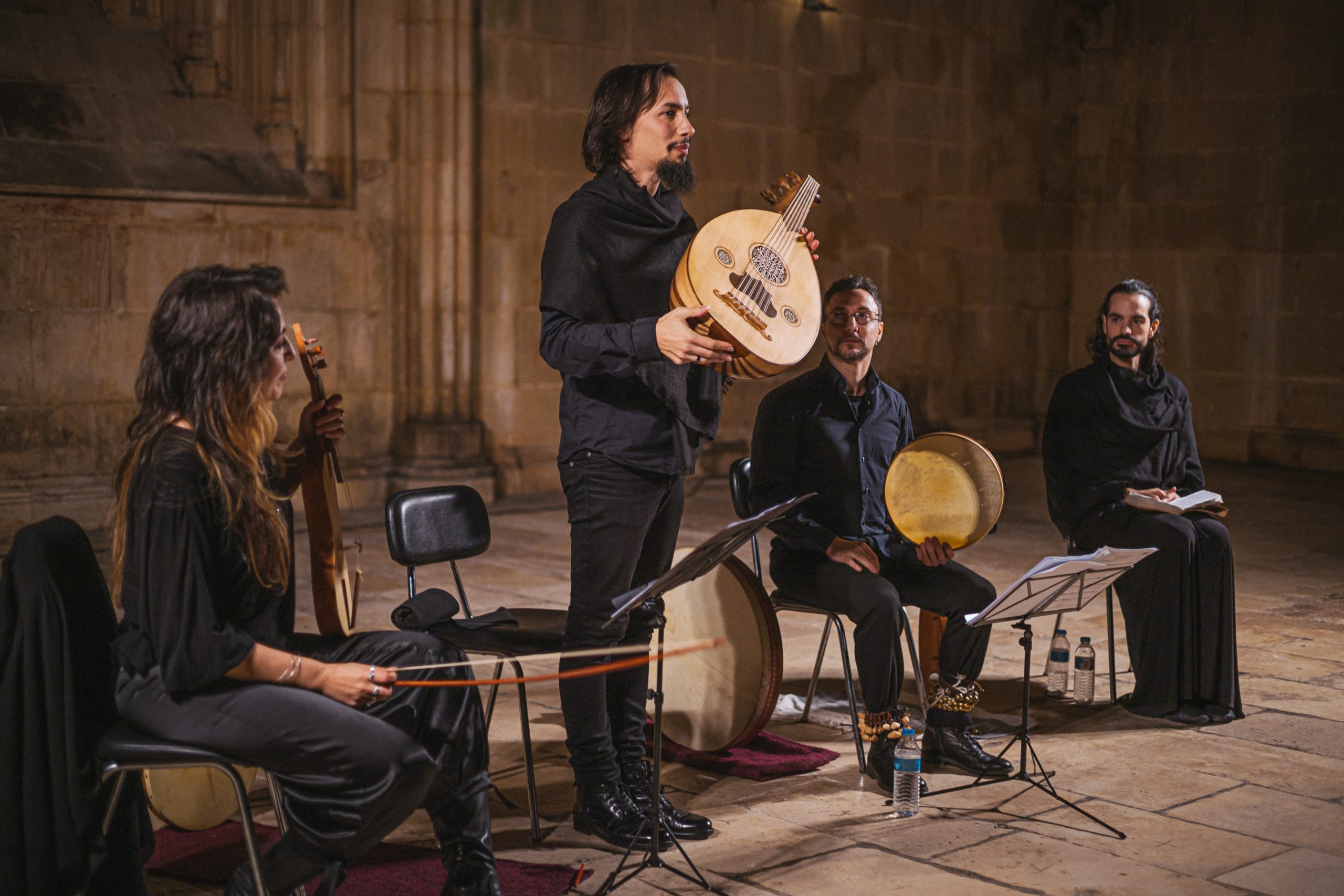
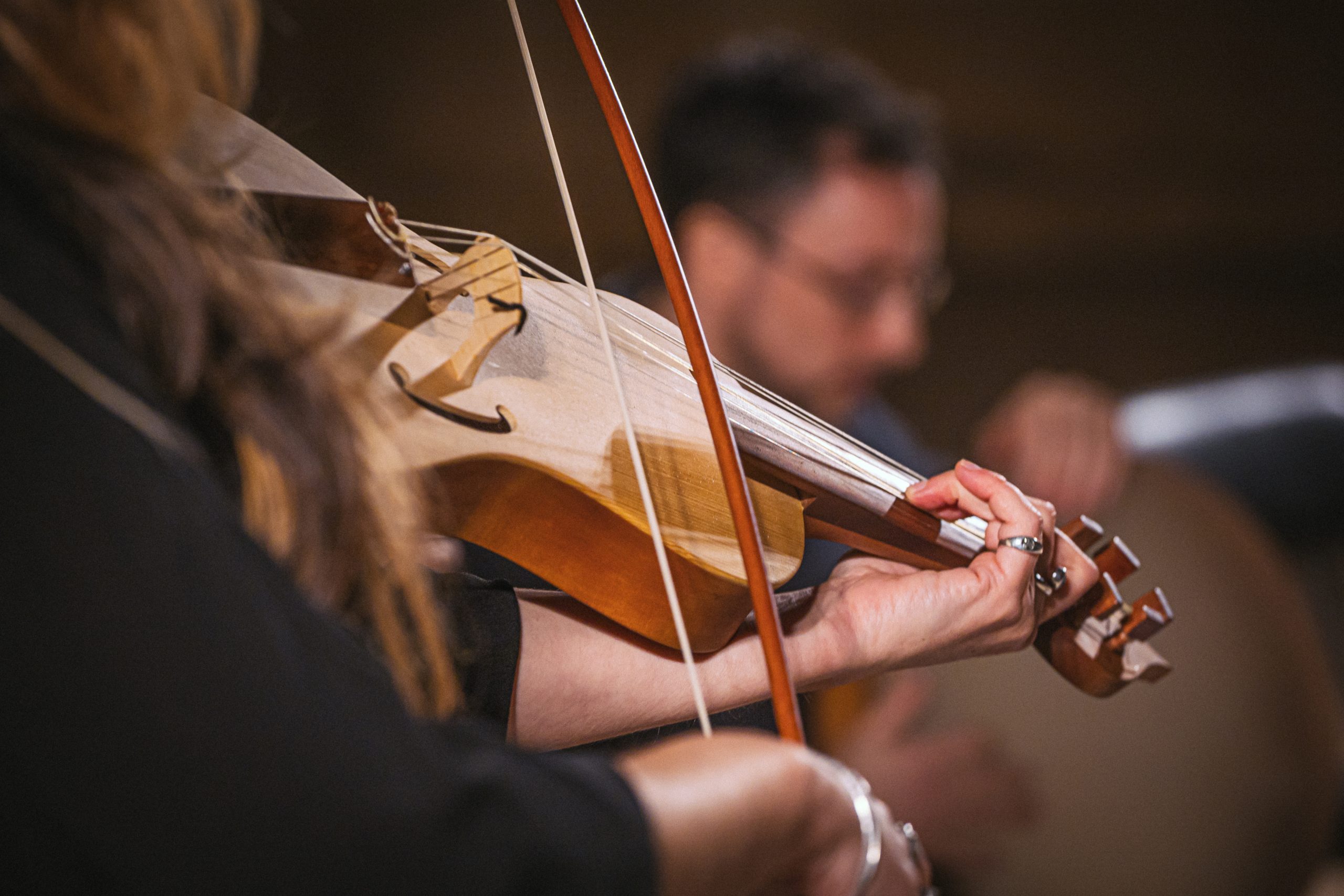
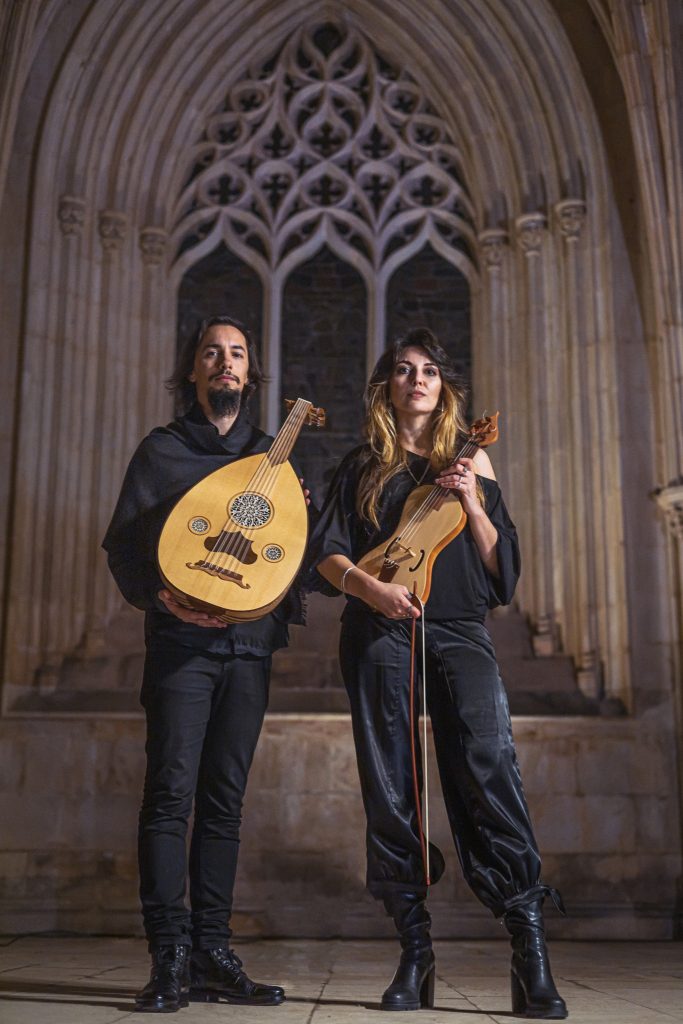
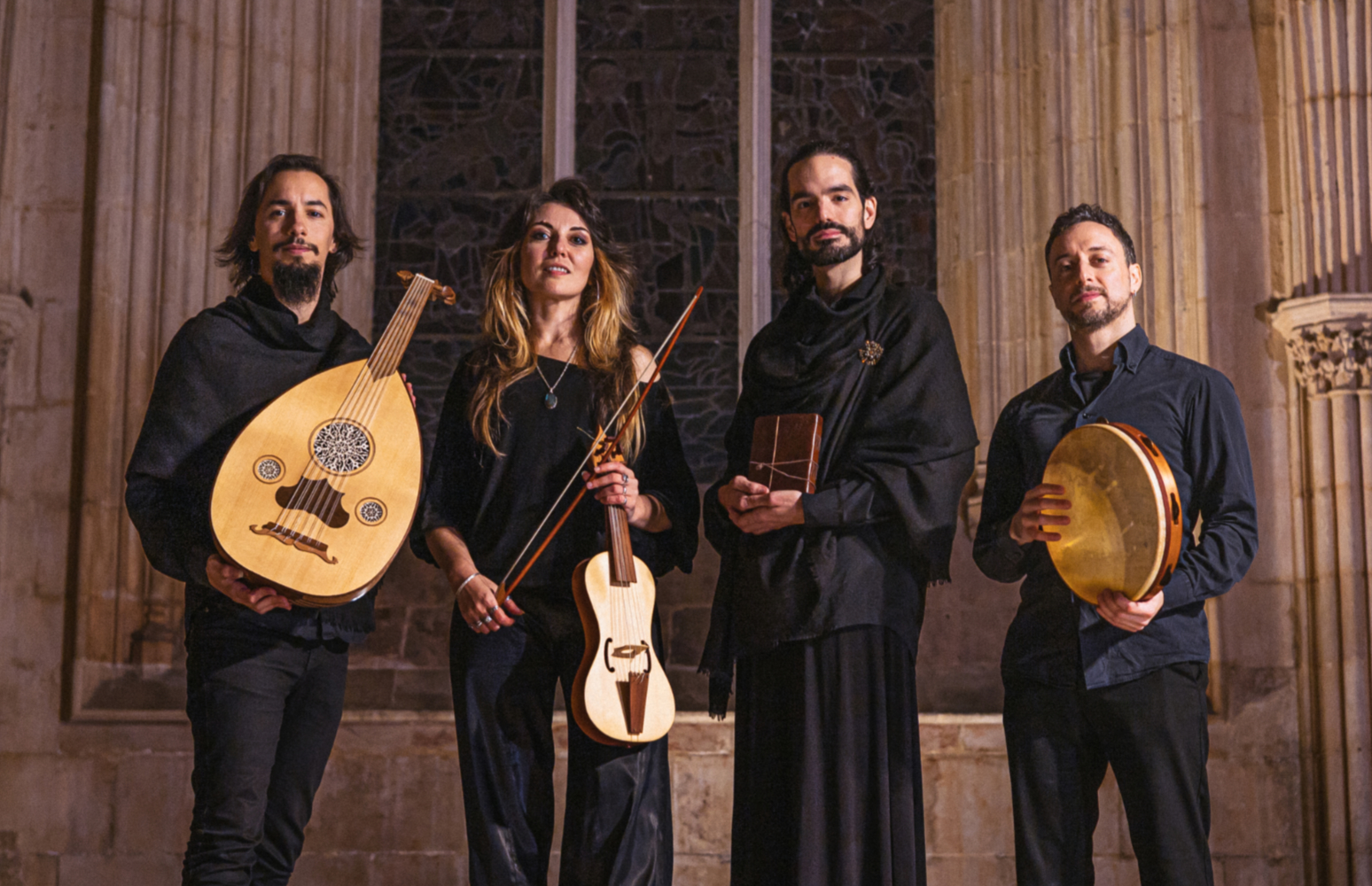
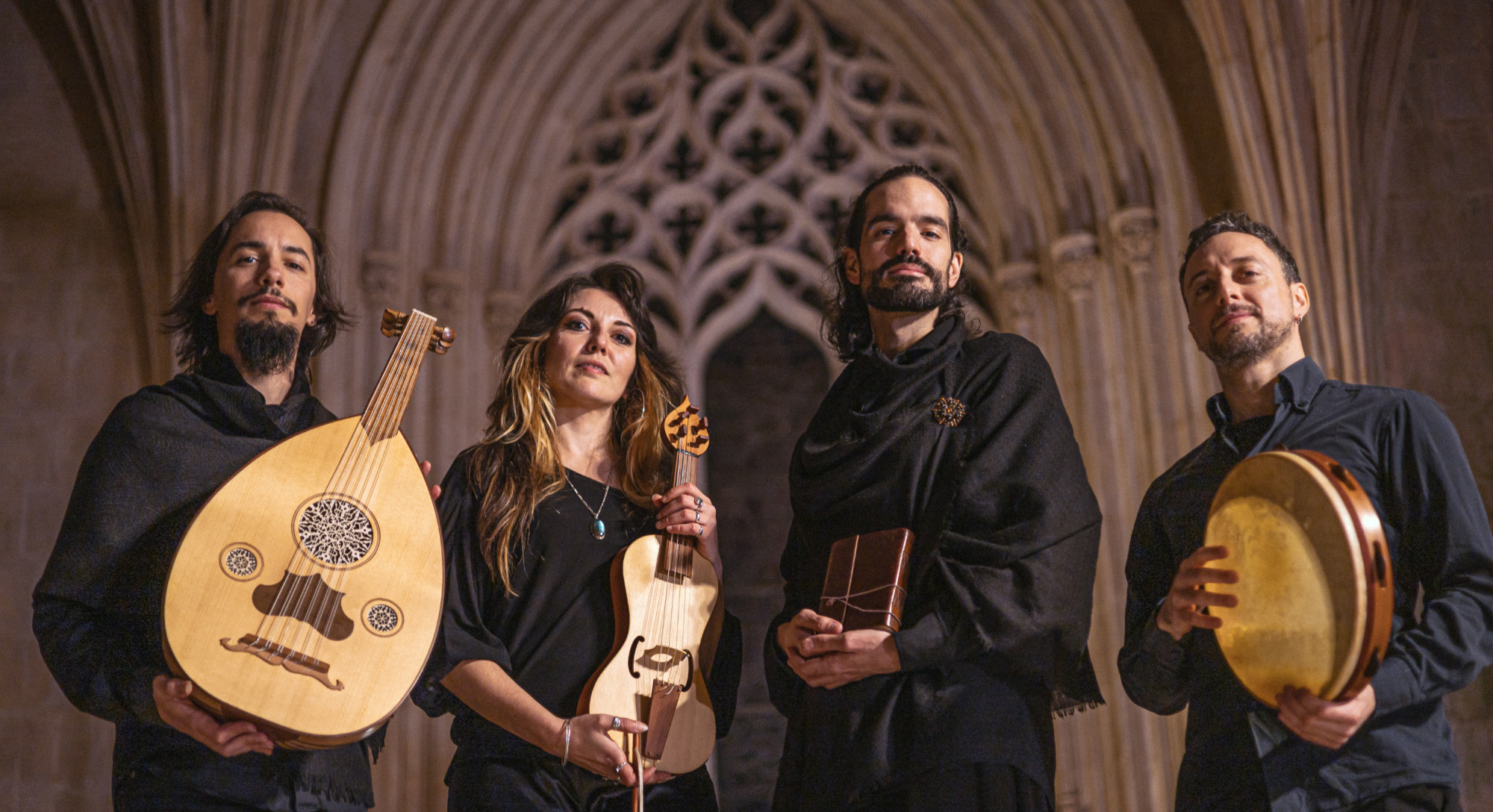
Esin Yardımlı Alves Pereira — artistic direction, vielle, voice, medieval harp
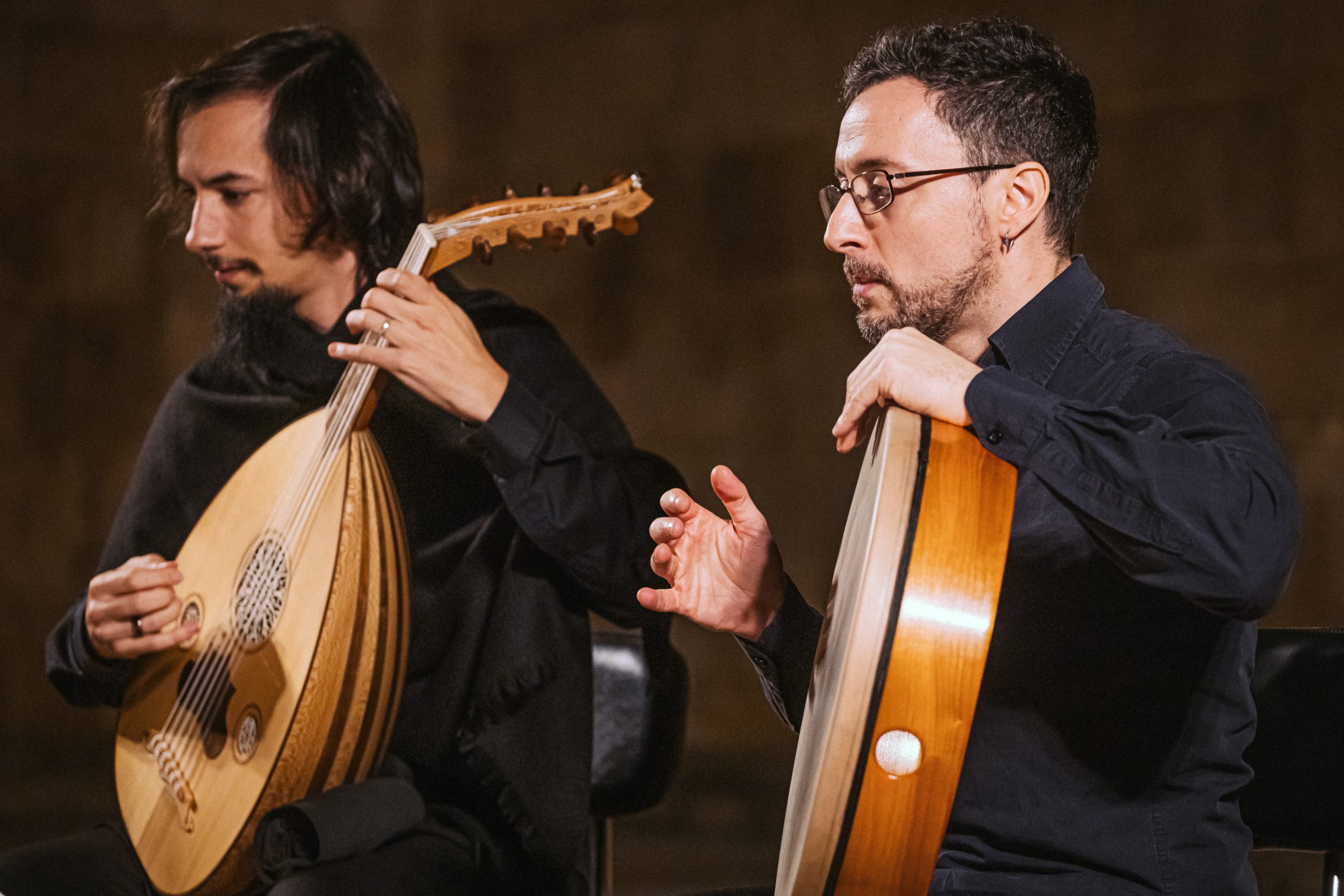
Ricardo Alves Pereira — artistic direction, lute, voice, percussion
Jorge Luís Castro — voice
Ruben Leonardi — percussion, voice
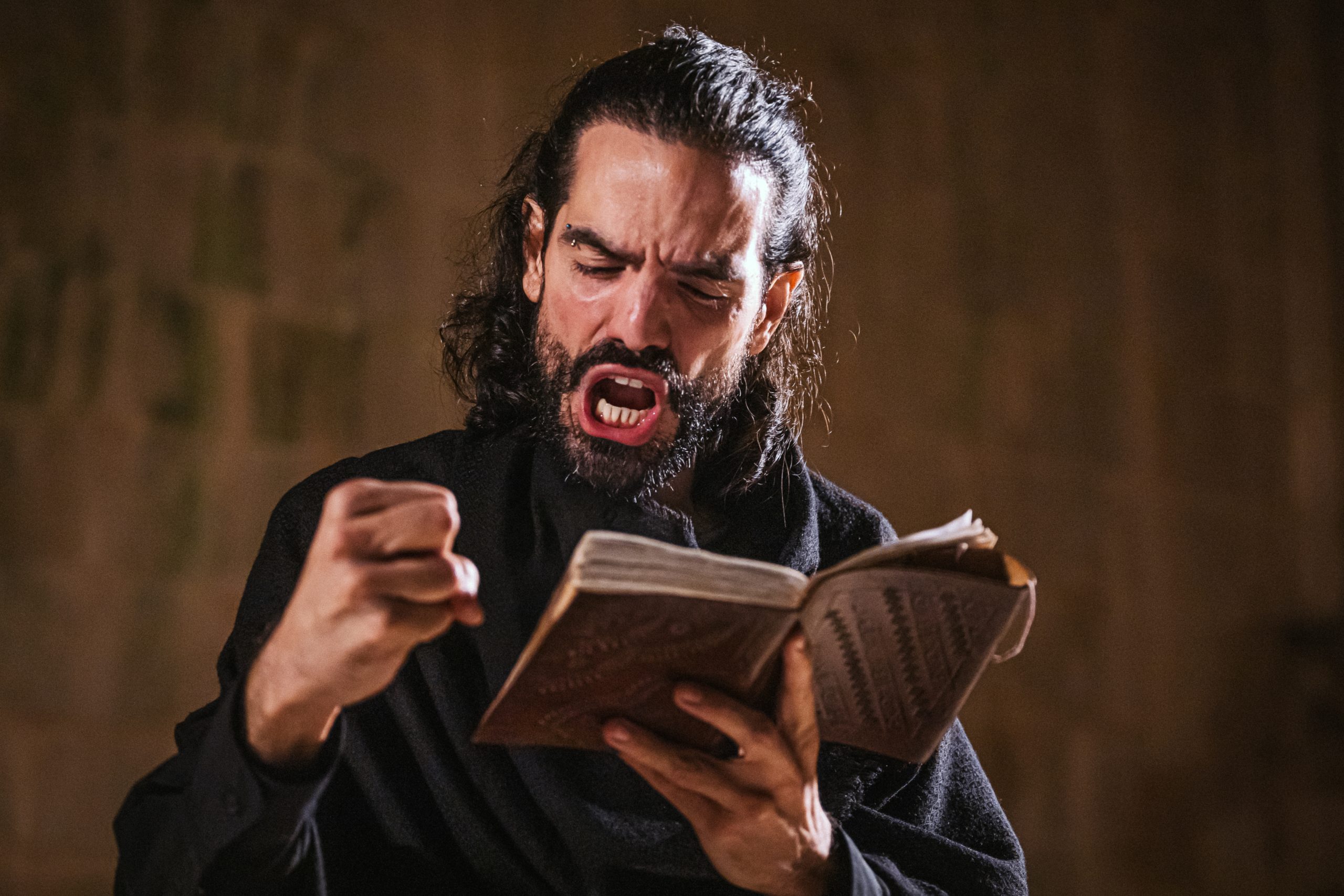
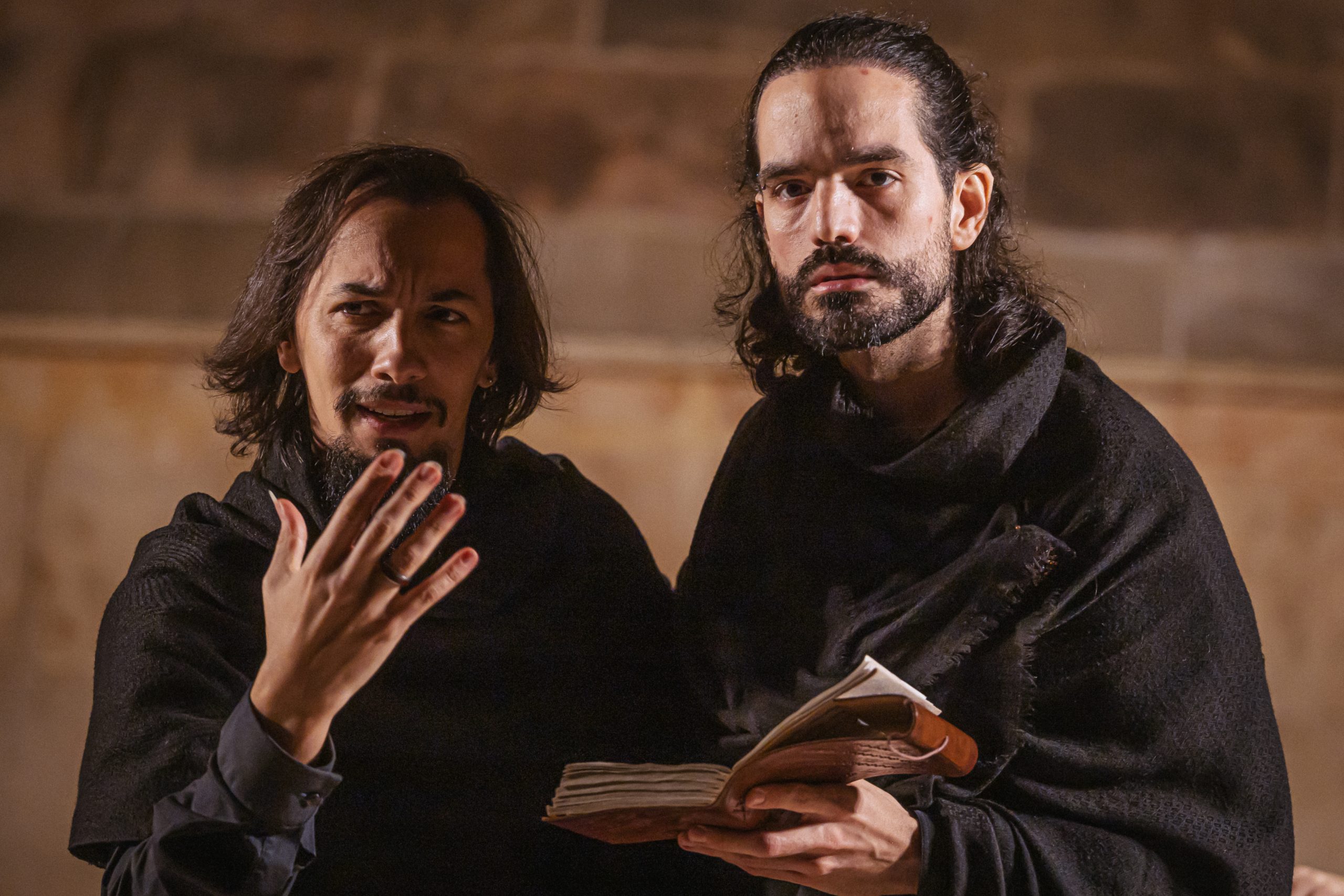
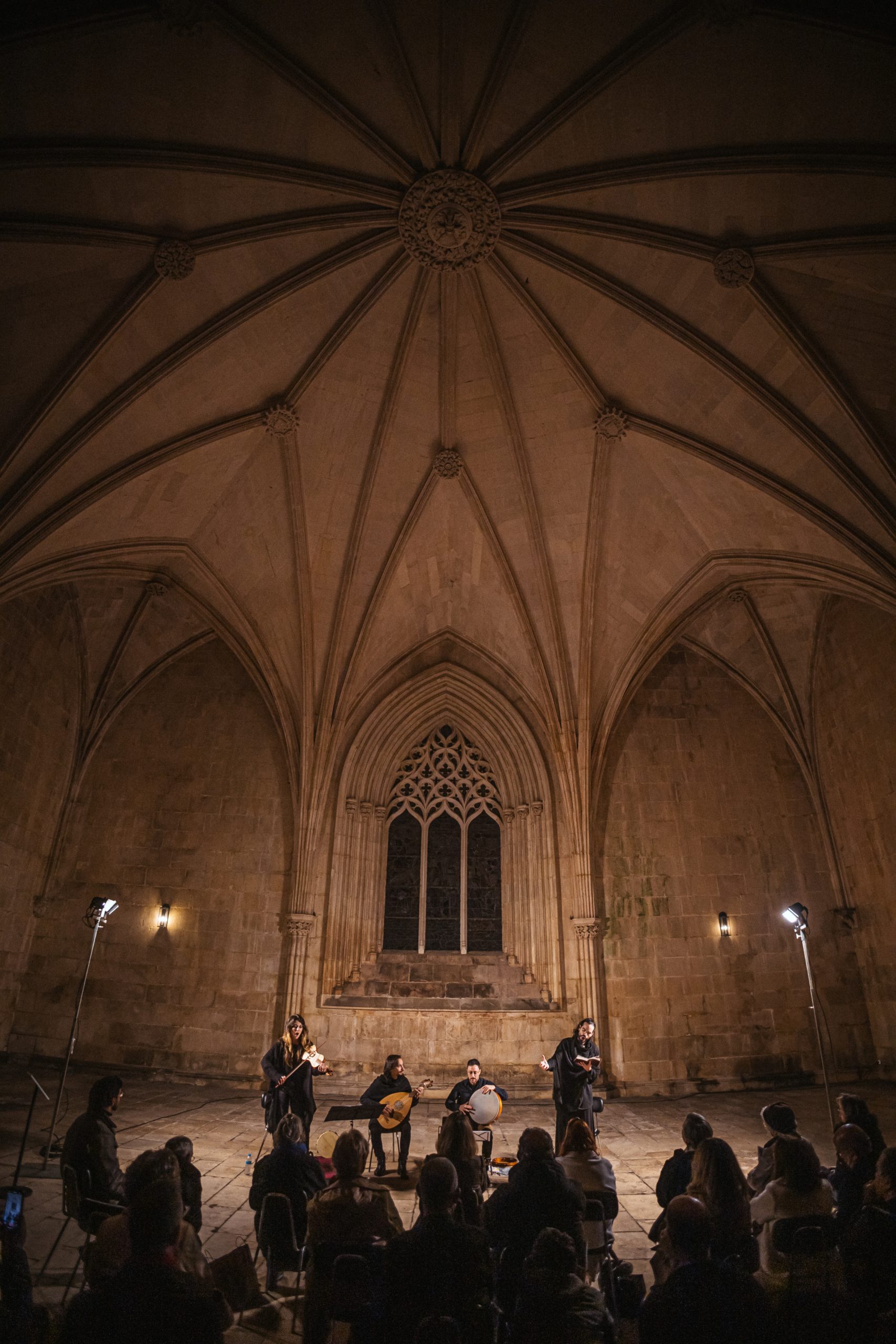
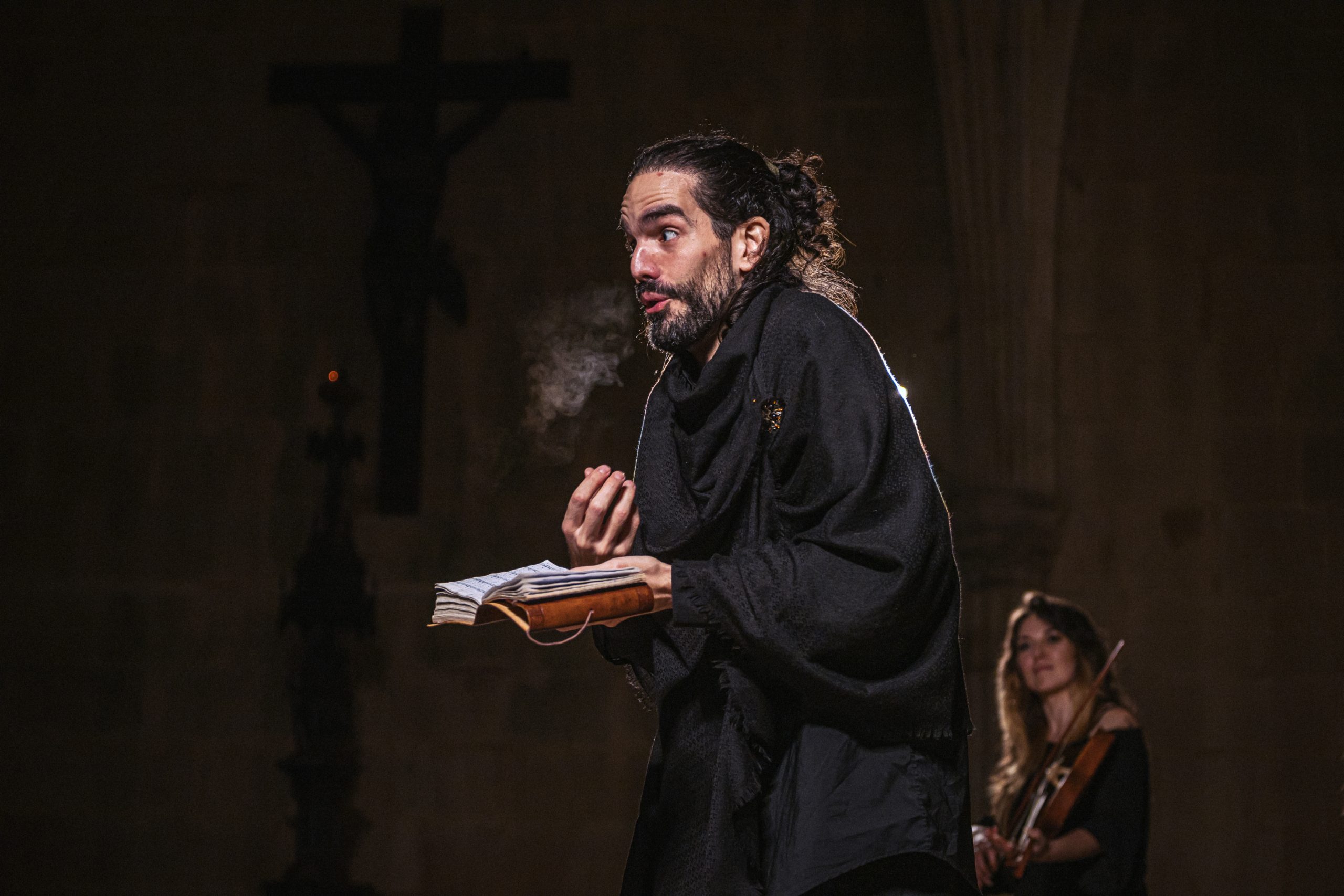
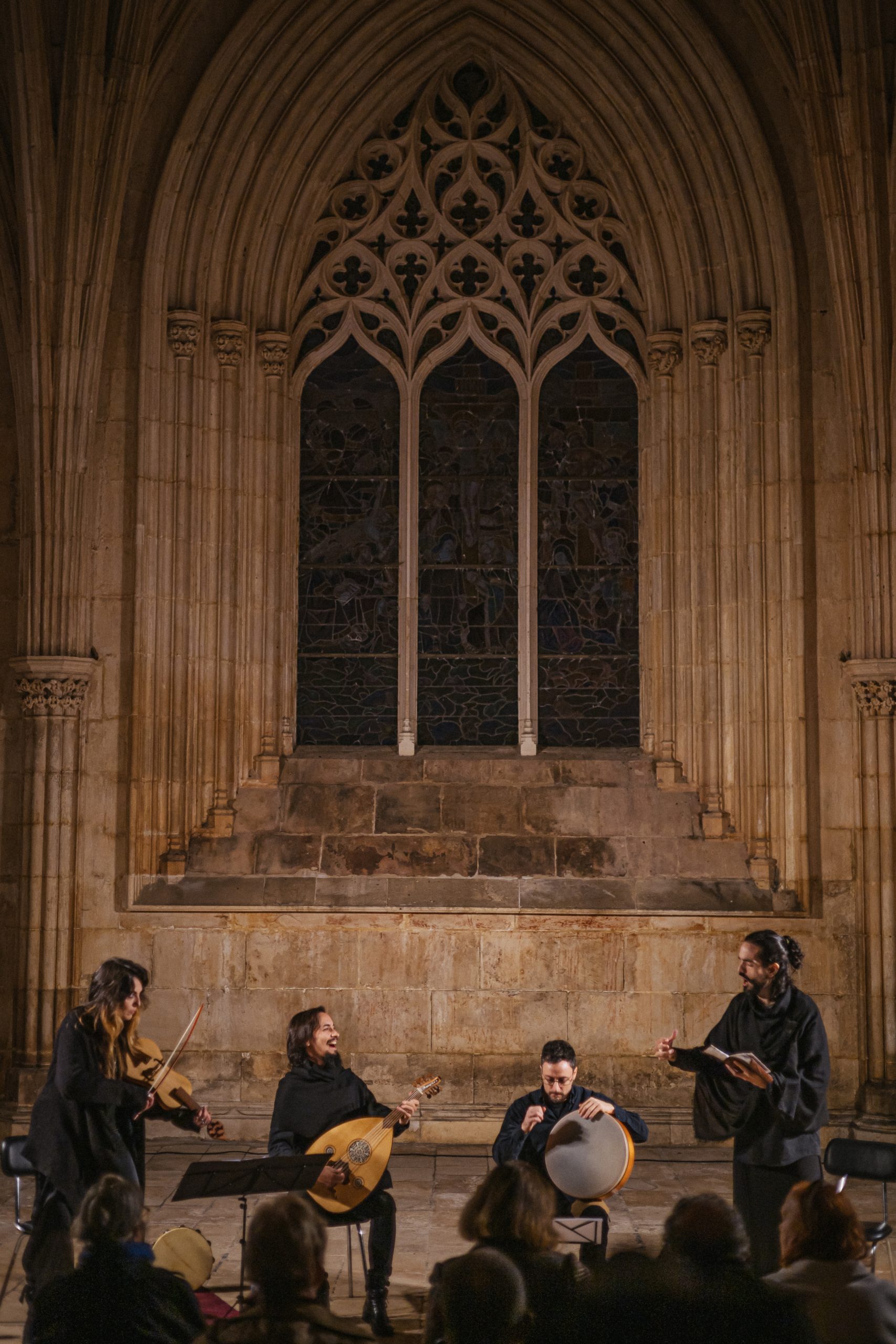
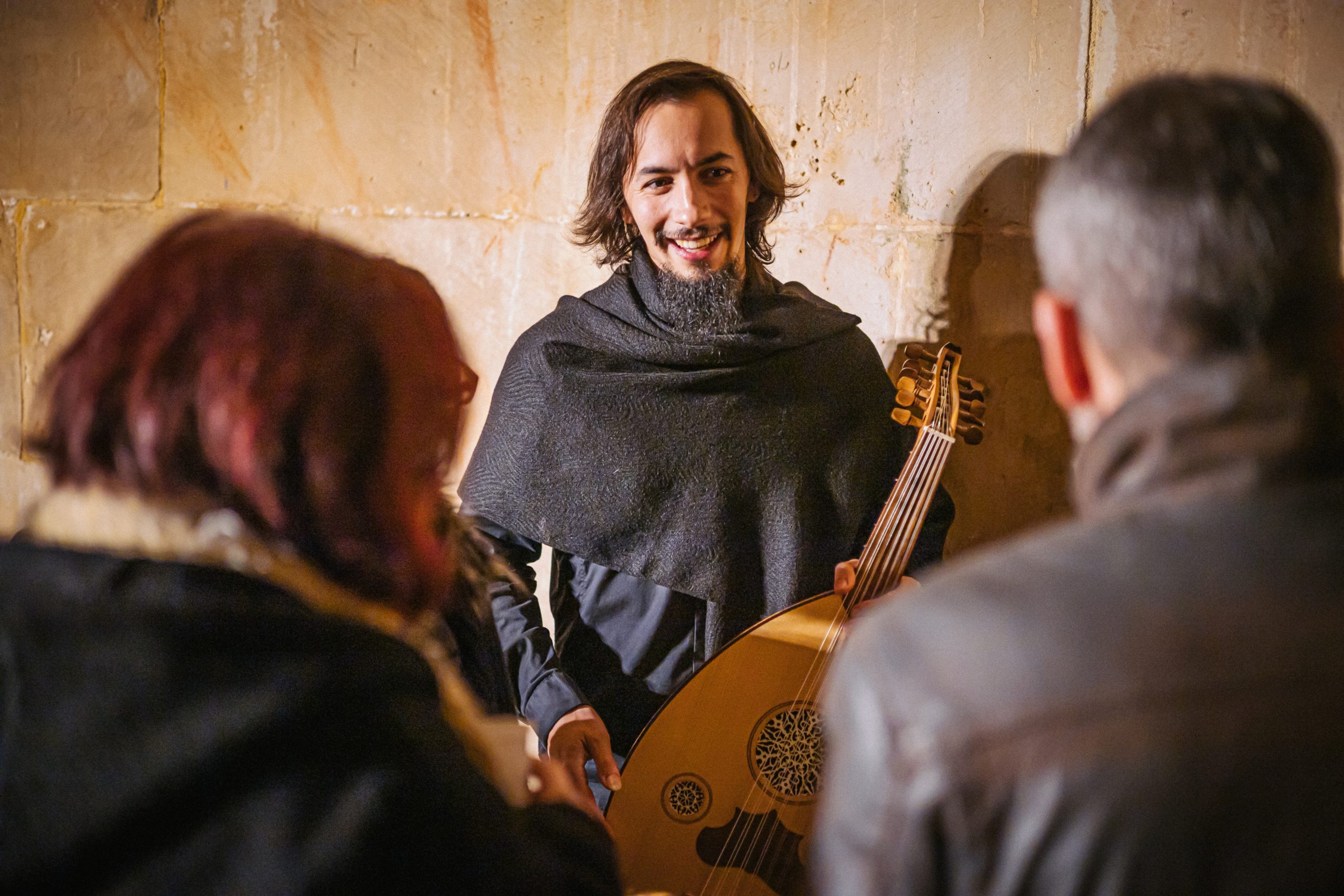
Excerpt from the performance at the Monastery of Batalha, December 2025
the nature of love:
at times merry,
at times spiteful
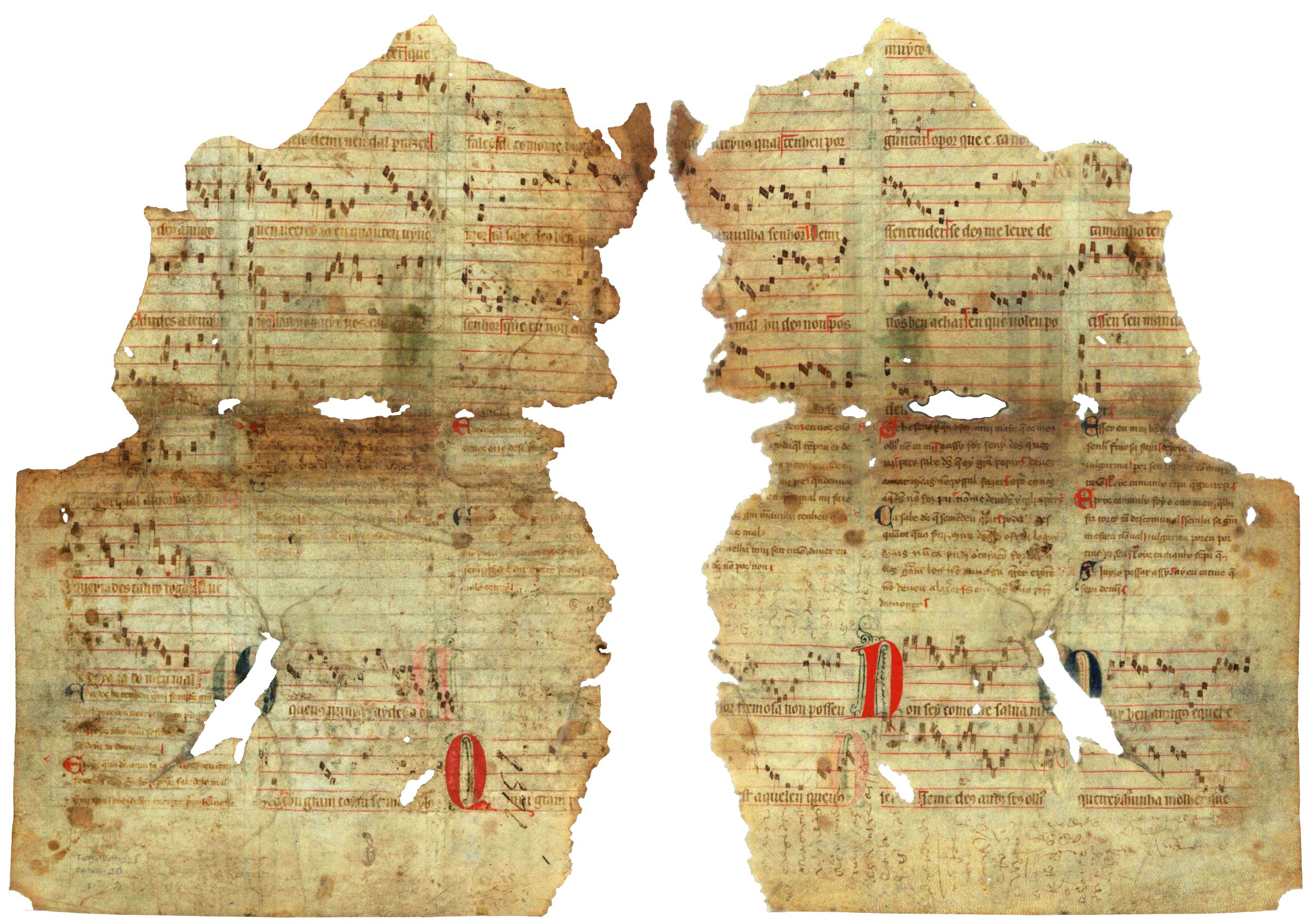
Performing the only known melodies of the cantigas de amor, moreover attributed to King D. Dinis of Portugal, the Troubadour King, The Wandering Bard brings a medieval Iberian treasure, the Sharrer Parchment, to life with historically informed performance techniques and instrumentation drawn from the illuminations of the era and region. Soon to be released as the ensemble’s eighth album, this project is the result of research rarely undertaken.
The cantigas de amor are songs from the Galician-Portuguese troubadour tradition (12th–14th centuries), where the poet laments his unattainable lady’s beauty, virtue, and superiority. At the heart of them lies coita d’amor, a kind of suffering of love unique to medieval Iberia. At times merry, at times spiteful, the multifaceted nature of this “love” is revealed throughout the concert, as D. Dinis of Portugal, the king with the epithet “the Poet-King”, demonstrates his mastery of the craft.
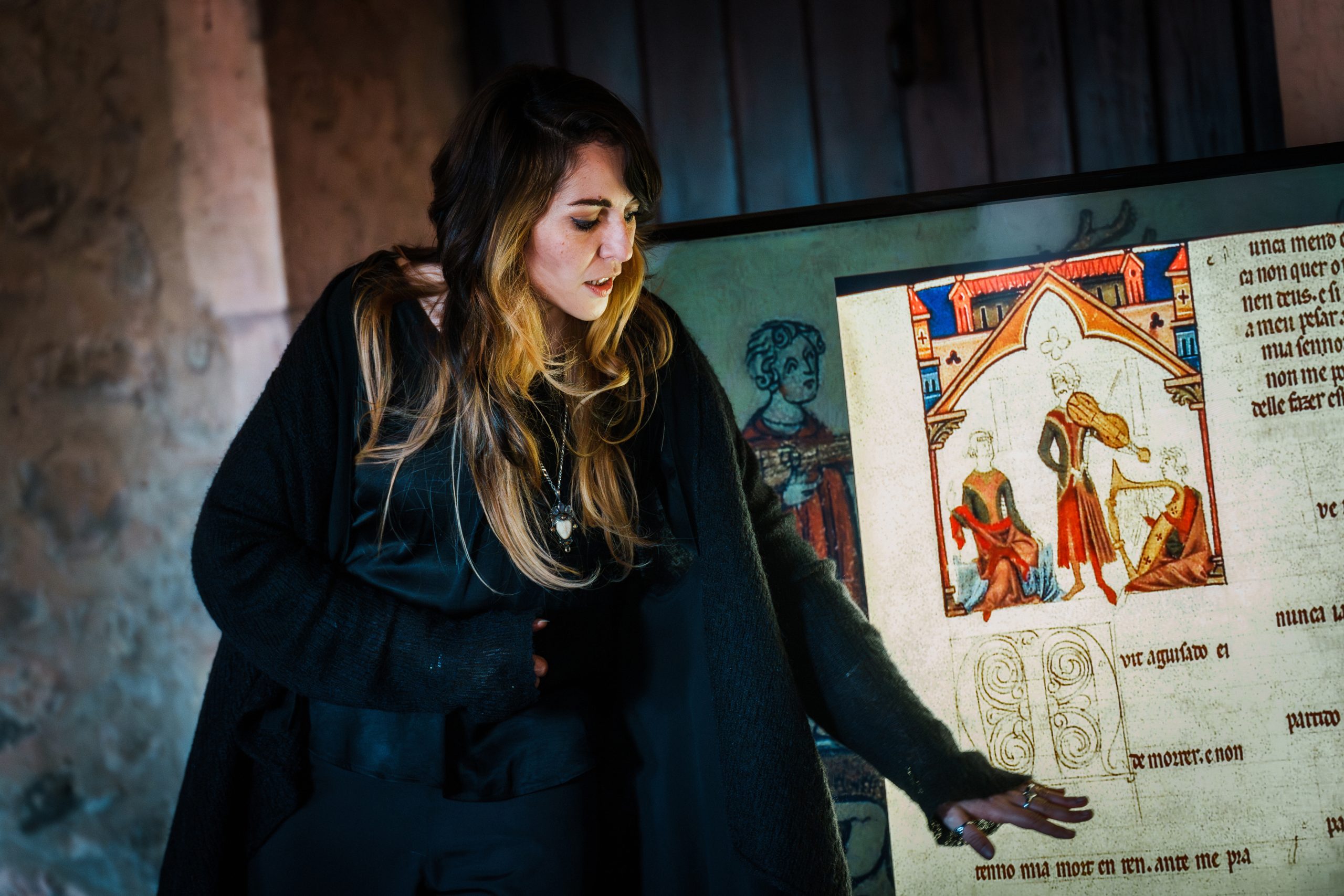
Discovered in 1990 and containing seven cantigas de amor by King D. Dinis of Portugal (1261-1325), the Sharrer Parchment is considered to be the only surviving document with musical notation of a genre with thousands of poems preserved in cancioneiros (songbooks) with no musical notation.
In order to render the work into a performable form for The Wandering Bard, Esin Yardimli Alves Pereira and Ricardo Alves Pereira deciphered the manuscript and reconstructed the lacunae directly from the surviving fragments.
“Those lovers who sing of love
should all mourn greatly
and take no pleasure in themselves,
for they have lost so good a lord
as King Dinis of Portugal,
of whom none but a detractor could speak ill.”
— Johan Jograr, resident in León (14th century)
During the concert, brief contextual commentary between the works guides the audience through the poetry, manuscripts and interpretative choices, welcoming both specialists and curious new listeners into the world of medieval Iberian song.
Visual materials and texts translated into modern languages, provided by The Wandering Bard through projections or printed concert programmes, make the performance accessible to international audiences.
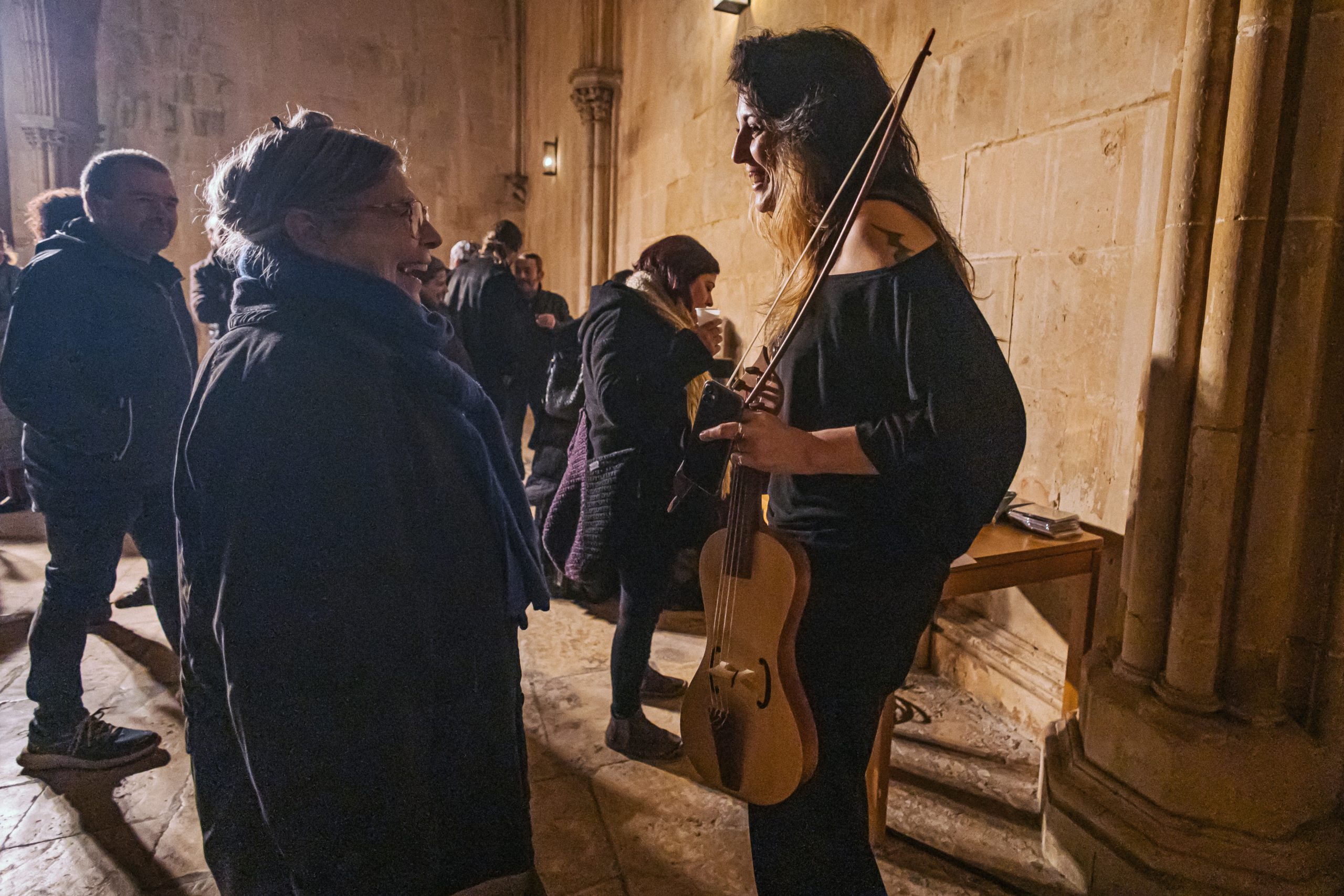
Meet & Greet: An informal gathering with the artists takes place after the concert, allowing audience members to speak with the musicians, ask questions and deepen the connection created during the performance.
To strengthen the audience’s connection with the performance, two pre-concert presentations may be offered: the first explores the historical, geographical and cultural context of the repertoire and the people who created it; the second introduces the medieval instruments used during the concert and help audience explore their sound, function and historical context.
For The Wandering Bard, bringing audiences closer to the instruments, manuscripts and people behind this music is also a way of sharing their enthusiasm for this world. Learning thus becomes a connection between past and present, and a joy shared together.
Founded and directed by Esin Yardimli Alves Pereira and Ricardo Alves Pereira, who are also responsible for the Portuguese medieval-music festivals CMML and DMMB, The Wandering Bard is an ensemble dedicated to historically informed performance grounded in manuscript sources.
Recognised for their precise, engaging and semi-staged performances, the ensemble combines distinctive arrangements born from historical research with strong musical creativity. Contextual narration and spoken commentary make rarely heard medieval music relevant to contemporary audiences.
While their albums reach thousands of listeners around the world, the ensemble regularly invites renowned specialists and artists such as Eduardo Paniagua and Fernando Ribeiro of MOONSPELL to join its stage formations.
Through the musical research and reconstruction undertaken by Esin and Ricardo, The Wandering Bard has presented audiences with more than one hundred Cantigas de Santa Maria by Alfonso X, the Wise; works from the Llibre Vermell de Montserrat; the complete Cantigas de Amigo of Martin Codax from the Vindel Parchment; and secular cantigas by dozens of troubadours and minstrels from the Iberian Peninsula.
On 7 January 2025, marking seven hundred years since the death of D. Dinis, the Troubadour-King, the ensemble premiered Esin and Ricardo’s musical research into the seven Cantigas de Amor attributed to the Poet-King and recovered from the Sharrer Parchment.
The Melody of D. Dinis – Music of the Poet-King from the Sharrer Parchment is available for booking.
The Wandering Bard ensemble has an adjustable line-up of two to eight musicians, while preserving the full artistic integrity of the programme.
The Melody of D. Dinis –Music of the Poet-King from the Sharrer Parchment is a scalable project that can be adapted in accordance with the host organisation.
Marta Almeida: booking@cordasonora.com
+351 965642540