A CordaSonora Production
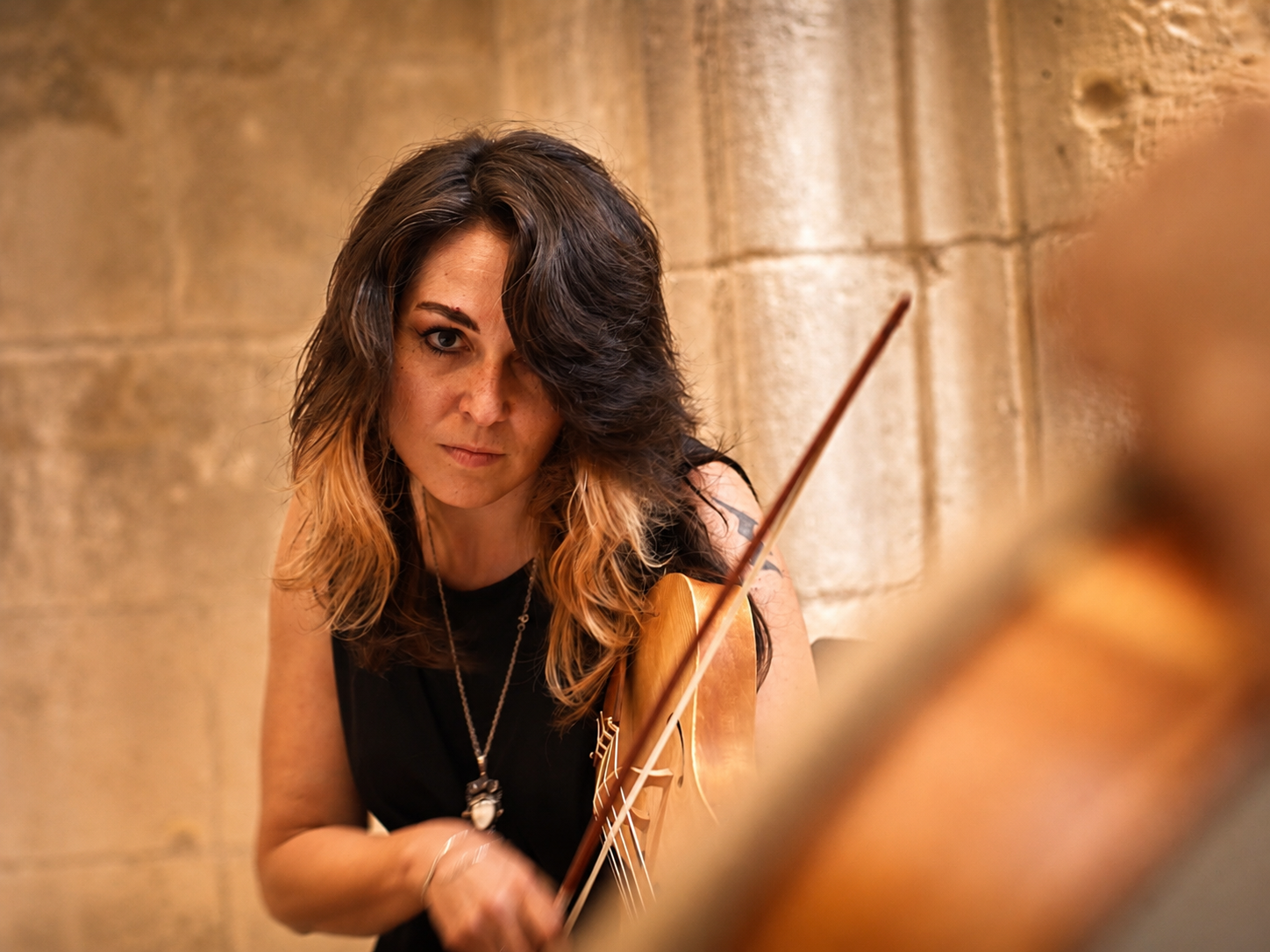
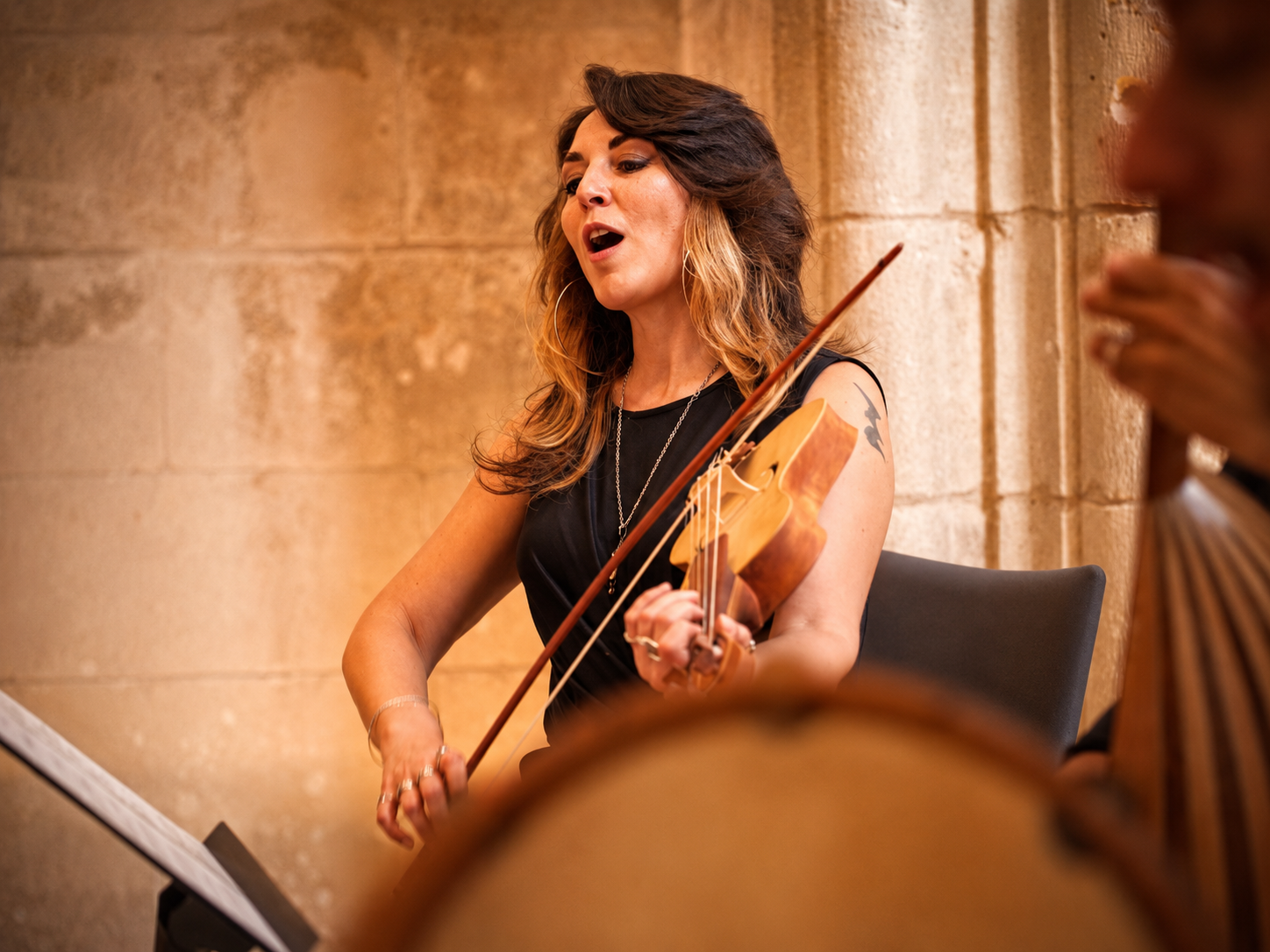
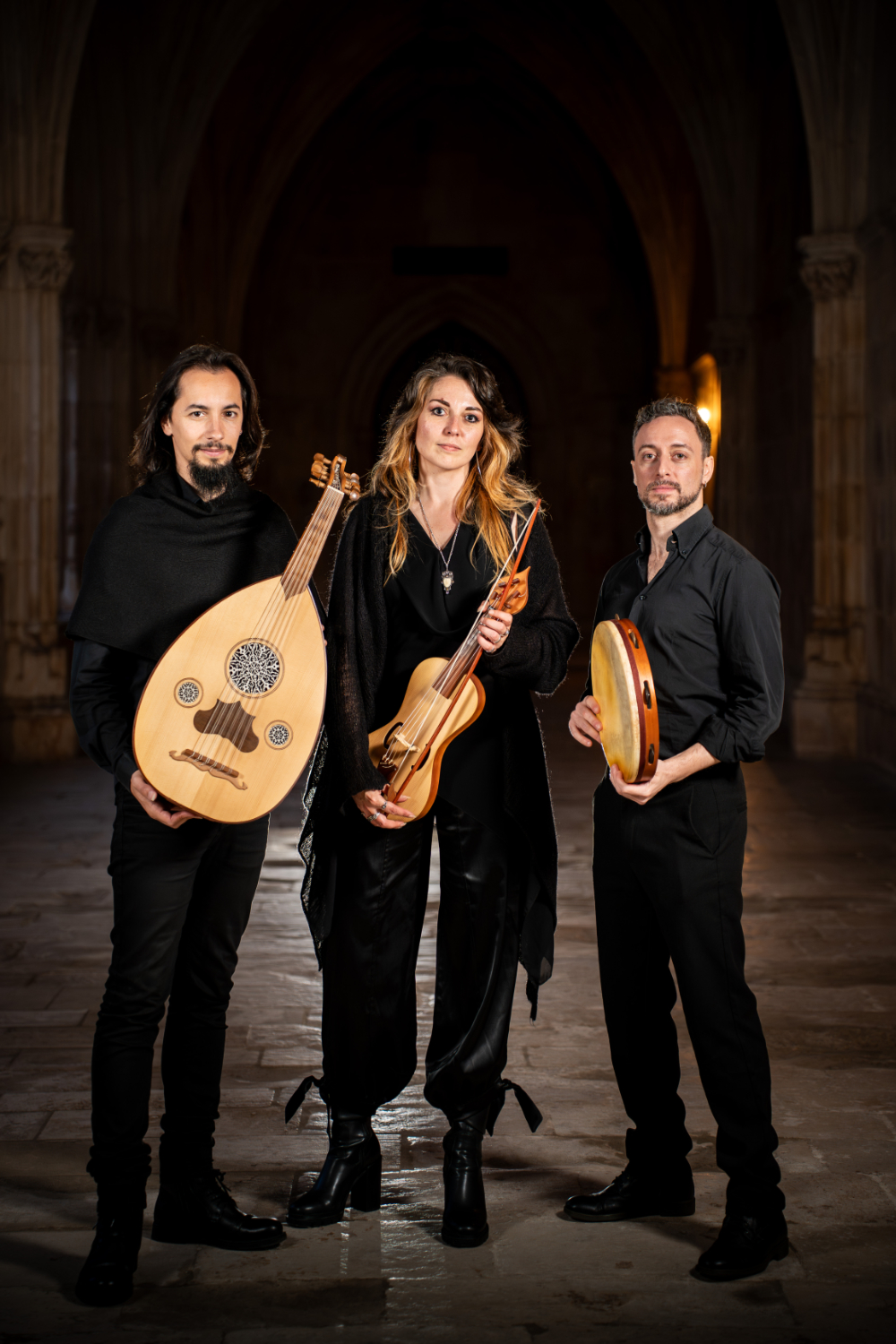
Esin Yardimli Alves Pereira – artistic direction, vielle, voice
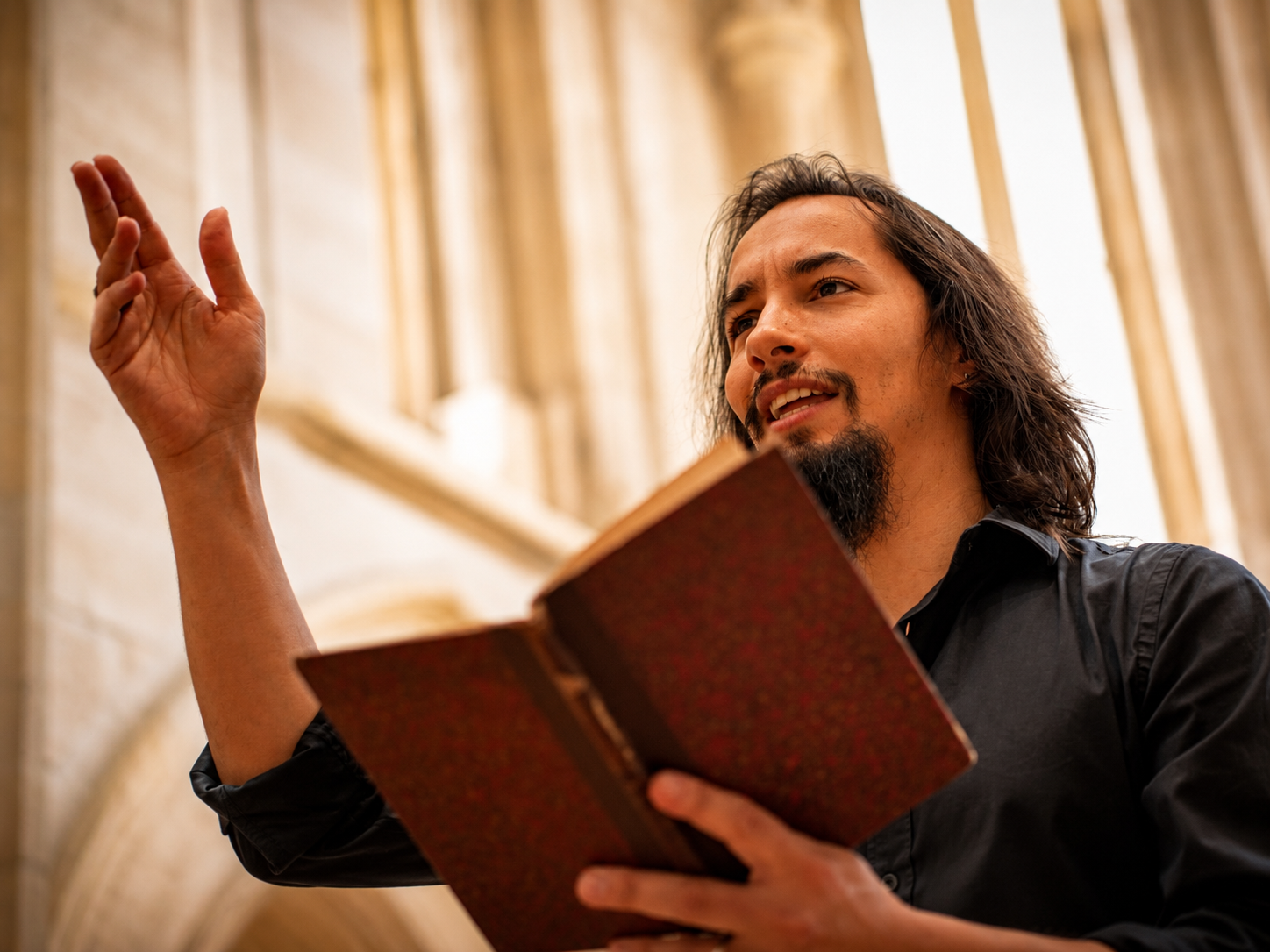
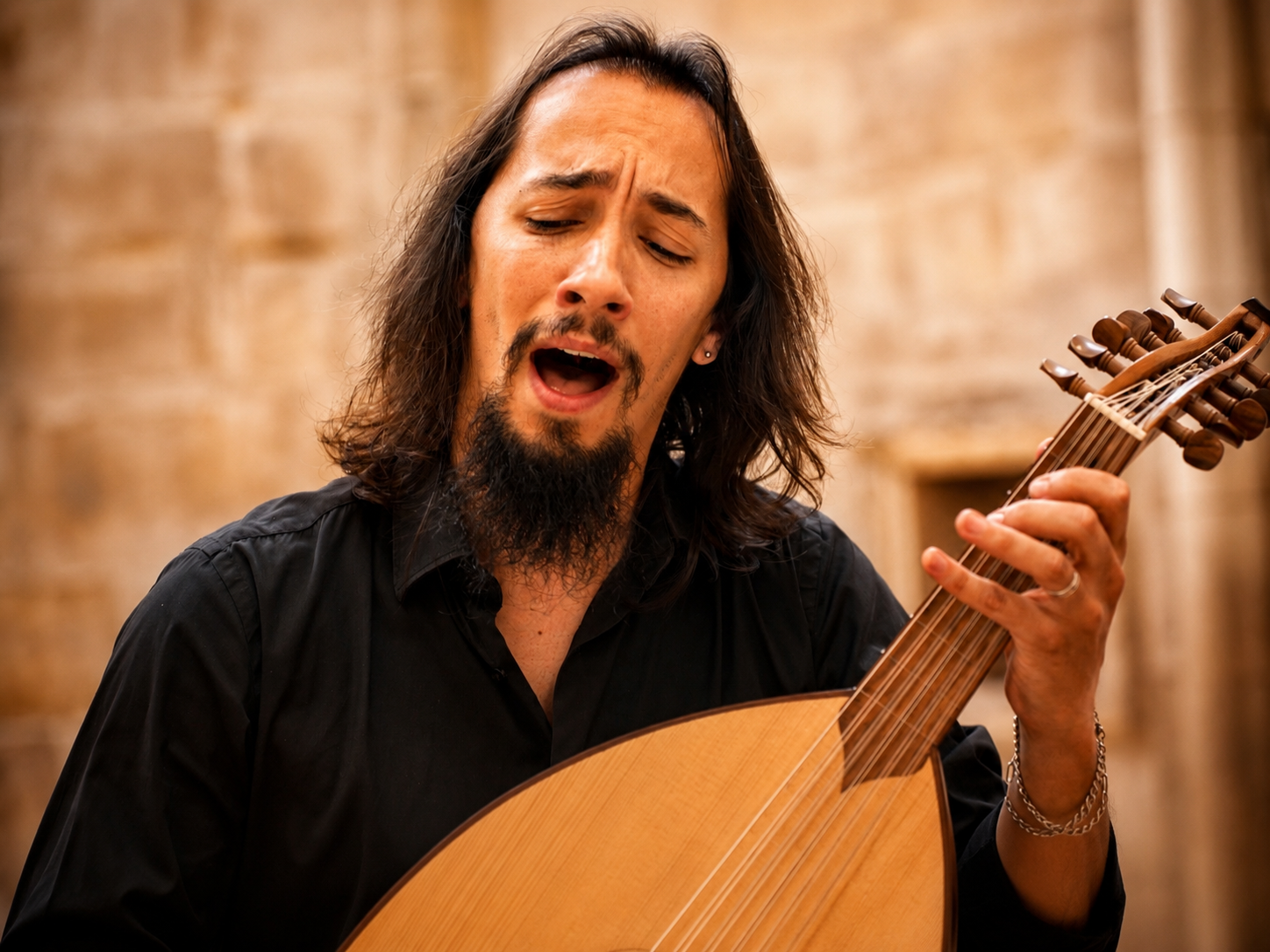
Ricardo Alves Pereira – artistic direction, oud, voice, percussion
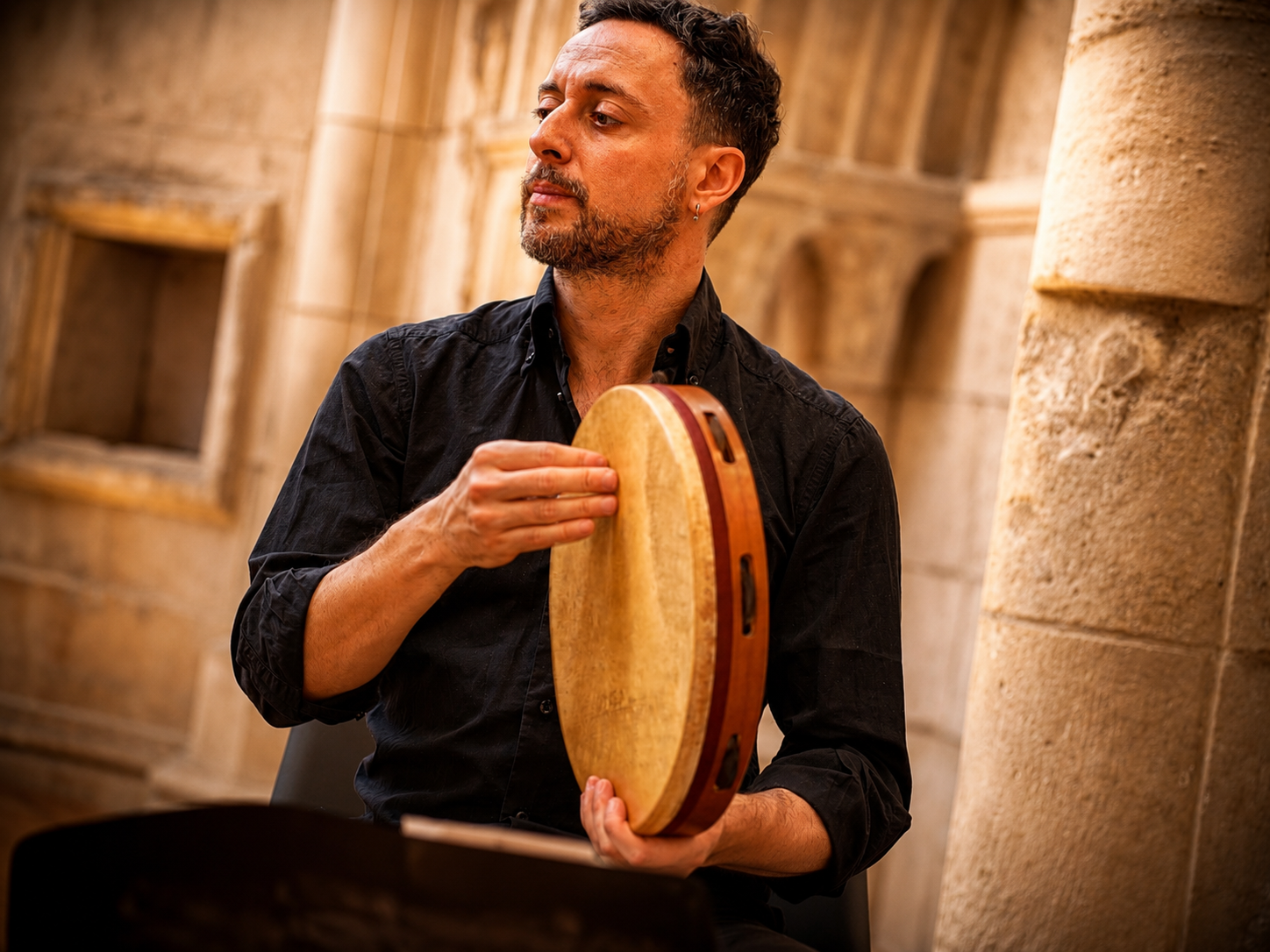
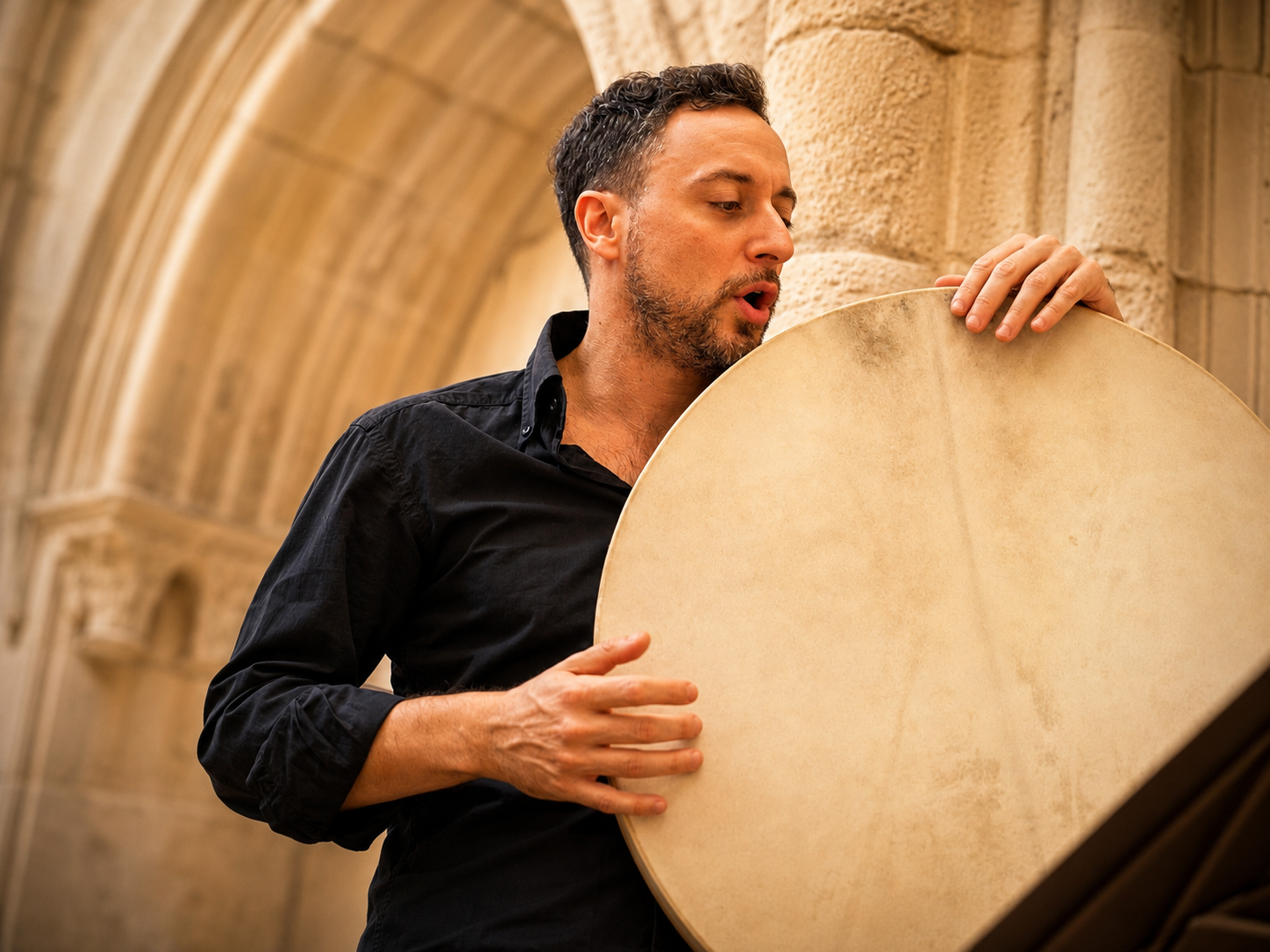
Ruben Leonardi – percussion, voice
Photography/videography: João Fitas
Production: CordaSonora
The Book of the King – O Livro do Rei presents the intimate odyssey between King Alfonso X, the Wise, and the Cantigas de Santa Maria, his monumental collection of more than 400 songs dedicated to Saint Mary and her miracles. Using the king’s first-person cantigas as a narrative thread, The Wandering Bard traces an autobiographical journey from the book’s opening prologue to its final poem, guiding the audience through the course of this majestic work and the king’s reflections on faith, art, legacy, and the grace of a powerful woman. It is a work that bears witness to the profound bond between the king and the Saint, revealing his devotion and the faith he places in her, and in which Alfonso X himself expresses the hope that she will one day receive him.
“E os médicos mandavam-me pôr — And the doctors told me to apply
panos quentes, mas não o quis fazer. — warm cloths, but I did not wish to do so.
Mas mandei o Livro dela trazer, — But I had her Book brought to me,
e puseram-mo, e logo fiquei em paz.” — and they placed it on me, and at once I was at peace.
— CSM 209: Muito faz grand’ erro e en torto iaz
Perhaps he was not the first king to show an immense interest in and support for culture, the arts, music, astrology and history. But he certainly did so more than his predecessors in the Iberian Peninsula. After all, one is not remembered, without good reason, by the epithets “the Wise” – and – “the Astrologer”.
This king stands at the origin of a great many works of science, art and literature, while taking part in them as a dedicated participant. Alfonso X did not only commission translations, or give scholars the task of writing these works, but also took part himself in the creation of many manuscripts, as was the case with the Cantigas de Santa Maria. And among the almost 430 cantigas, some are not only attributed to him, but are also written in the first person, from the king’s own point of view, recalling moments from his life and turning this collection of cantigas partly, as some have called it, into a “poetic autobiography”.
Besides these first-hand stories, los libros de los cantares de loor de Sancta Maria bring us the way of life of medieval people through the miracles of a powerful woman, and how people lived around them. The protagonists of the cantigas come from every background. Rich and poor, kings and common people, musicians and bakers, young and old, Santa Maria granted them all a miracle. And Alfonso X left no one out, because the miracles even gave lessons to the clergy.
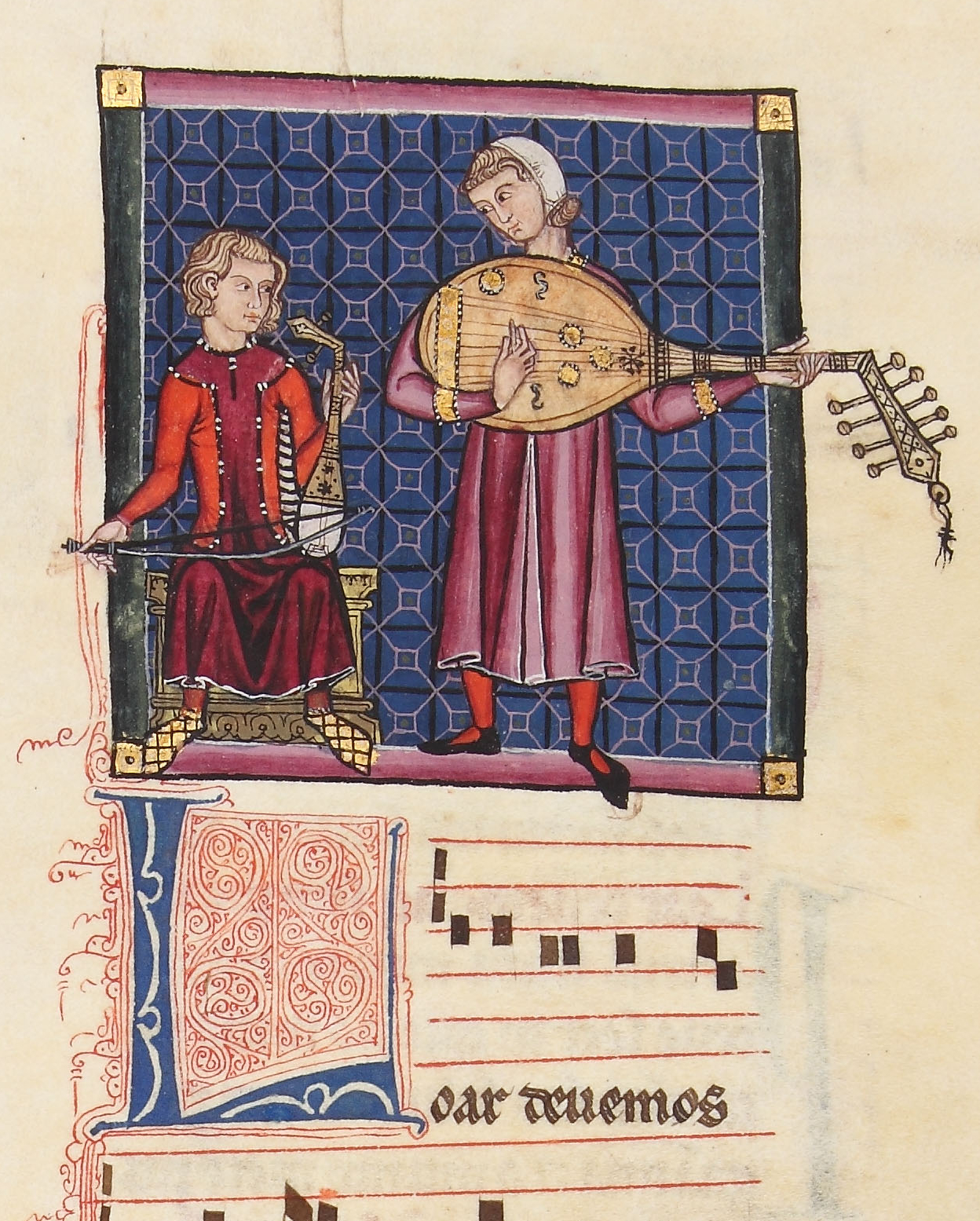
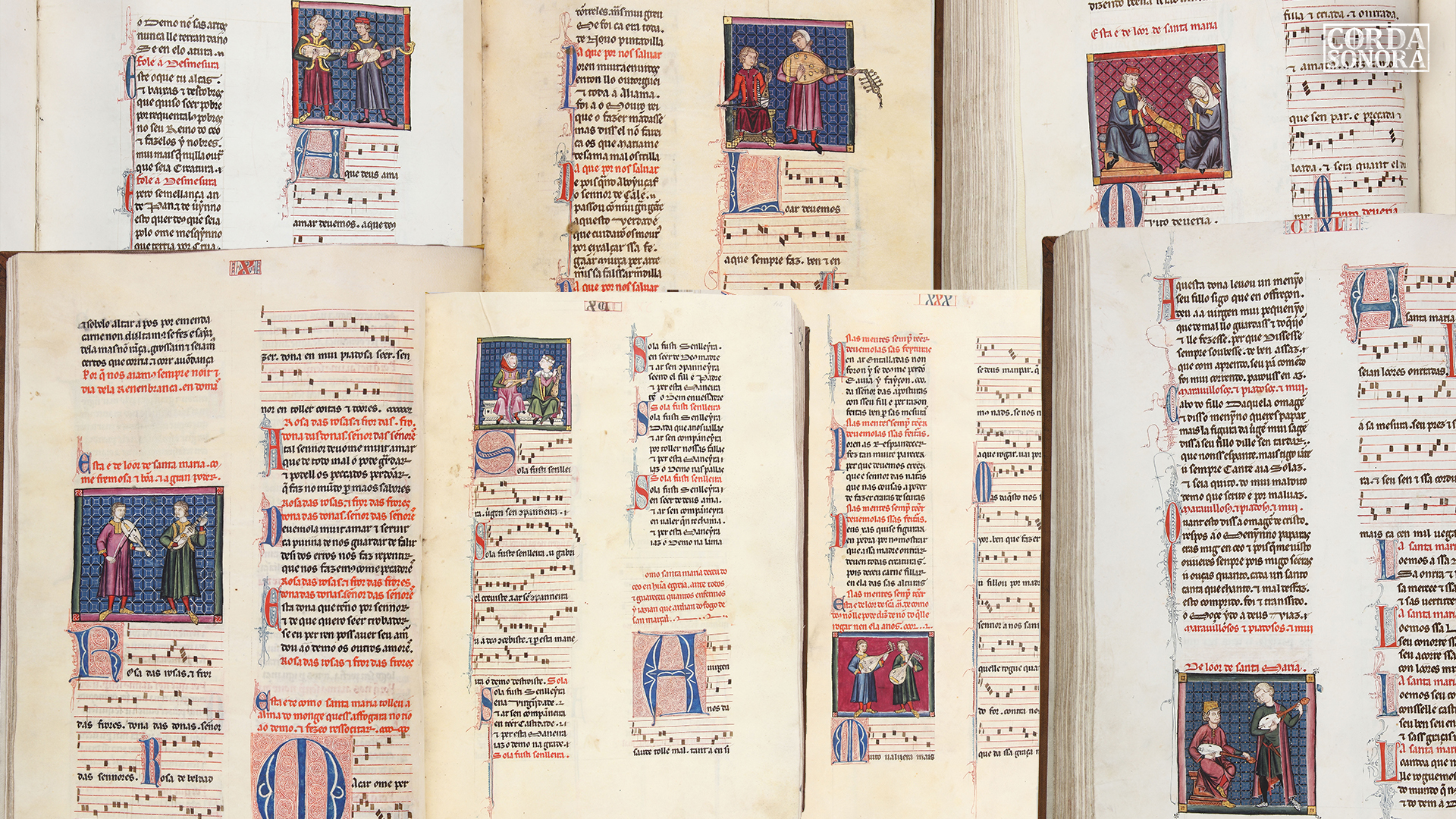
Therefore, Alfonso X, the Wise, and his scholars, jongleurs and segréis, whom the king makes a point of recognising in practically every manuscript of the Cantigas through their depictions in richly detailed illuminations, collected and retold around 400 stories attributed in this book to Santa Maria.
These miracles happened throughout Iberia, some even across Europe, following a poetic form developed both at the same time in the regions of Al-Andalus and Occitania, and collectively in places spread throughout Iberia during the era of Convivencia. They were written in Galician-Portuguese, a language that had kept its poetic tradition intact for hundreds of years before the king, and set to melodies that sometimes sound Gaelic, sometimes Sephardic, and sometimes simply Iberian, to share his devotion to a woman who was called Virgin, or Maiden, who was Mother, who was seen as a woman who helps, a Handmaiden, and Queen: Dona das donas, Sennor das sennores.
Who would not want to know more about that?
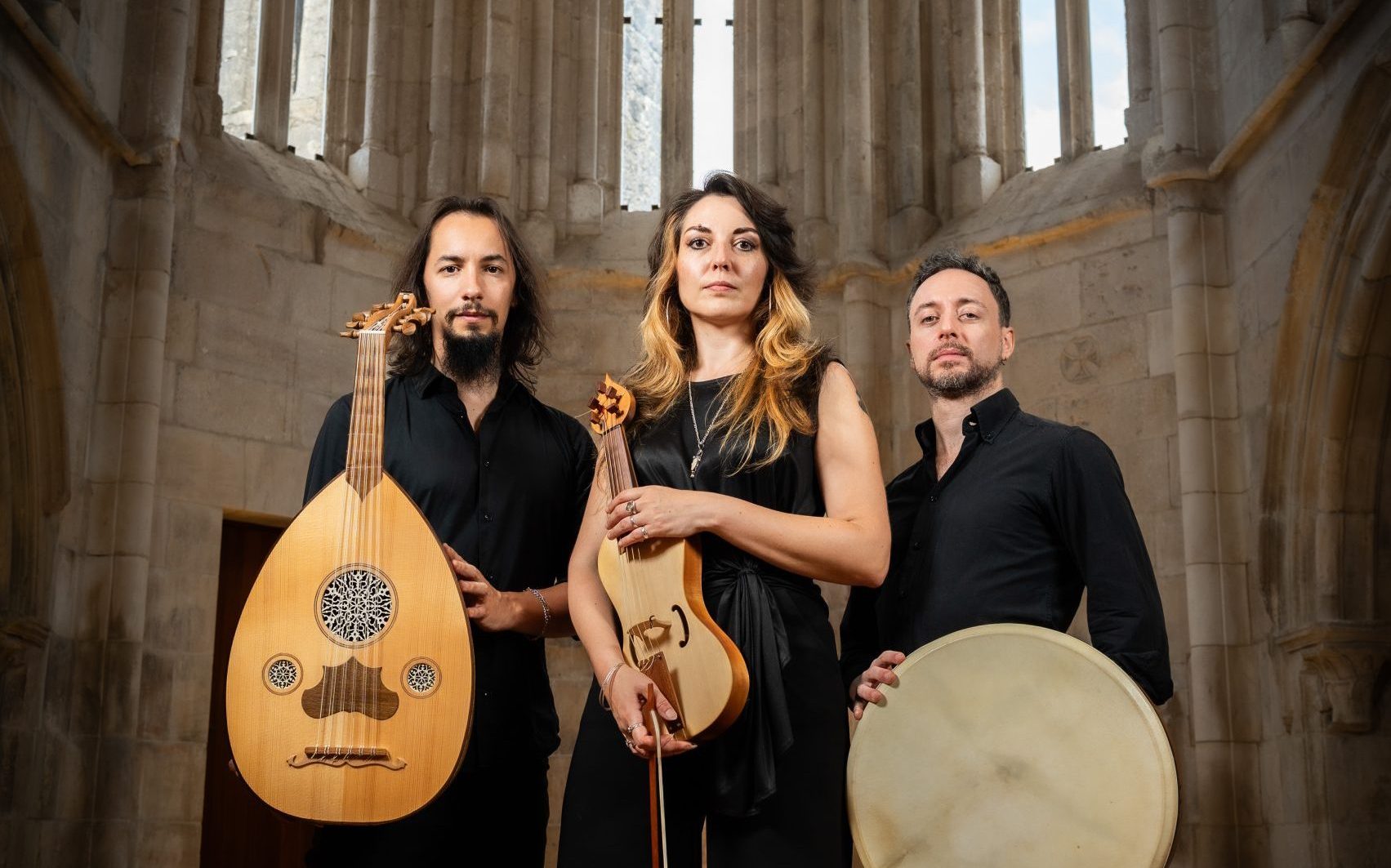
Esin Yardimli Alves Pereira, The Wandering Bard
Period Instruments
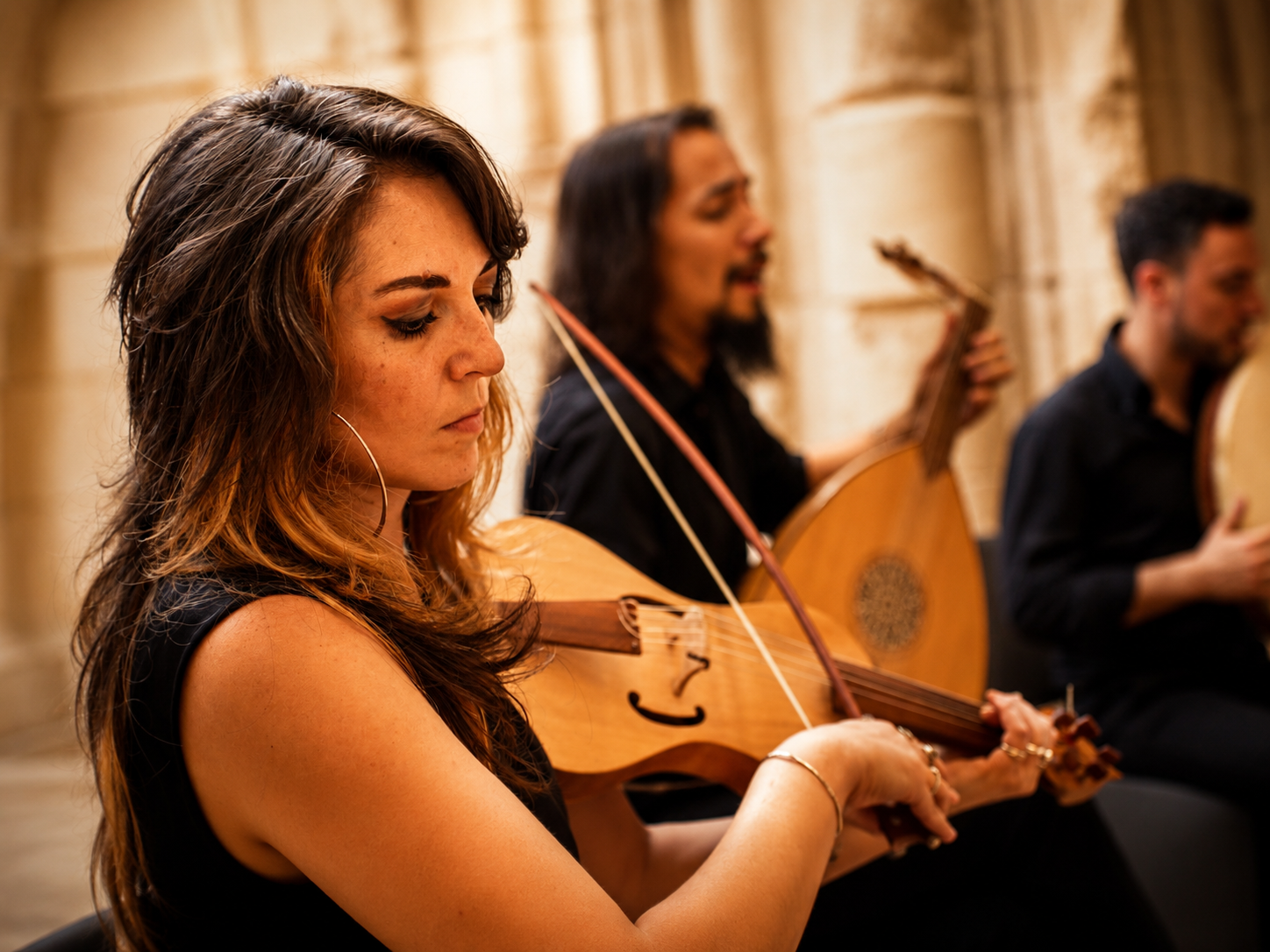
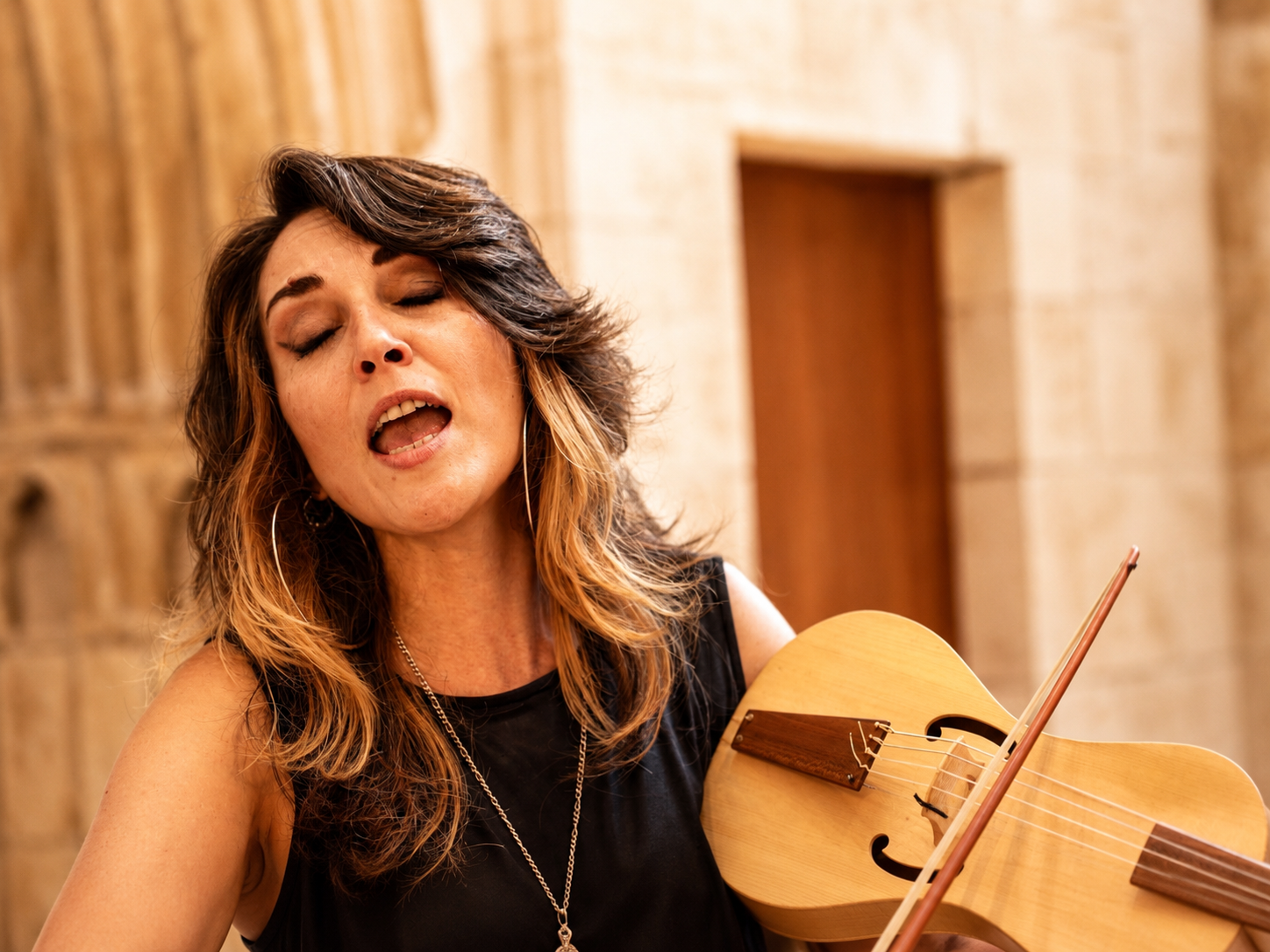
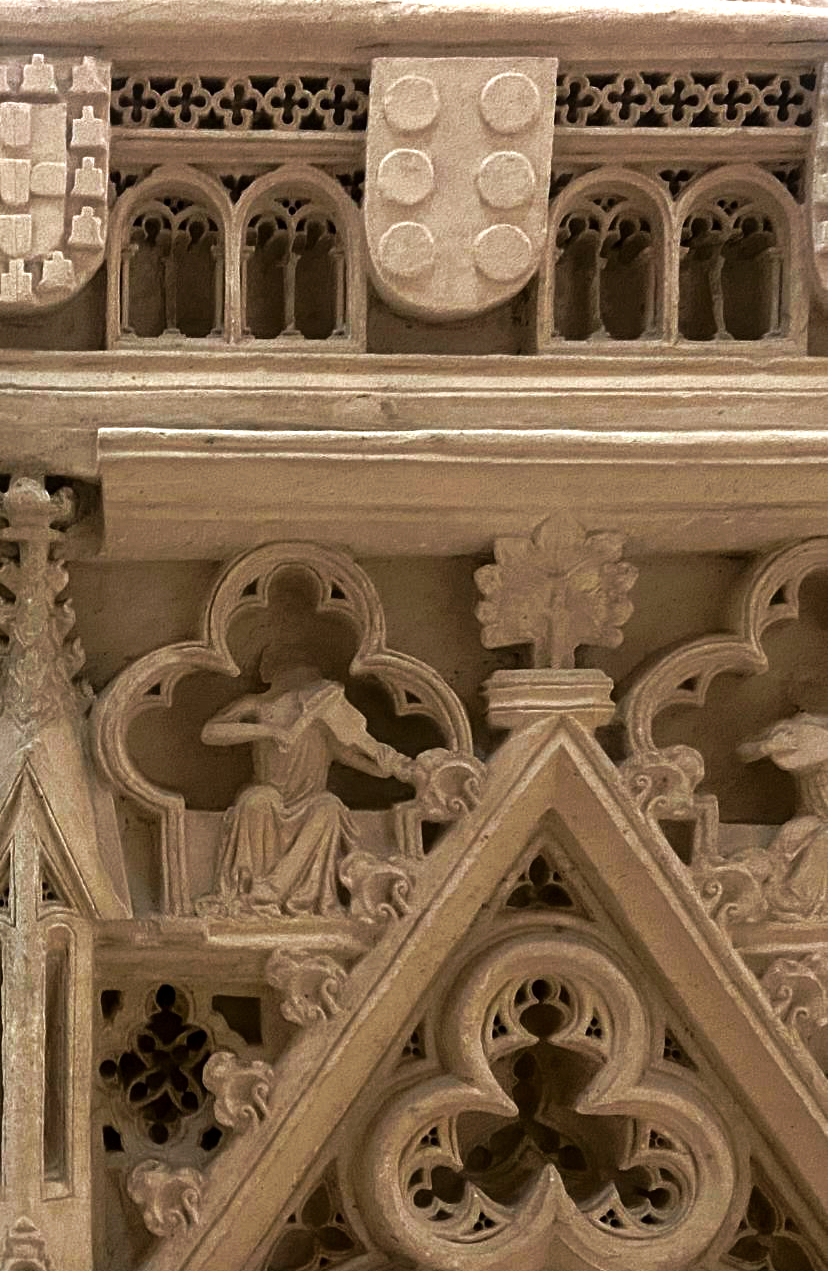
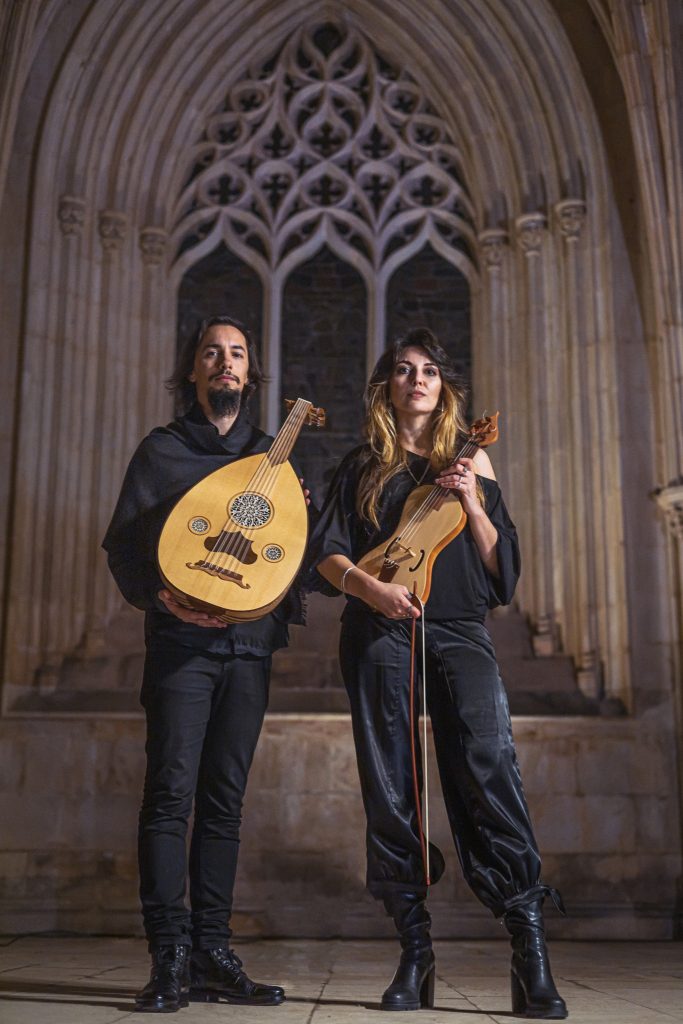
To reflect the spirit of the period, the members of The Wandering Bard play instruments represented in manuscripts and sculptures from the time in which the Cantigas de Santa Maria were written.
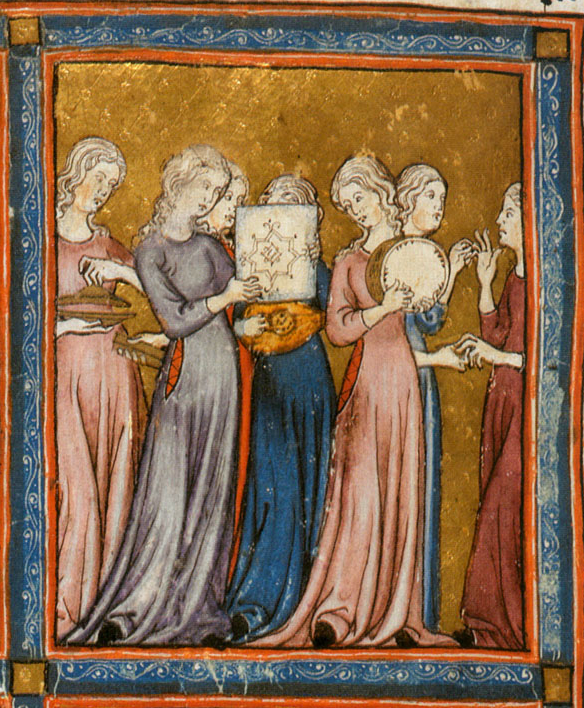
Golden Haggadah, MS 27210, British Library
Tomb of Inês de Castro, Monastery of Alcobaça
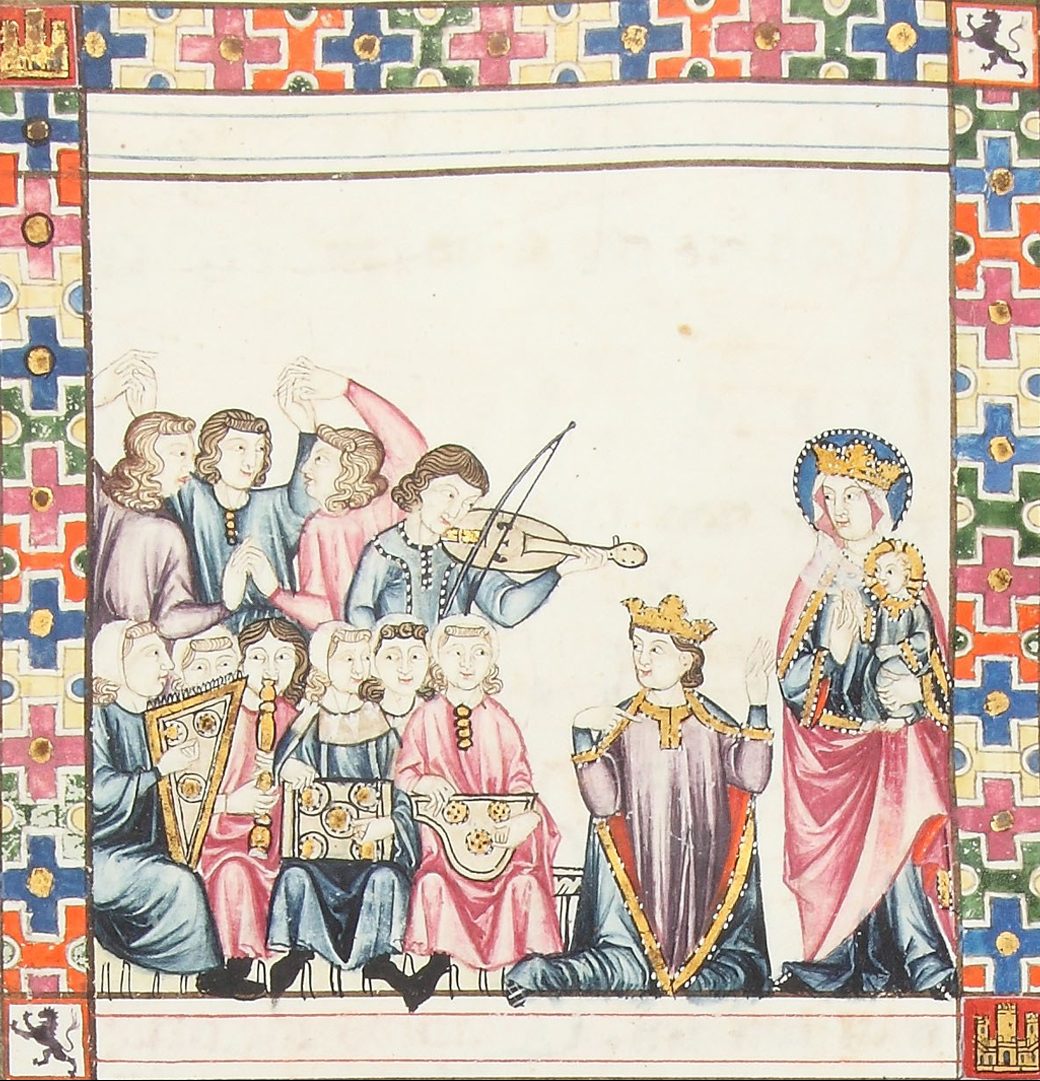
Códice de los músicos, RBME. Patrimonio Nacional
“Likewise, we command that all the books of the songs in praise of Saint Mary be kept in that church where our body is to be buried, and that they be sung on the feast days of Saint Mary.”
— excerpt from the will of Alfonso X, the Wise (1221–1284)
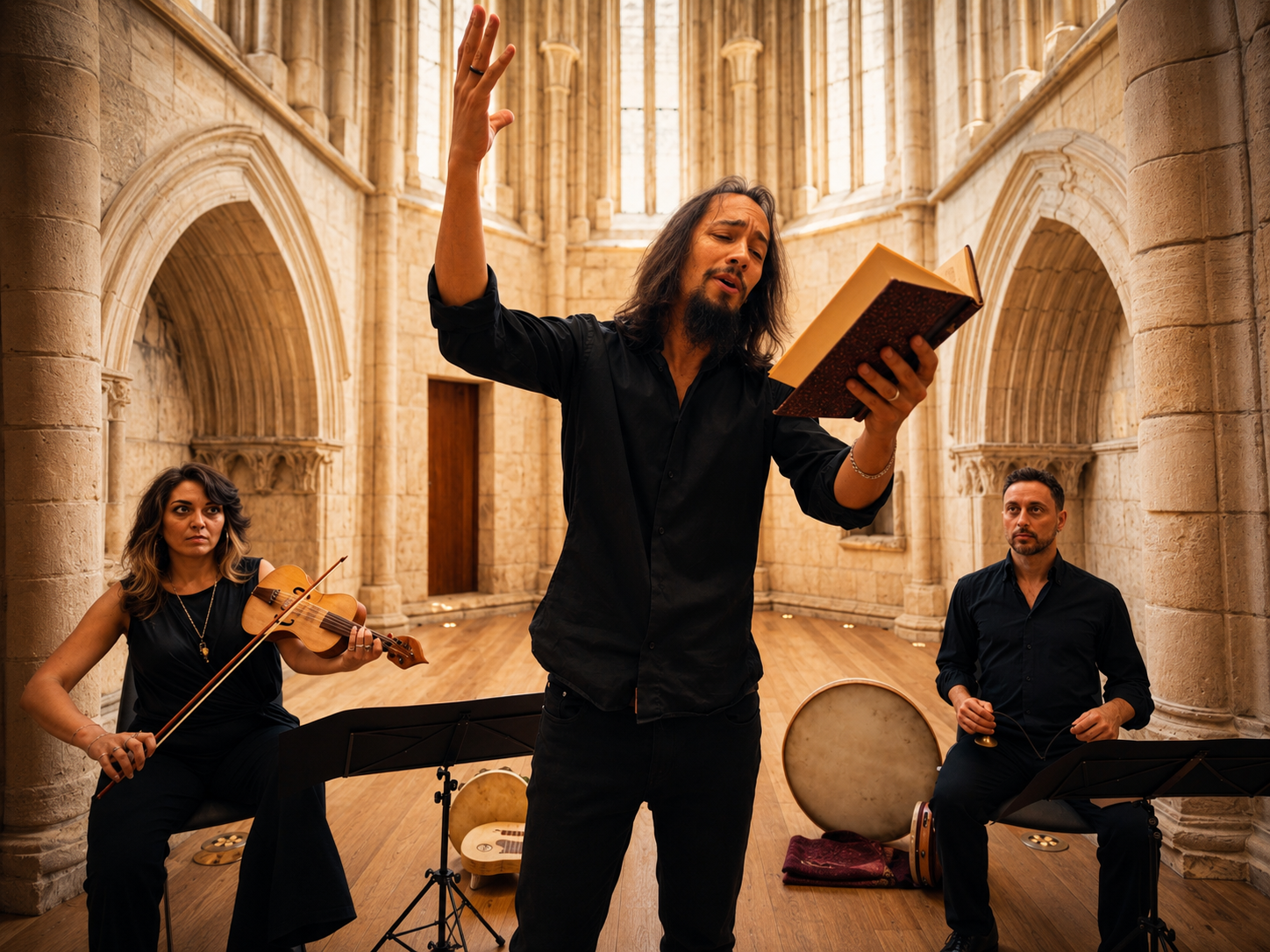
Excerpt from the concert “The King’s Book”, performed at the Church of Santiago, Monsaraz, 19 October 2025
Esin Yardımlı Alves Pereira — artistic direction, vielle, vocals, medieval harp
Ricardo Alves Pereira — artistic direction, lute, vocals, percussion, and commentary
Ruben Leonardi — percussion, vocals
Cantigas de Santa Maria, Códice de los músicos, Códice rico, RBME. Patrimonio Nacional
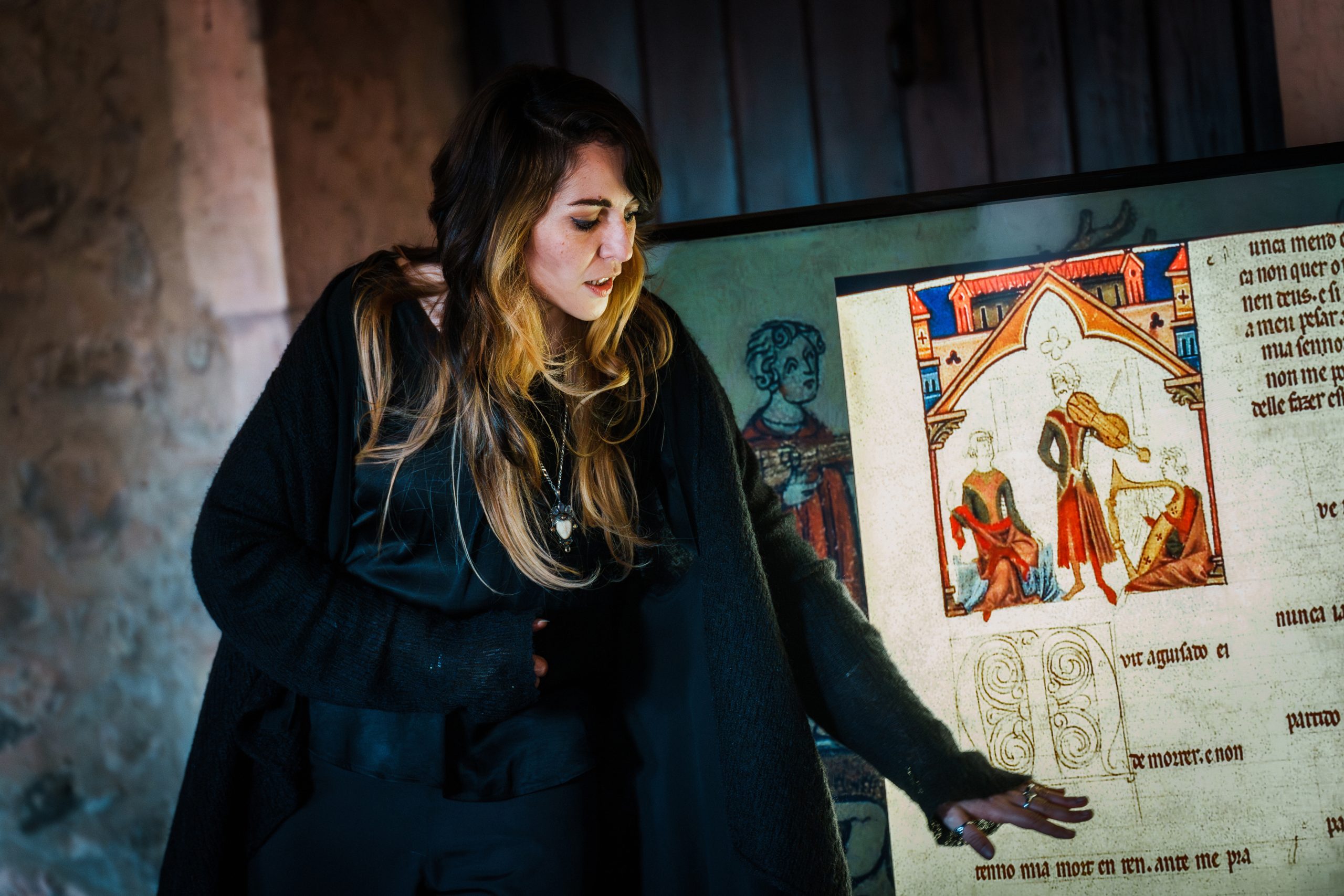
During the concert, brief contextual commentary between the works guides the audience through the poetry, manuscripts and interpretative choices, welcoming both specialists and curious new listeners into the world of medieval Iberian song.
Visual materials and texts translated into modern languages, provided by The Wandering Bard through projections or printed concert programmes, make the performance accessible to international audiences.
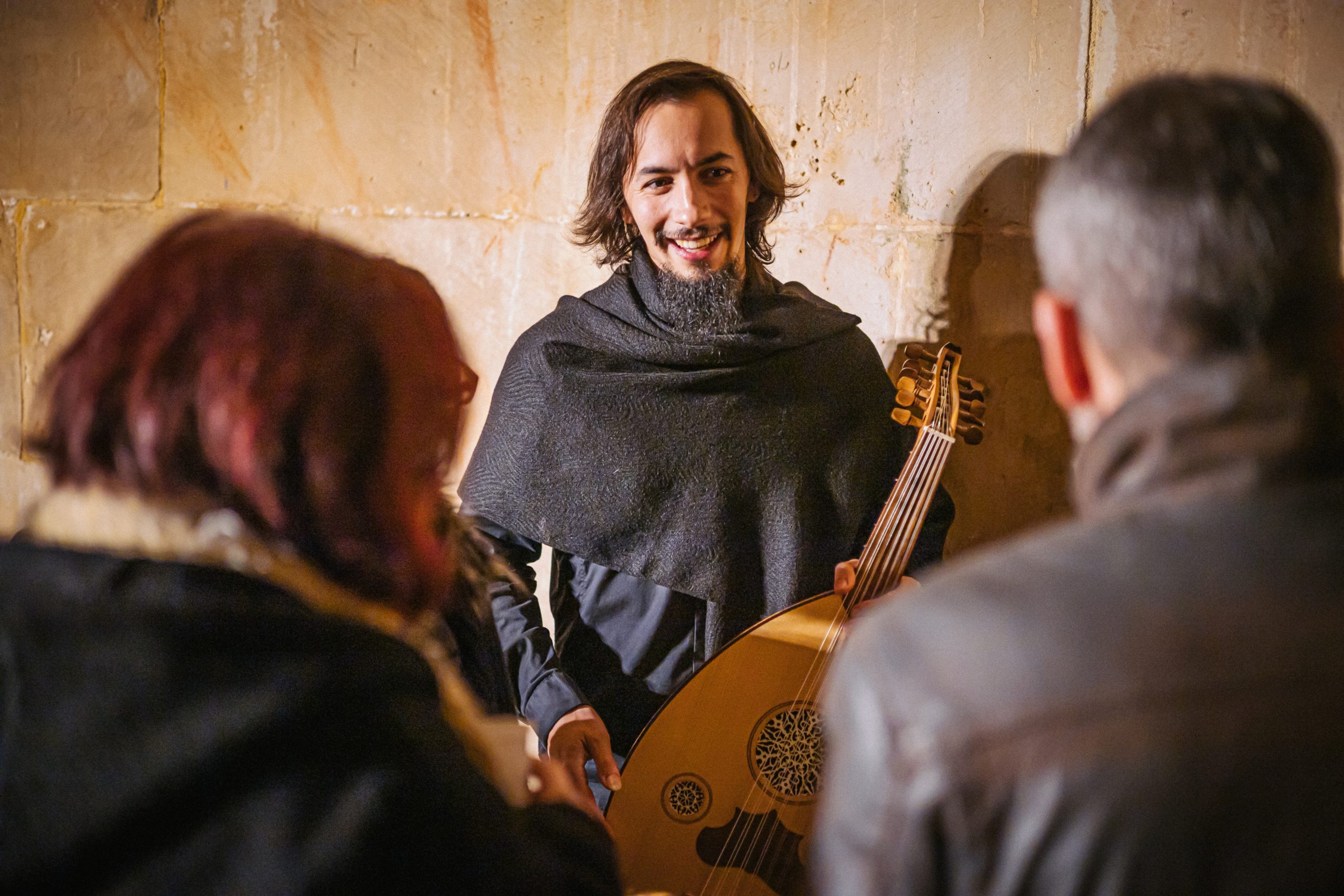
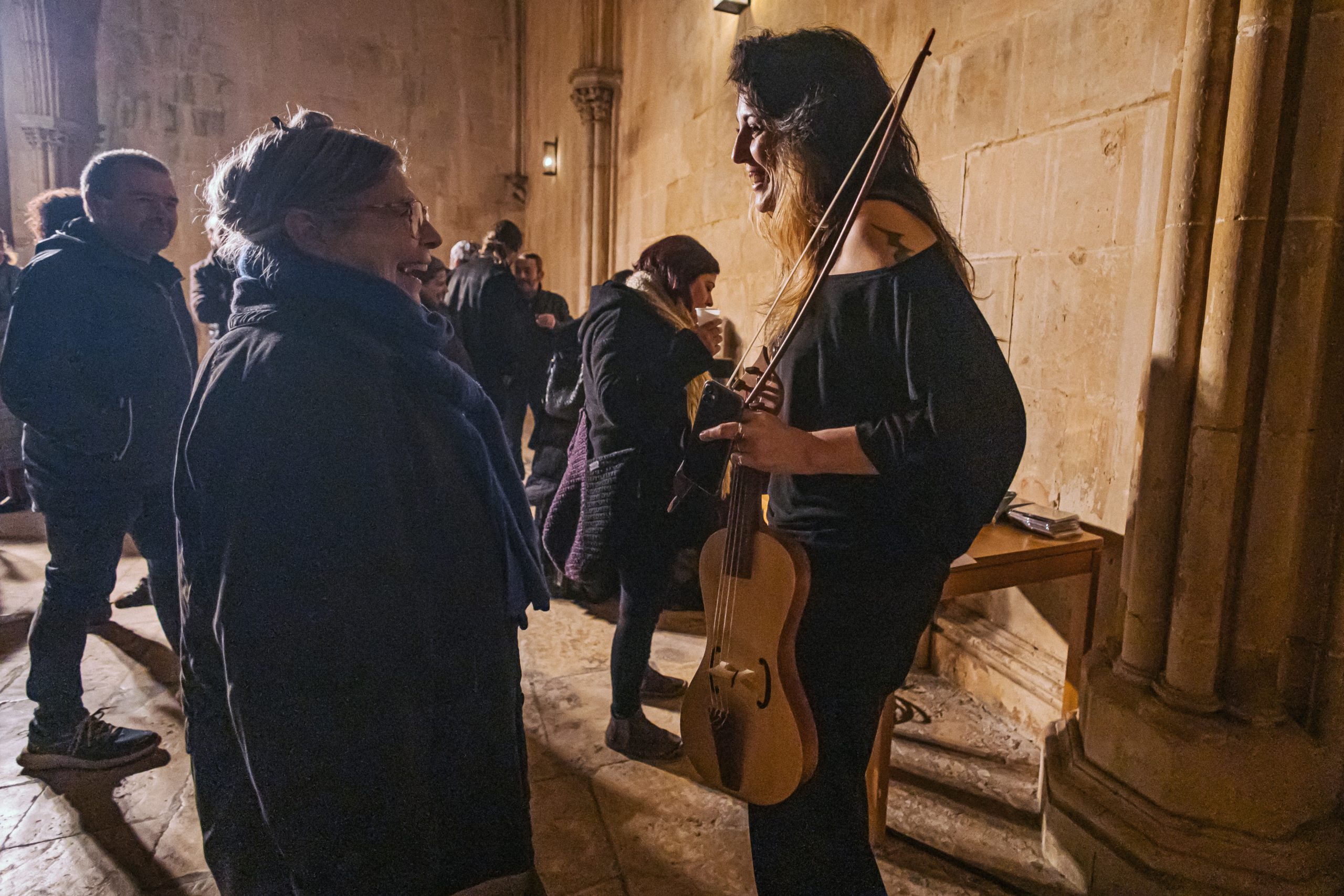
Meet & Greet: An informal gathering with the artists takes place after the concert, allowing audience members to speak with the musicians, ask questions and deepen the connection created during the performance.
To strengthen the audience’s connection with the performance, two pre-concert presentations may be offered: the first explores the historical, geographical and cultural context of the repertoire and the people who created it; the second introduces the medieval instruments used during the concert and help audience explore their sound, function and historical context.
For The Wandering Bard, bringing audiences closer to the instruments, manuscripts and people behind this music is also a way of sharing their enthusiasm for this world. Learning thus becomes a connection between past and present, and a joy shared together.
Founded and directed by Esin Yardimli Alves Pereira and Ricardo Alves Pereira, who are also responsible for the Portuguese medieval-music festivals CMML and DMMB, The Wandering Bard is an ensemble dedicated to historically informed performance grounded in manuscript sources.
Recognised for their precise, engaging and semi-staged performances, the ensemble combines distinctive arrangements born from historical research with strong musical creativity. Contextual narration and spoken commentary make rarely heard medieval music relevant to contemporary audiences.
While their albums reach thousands of listeners around the world, the ensemble regularly invites renowned specialists and artists such as Eduardo Paniagua and Fernando Ribeiro of MOONSPELL to join its stage formations.
Through the musical research and reconstruction undertaken by Esin and Ricardo, The Wandering Bard has presented audiences with more than one hundred Cantigas de Santa Maria by Alfonso X, the Wise; works from the Llibre Vermell de Montserrat; the complete Cantigas de Amigo of Martin Codax from the Vindel Parchment; and secular cantigas by dozens of troubadours and minstrels from the Iberian Peninsula.
On 7 January 2025, marking seven hundred years since the death of D. Dinis, the Troubadour-King, the ensemble premiered Esin and Ricardo’s musical research into the seven Cantigas de Amor attributed to the Poet-King and recovered from the Sharrer Parchment.
The Book of the King – O Livro do Rei is available for booking.
The Wandering Bard ensemble has an adjustable line-up of two to eight musicians, while preserving the full artistic integrity of the programme.
The Book of the King – O Livro do Rei is a scalable project that can be adapted in accordance with the host organisation.
Marta Almeida: booking@cordasonora.com
+351 965642540