The
Wandering
Bard

Medieval Music, Alıve

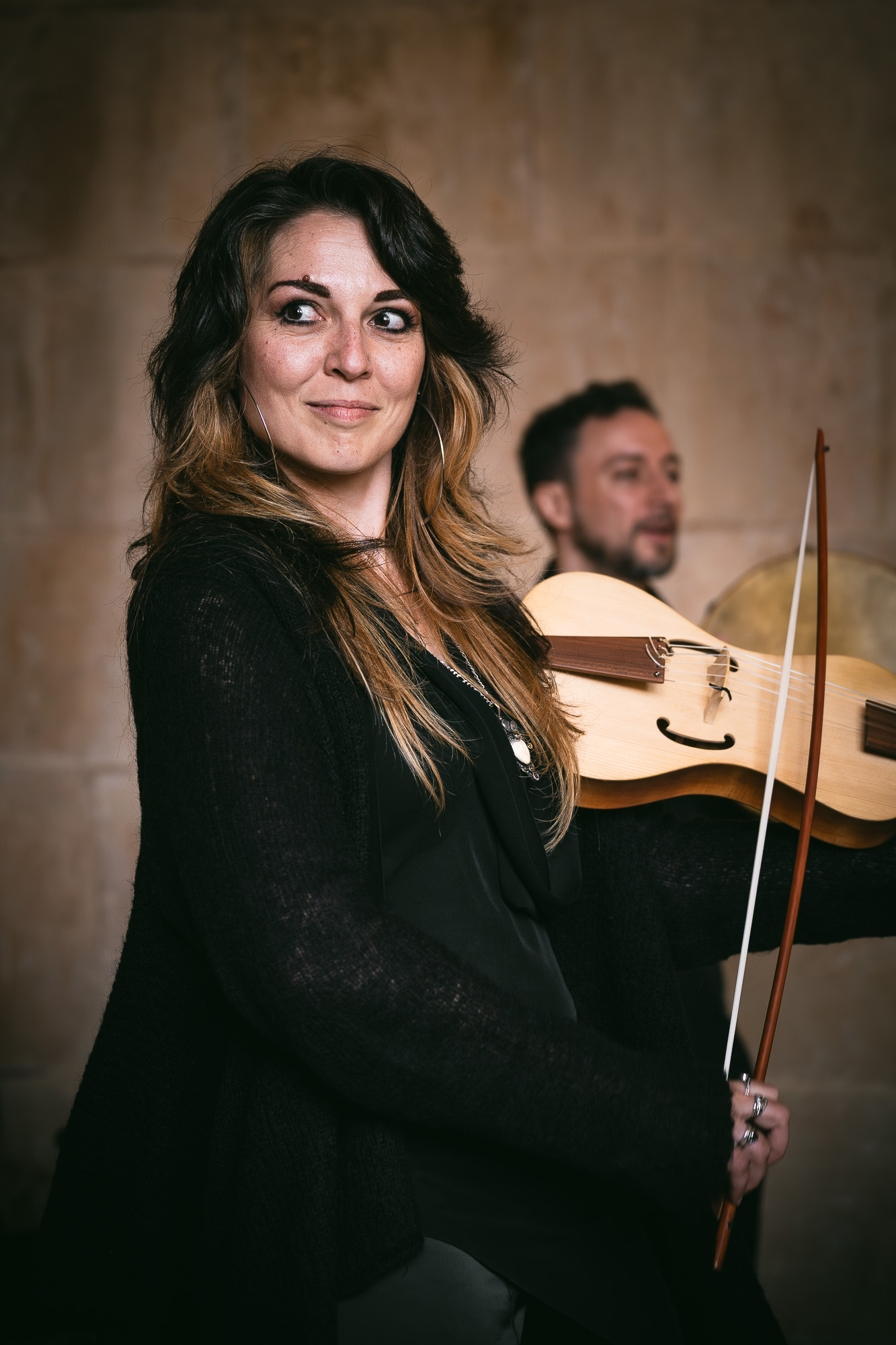
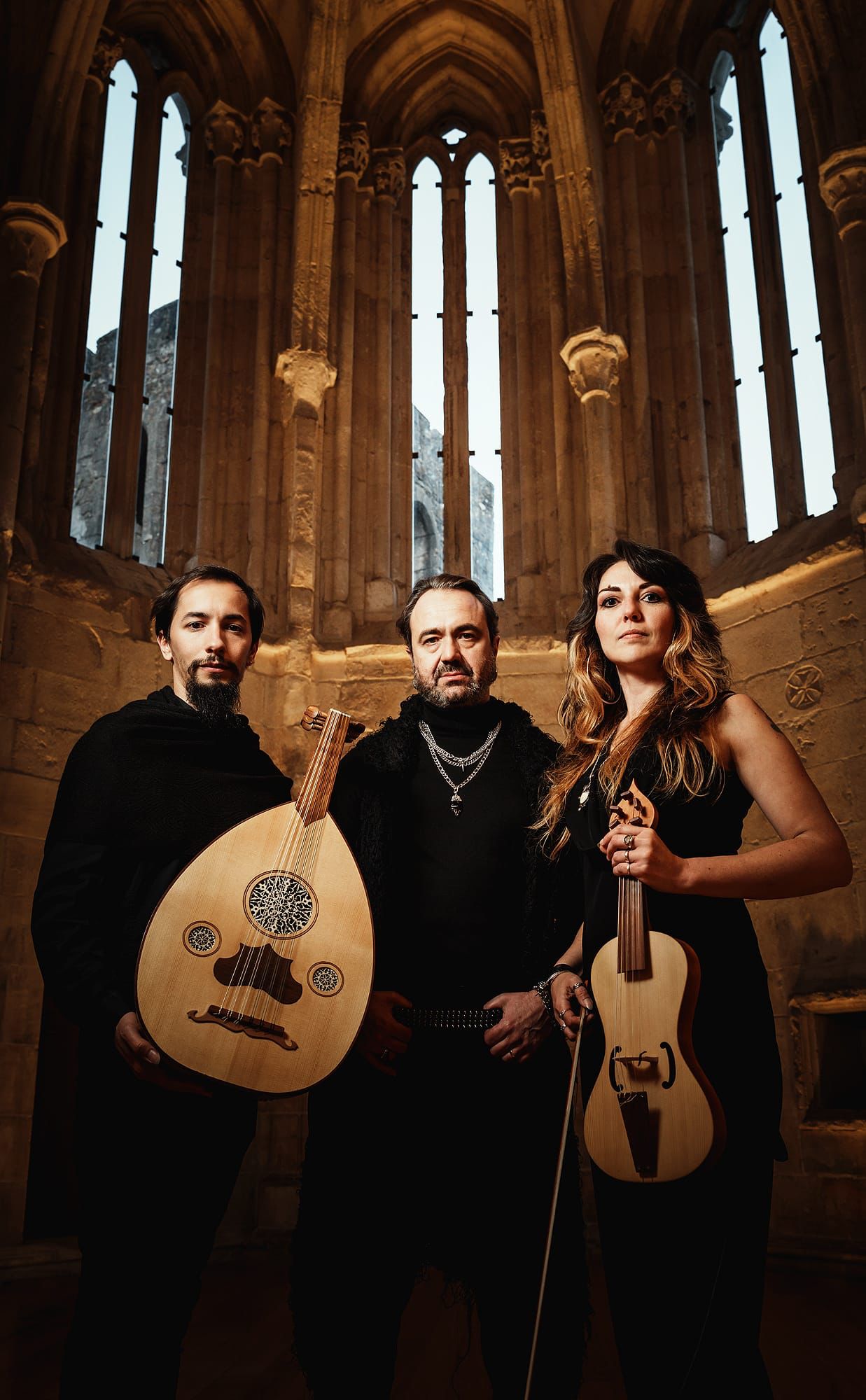
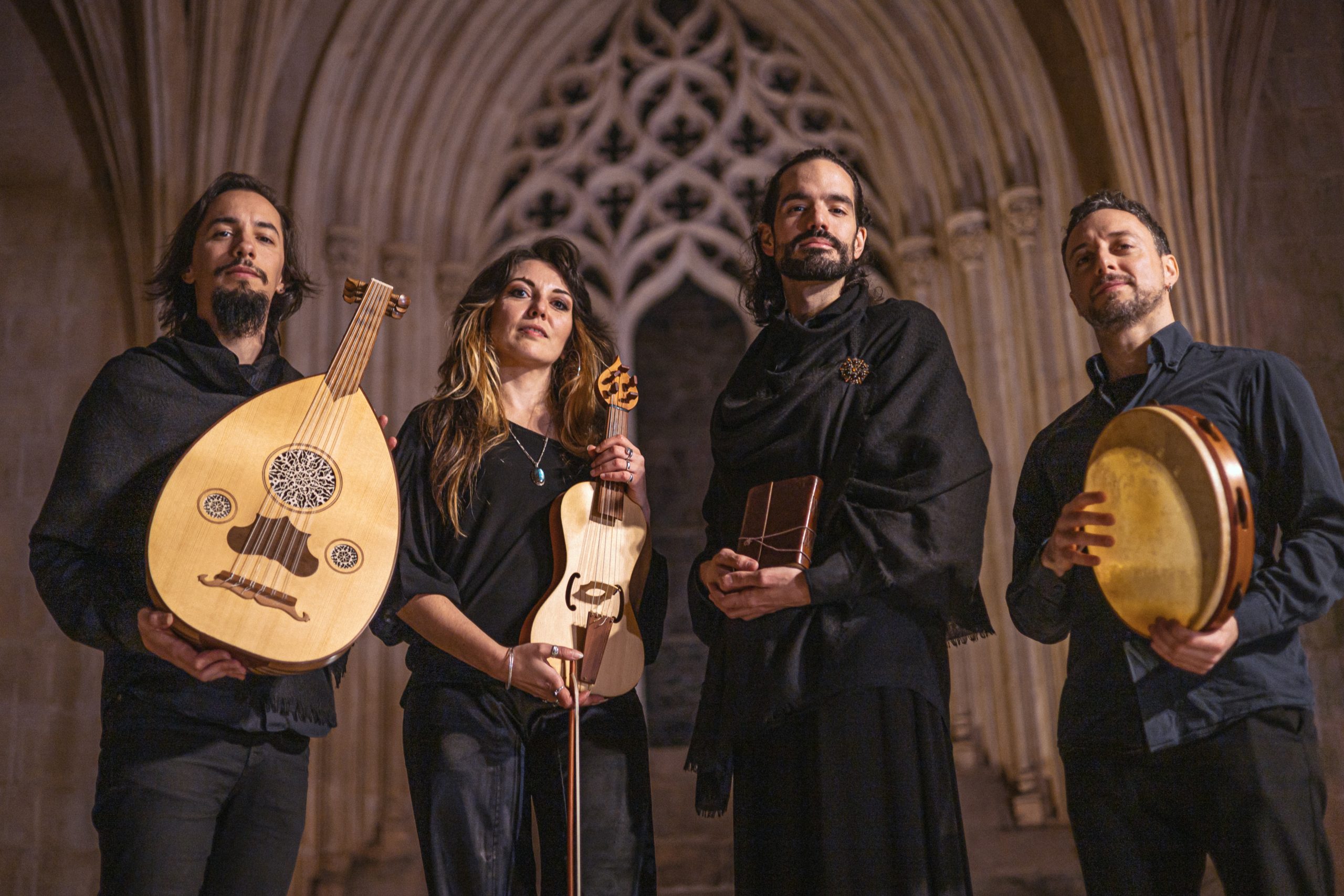
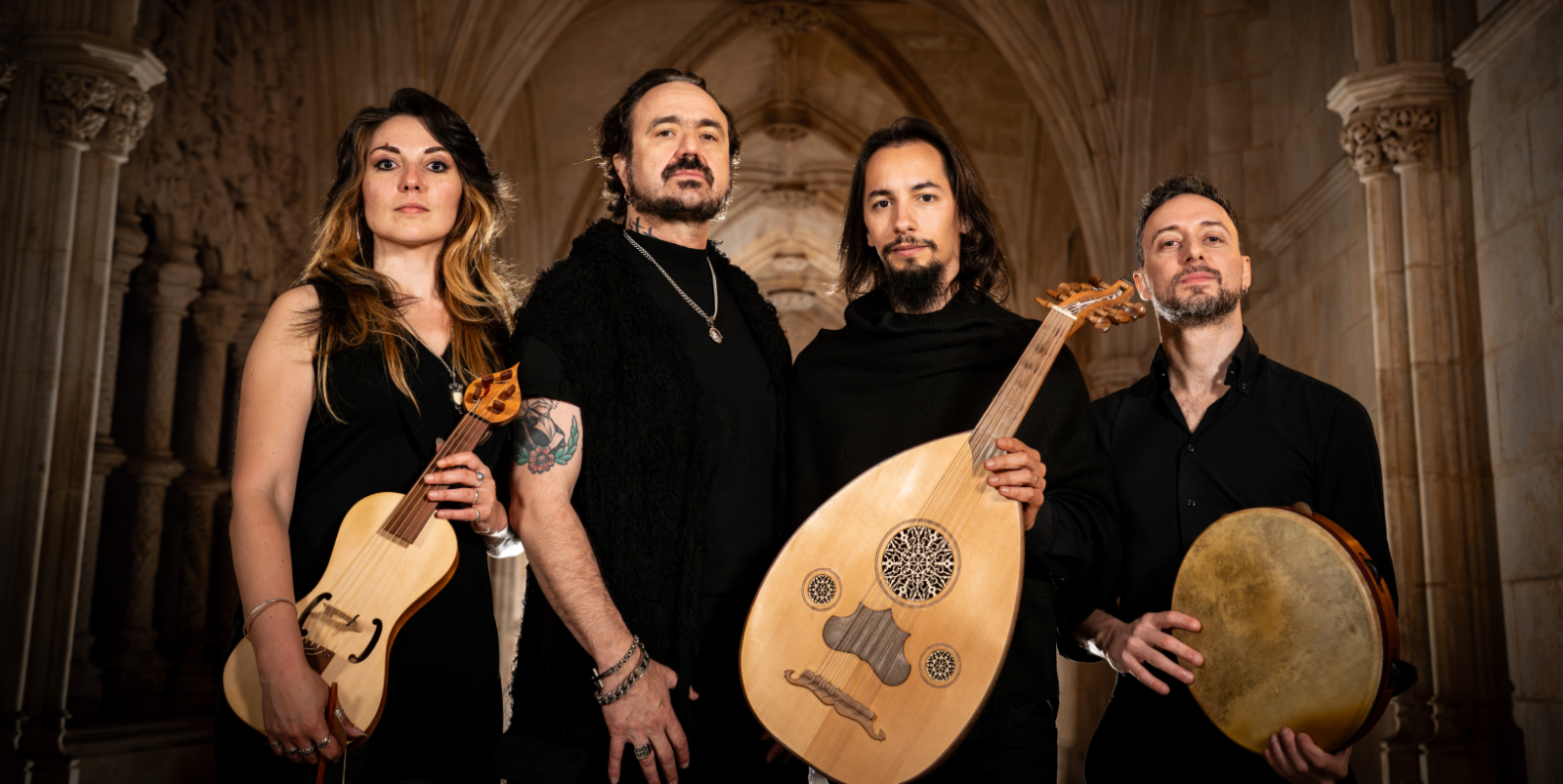
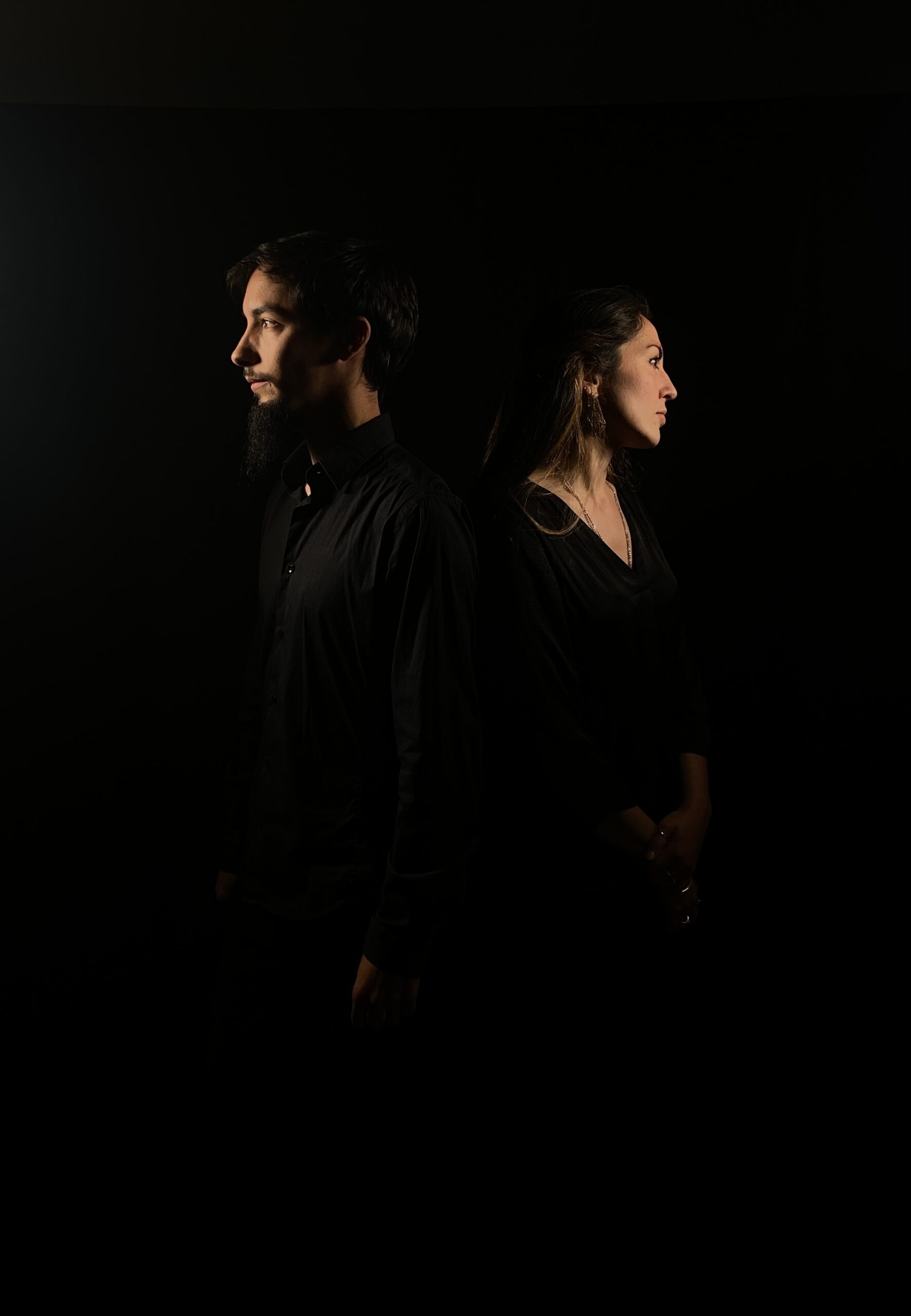
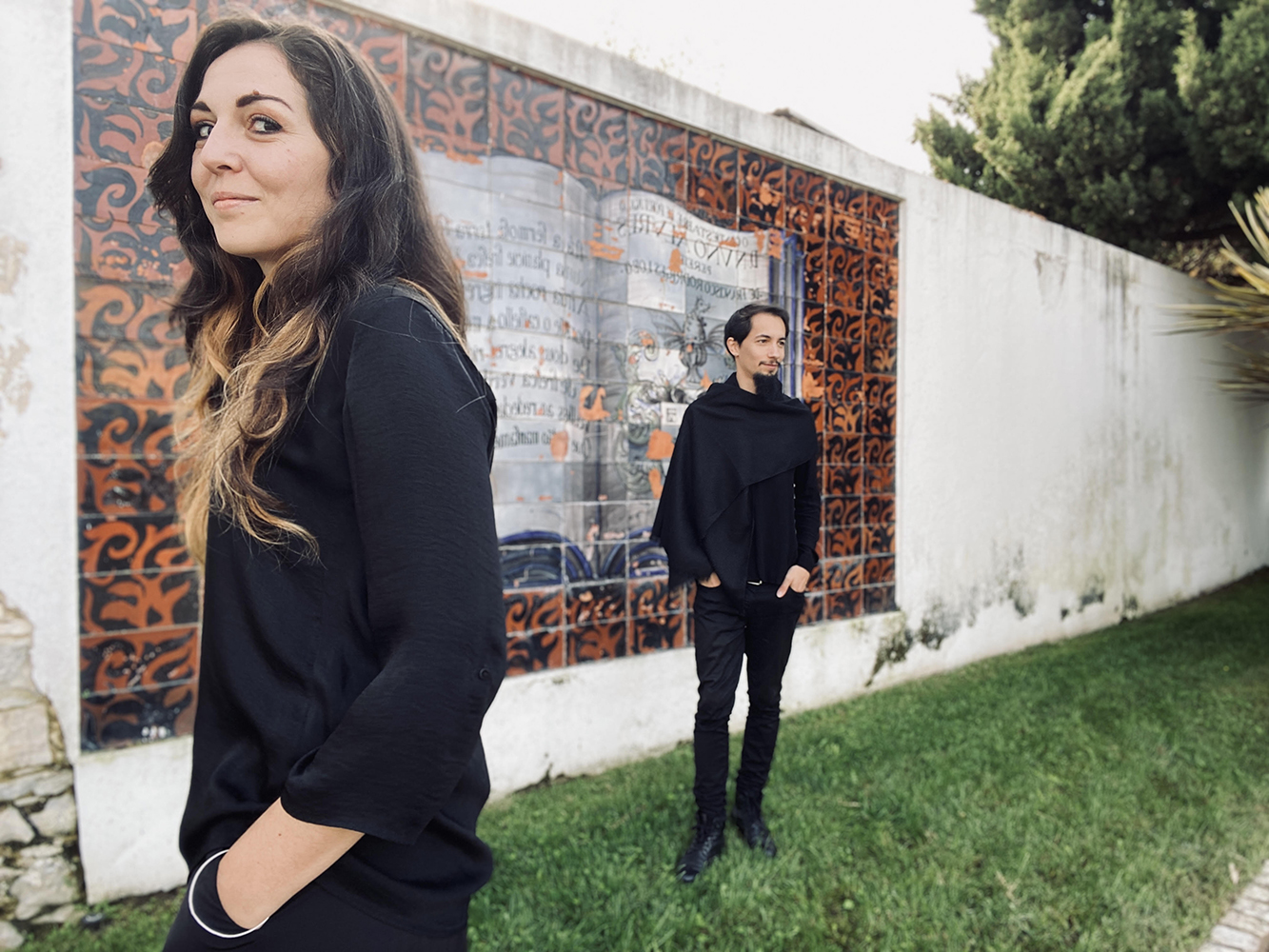
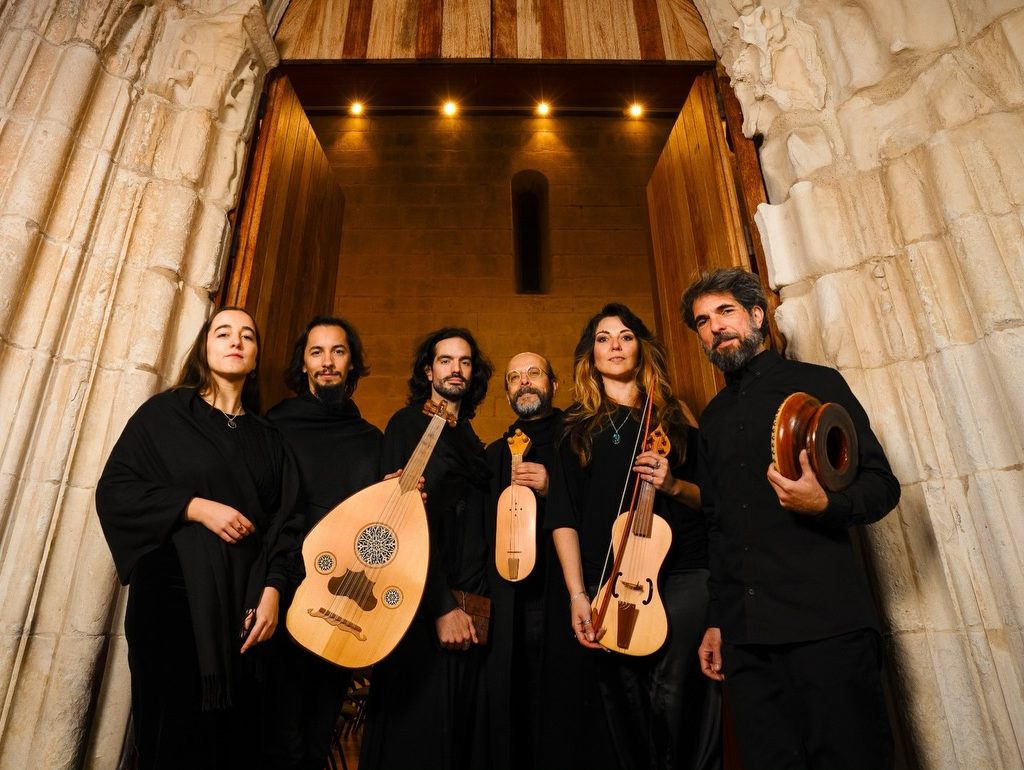
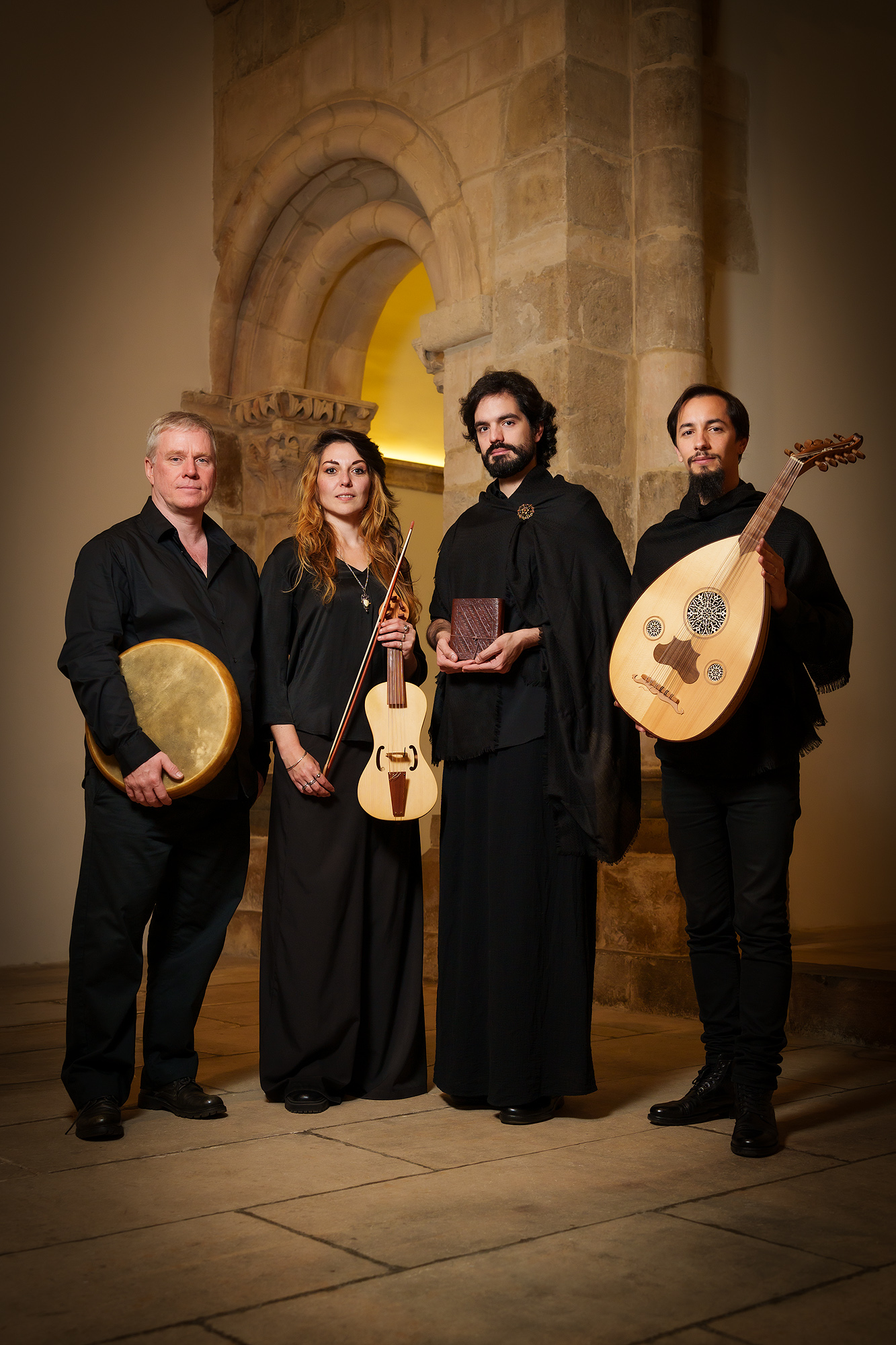
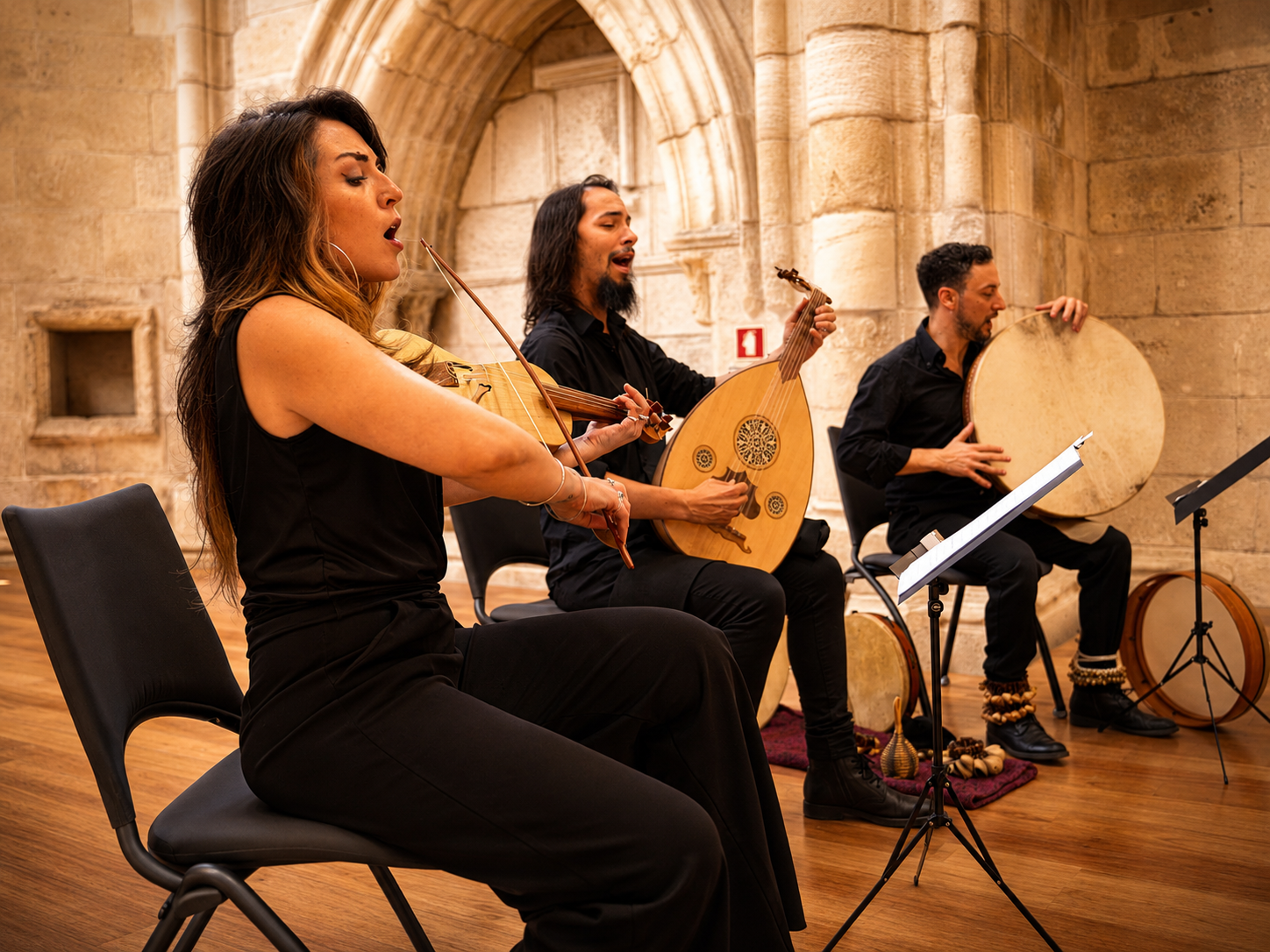
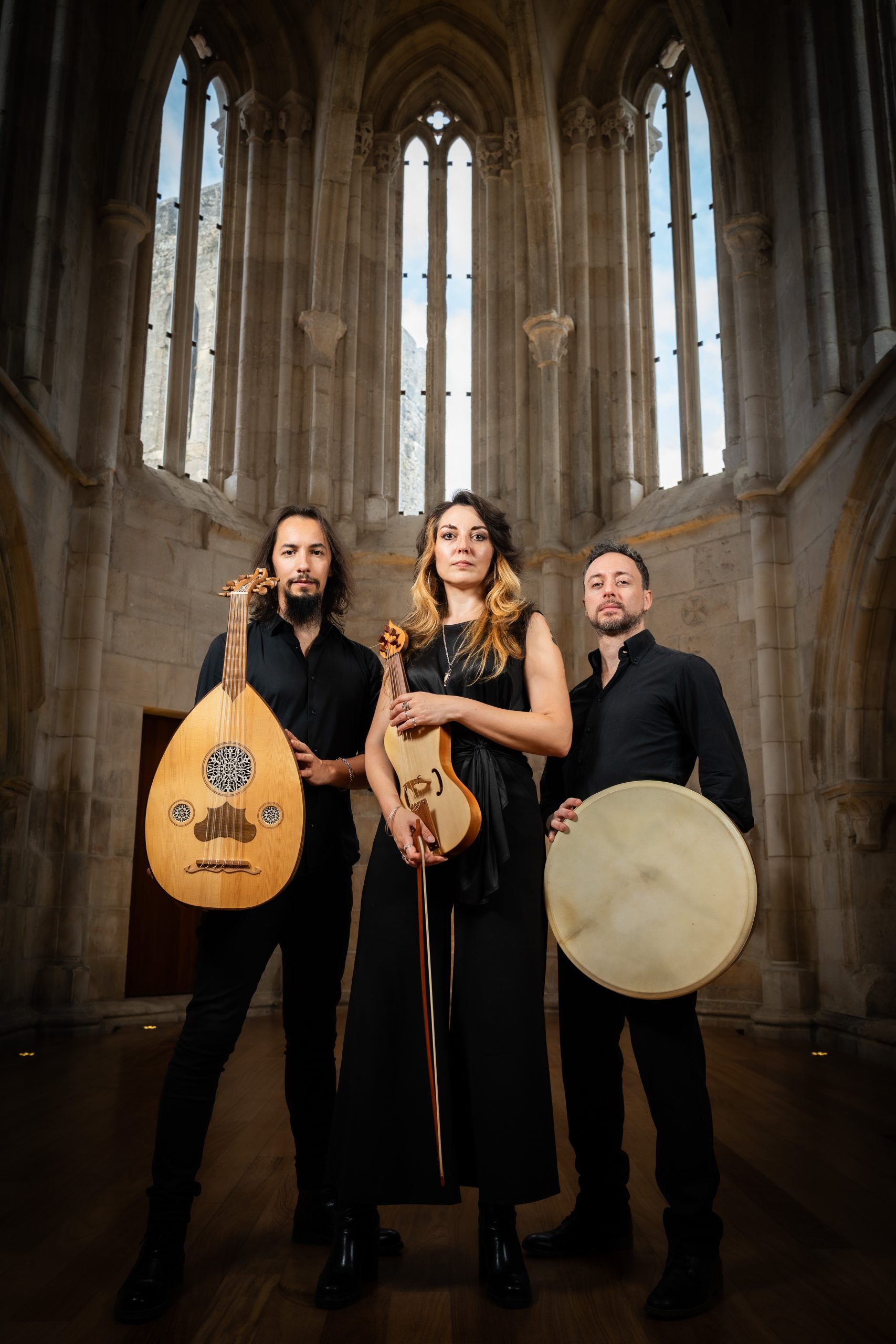
Directed by Esin Yardimli Alves Pereira and Ricardo Alves Pereira, also behind the Portuguese medieval music festivals CMML and DMMB, The Wandering Bard is an early music ensemble dedicated to historically informed performance grounded in manuscript sources.

While their seven albums reach thousands worldwide, passing more than 3 million streams, the ensemble frequently invites specialists and distinguished artists such as Eduardo Paniagua, Fernando Ribeiro (MOONSPELL) and a selection of upcoming artists for varied formations on stage.

Deeply rooted in the world of early music, The Wandering Bard skillfully creates a bridge to audiences who may be unfamiliar with the genre by infusing either historical or mythical narrative dimensions into their programmes.

Known for precise, compelling, semi-staged performances, the ensemble combines their distinctive arrangements drawn from historical research and bold musical creativity with contextual storytelling and commentary that make rare medieval music relevant for today’s audiences.

Discography

Performance types

CONCERTS AND INTERACTIVE & EDUCATIonal ACTIVITIES

DISTINCTIVE CONCERT REPERTOIRES
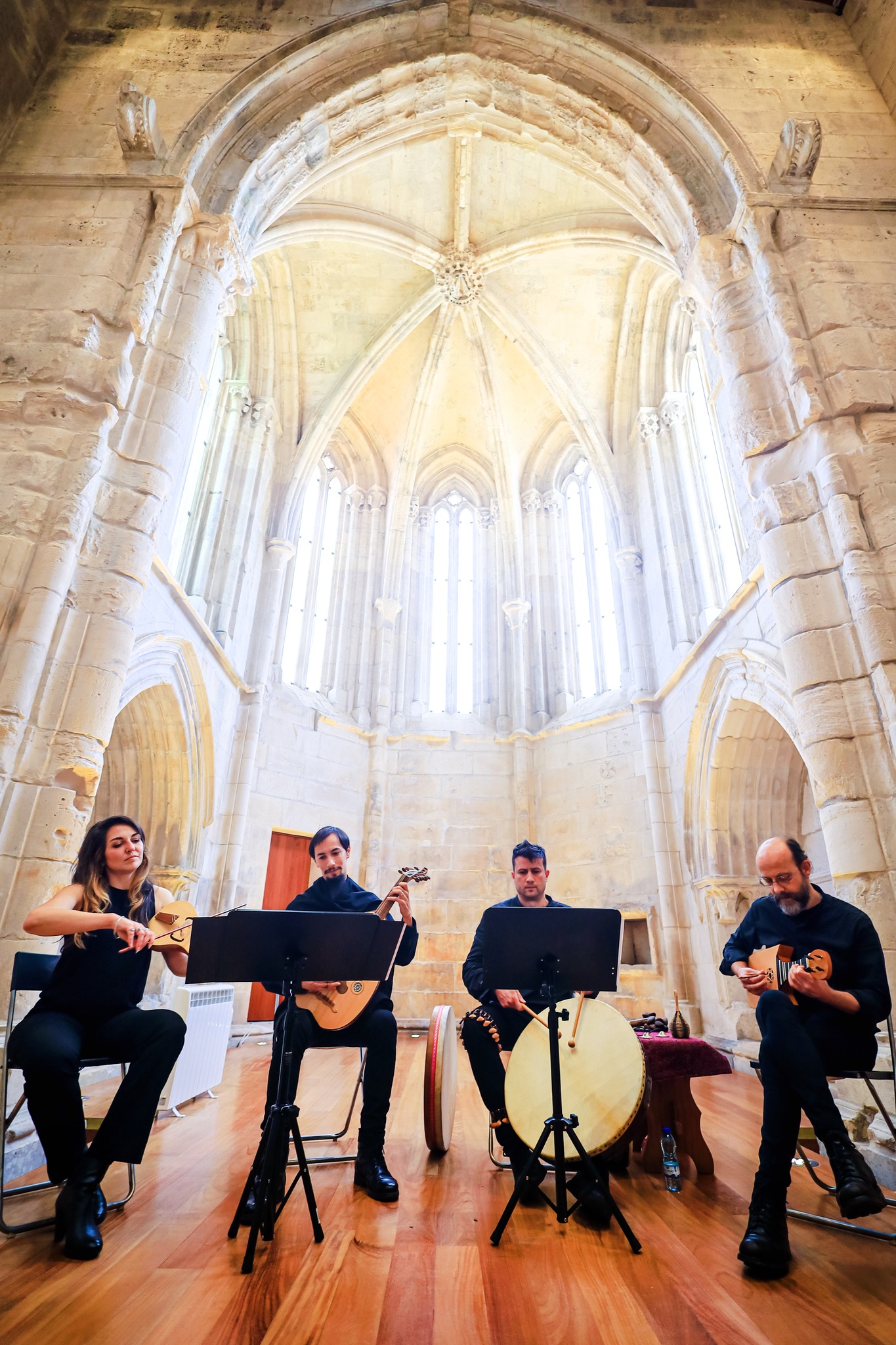
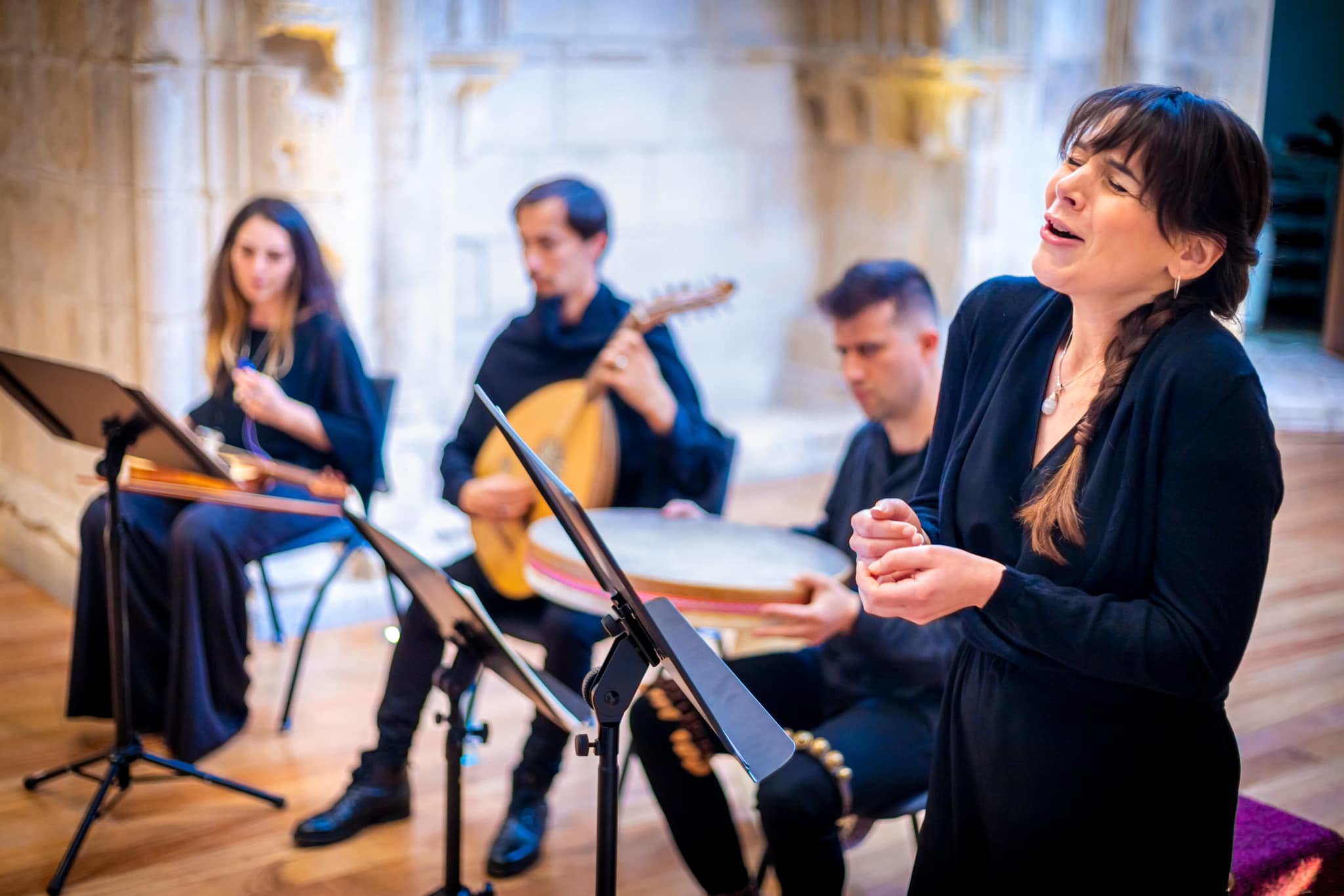
Semi-staged concerts with commentary; 2 to 8 musicians on stage, each production with its own source manuscripts, narrative, line-up and target audience.

MUSICAL POETRY RECITALS
Available with translations into modern Portuguese, Spanish and English.

PRESENTATIONS AND PARTICIPATIVE WORKSHOPS
Connecting both the specialized audience and the curious amateur to the culture of medieval Iberia through manuscript sources.

INTERACTIVE INSTRUMENT EXHIBITIONS
Demonstrations by The Wandering Bard members where participants can touch and play a selection of instruments made and presented by Orlando Trindade, based on medieval architecture and manuscripts.

COMMUNITY CHOIR TRAINING
Integration of repertoire to existing choirs as much as creating choirs with participants of zero background, teaching medieval pronunciations, neumatic notation and singing techniques with or without score.

LATEST RELEASE

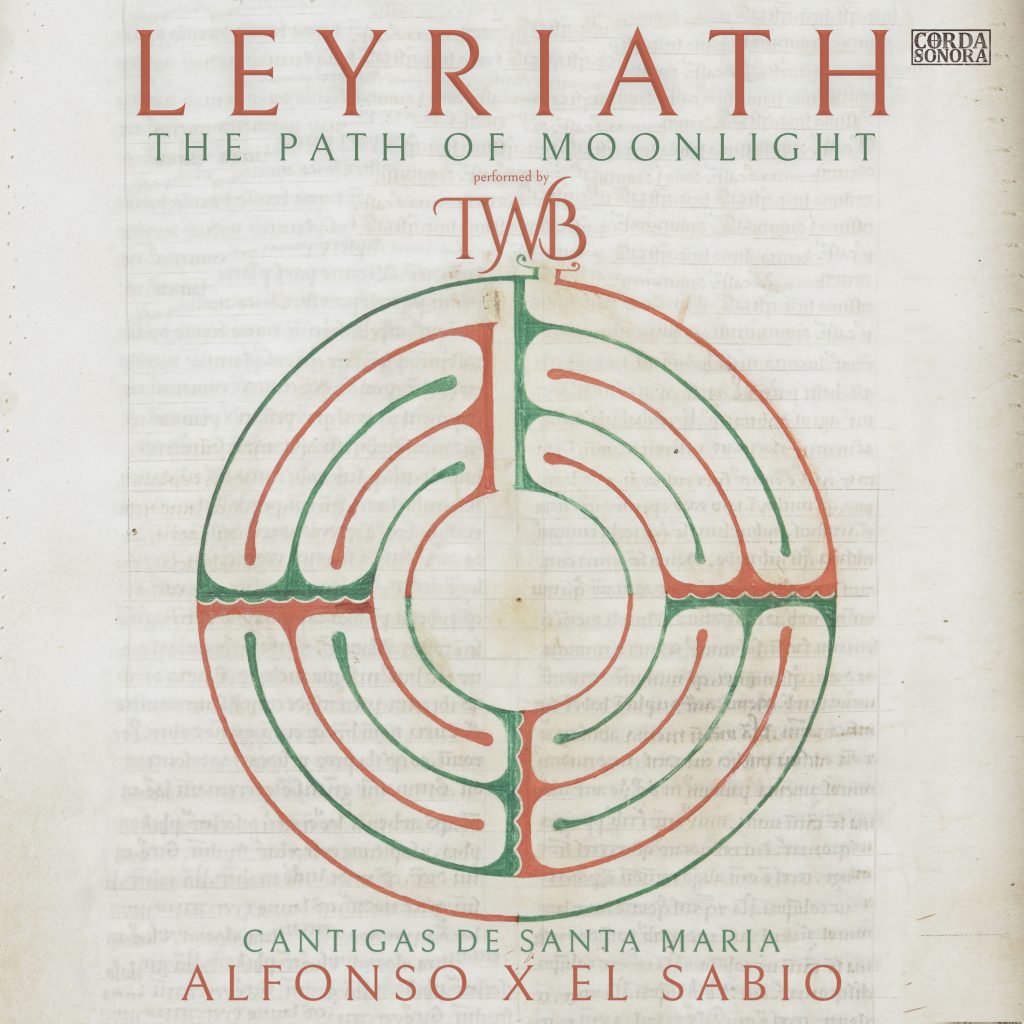
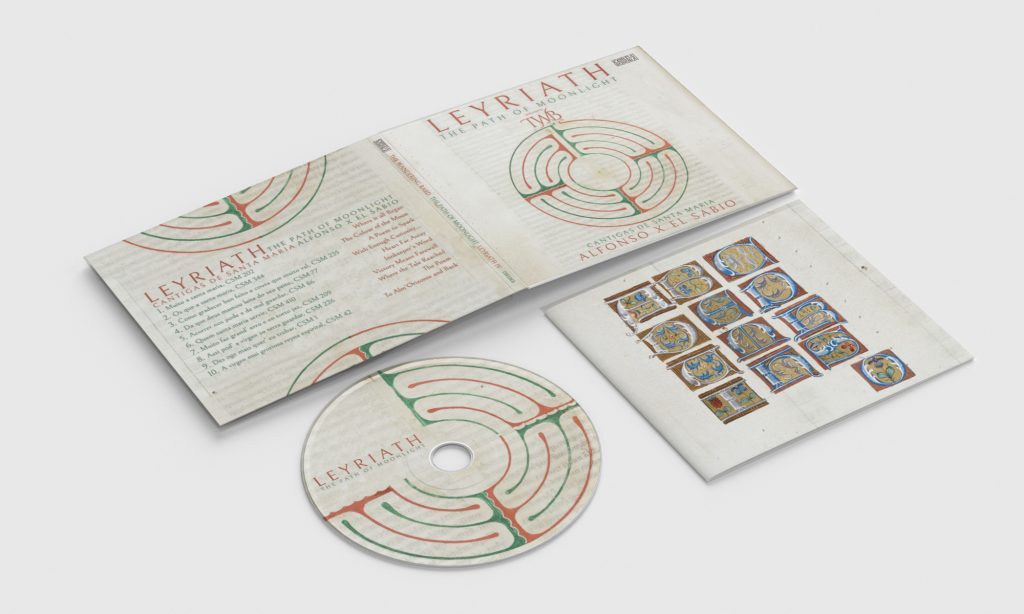
Leyriath, The Path of Moonlight

Cantigas de Santa Maria (Alfonso X)

by The Wandering Bard

A MEDIEVAL DREAM IN A SILVER NIGHT

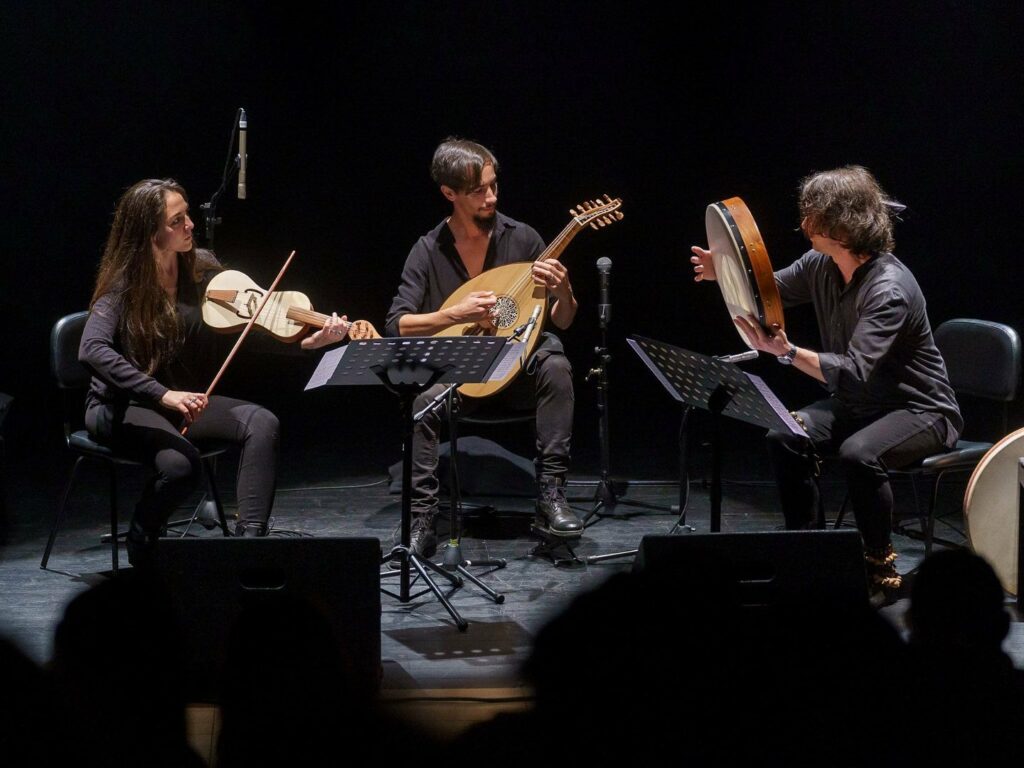
A 50-minute instrumental journey through ten Cantigas de Santa Maria drawn from the Códice de los Músicos and Códice Rico. Performed on vielle, oud, and traditional percussion, the ensemble breathes life into medieval manuscripts with arrangements that balance historical authenticity and emotional depth. Each cantiga forms part of a greater musical arc inspired by The Path of Moonlight, a beloved Leyriath story, culminating in a spoken-word finale. Uniting manuscript research, gymel technique, and immersive storytelling, The Wandering Bard offers a timeless, expressive interpretation of medieval music for modern audiences.

Read the story related to the album here

Artistic style

Sources, instruments and performance practice

PERIOD INSTRUMENTS
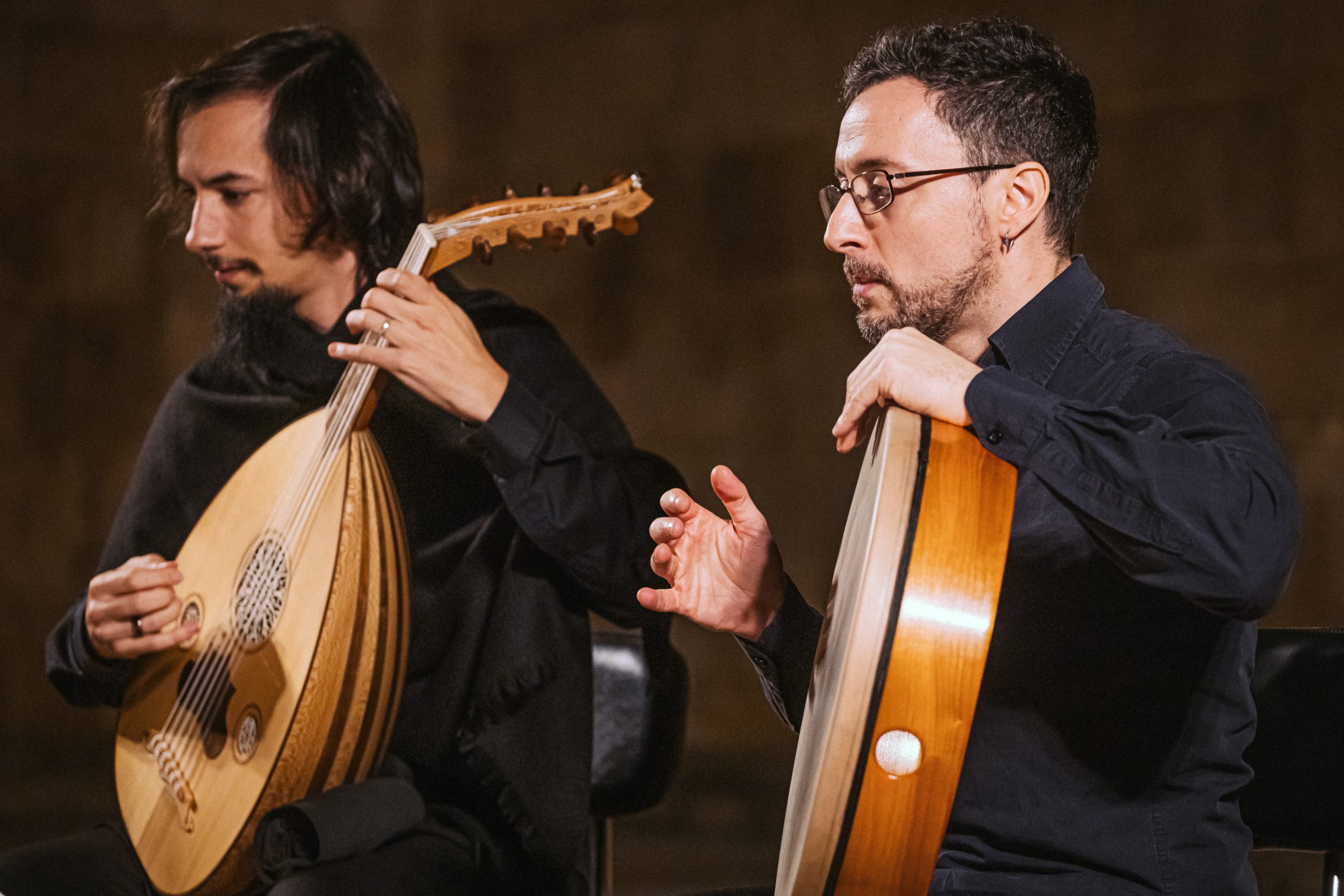
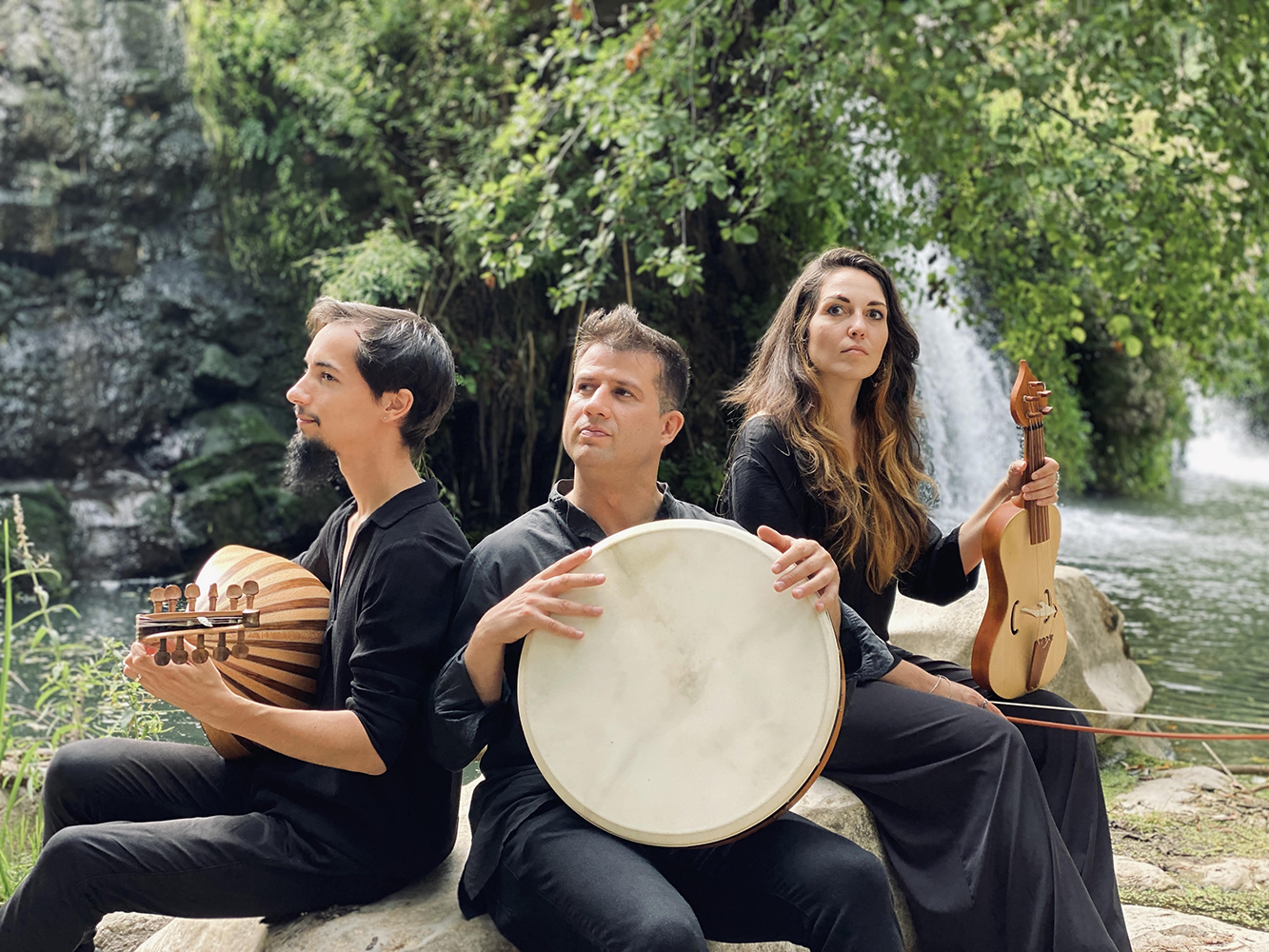
The Wandering Bard performs with instruments found in Iberian medieval manuscripts and architecture.

MANUSCRIPT SOURCES
Current repertoires include more than 100 Cantigas de Santa Maria (from Códice de los músicos and Códice rico), the entirety of the Pergaminho Vindel, Pergaminho Sharrer and Llibre Vermell de Montserrat, and various cantigas de amigo, cantigas de amor and cantigas de escárnio e maldizer, selected in relation to connection to modern audience through research across the complete corpora of the Cancioneiro da Biblioteca Nacional and Cancioneiro da Vaticana.

HISTORICALLY INFORMED ARRANGEMENTS AND PERFORMANCE
The Wandering Bard uses musical techniques (contrafactum, organum, gymel…) depicted in historical treaties.

CONCERTS WITH COMMENTARIES and MUSICAL NARRATIVES
In commented concerts, between each piece, a one-minute introduction is given to strengthen the connection of the audience to the repertory and culture behind the music. In concerts with musical narratives, spoken between each piece, a story builds an arch along the concert, providing a non-historical angle that moves with arrangements done to strengthen the emotions of the narrative.

INCLUSIVITY IN CURATORIAL APPROACH
The Wandering Bard carefully selects repertoire that can be shared with audiences of different backgrounds and sensitivities, avoiding graphic violence, glorification of battle, racism, sexism and similarly alienating material. The aim is to highlight welcoming, human and culturally rich aspects of the medieval world while remaining faithful to the historical sources.

ONE IDENTITY, SEVERAL ROUTES
Early music and heritage remain central in the ensemble’s orbit, while individual productions also suit folk, literary and other alternative festivals. Audience profile of The Wandering Bard includes young audience that is interested in history, as much as fantasy literature. A literary festival, an early-music series and a dark-folk event may book different productions, but the artistic identity of The Wandering Bard remains unmistakable.

The Wandering Bard in Numbers

7

Released albums

+30K

Monthly Listeners

3.5M

Streams in online platforms
🇺🇸 United States — 410,789 🇩🇪 Germany — 88,795 🇫🇷 France — 61,504
🇬🇧 United Kingdom — 61,073 🇨🇦 Canada — 55,808 🇪🇸 Spain — 52,222
🇧🇷 Brazil — 46,888 🇵🇹 Portugal — 46,314 🇲🇽 Mexico — 34,726
🇵🇱 Poland — 32,339 🇳🇱 The Netherlands — 27,645 🇮🇹 Italy — 23,265
🇦🇺 Australia — 20,776 🇸🇪 Sweden — 20,223 🇹🇷 Turkey — 16,311
Streams by country · past 12 months

The Wandering Bard Live

Concert Programs

Booking: Marta Almeida
booking@cordasonora.com

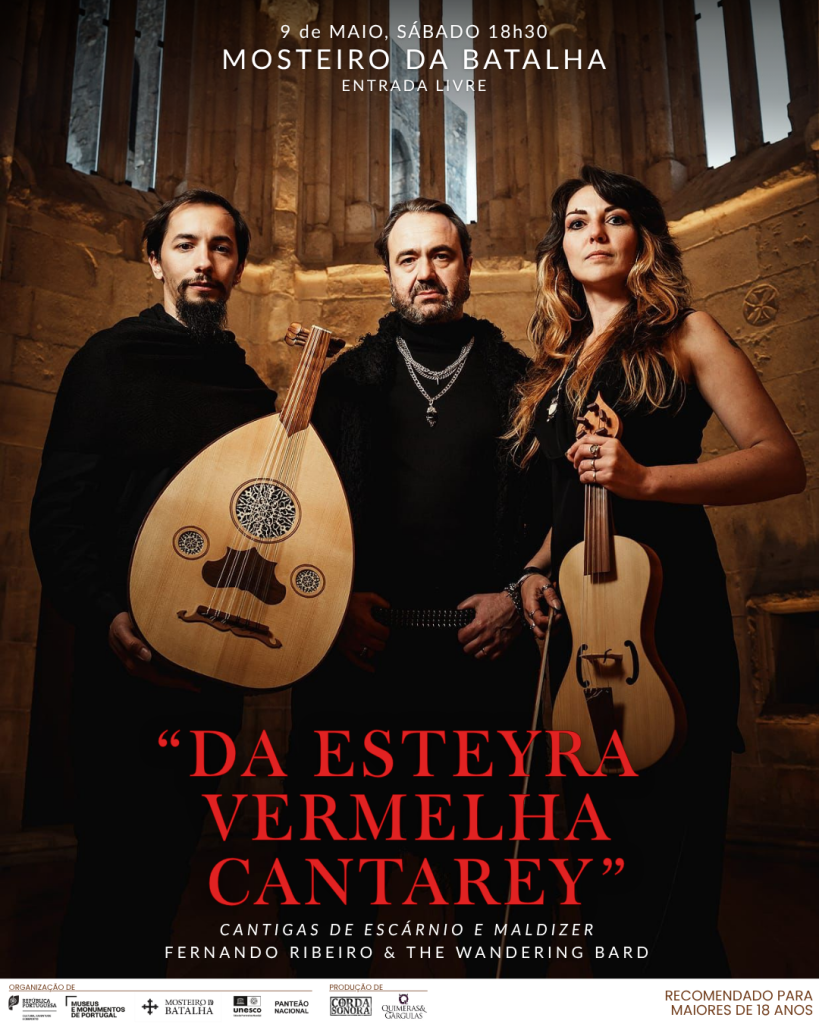
DA ESTEYRA VERMELHA CANTAREY – FROM THE RED MAT I SHALL SING
Musical poetry recital where medieval satire and music unites to celebrate freedom of expression.
Featuring Fernando Ribeiro of MOONSPELL | Early music · Literary · Crossover (recommended for +18)
Quartet | 60–75 min

CANTIGAS DA CONVIVÊNCIA – SONGS OF LIVING-TOGETHERNESS
Semi-staged concert with commentary, exploring the musical cultures of medieval Iberia.
Early music · Heritage · Multicultural
Sextet (adaptable: 3 to 8 musicians) | 50–75 min

O LIVRO DO REI – THE BOOK OF THE KING
An autobiographical journey through Alfonso X’s Cantigas de Santa Maria.
Early music · Heritage
Trio, (adaptable: 2 to 4 musicians) | 50–75 min

A MELODIA DE D. DINIS – THE MELODY OF D. DINIS
The surviving songs of Portugal’s Poet-King, reconstructed from the Sharrer Parchment.
Early music · Heritage
Quartet, (adaptable: 2 to 4 musicians) | 60–75 min

Selected partners

institutions, venues and cultural entities that have presented or supported the Wandering Bard

HERITAGE VENUES
Leiria Castle
Monastery of Batalha
Monastery of Alcobaça
National Museum Machado de Castro
Quinta da Regaleira
Paleis Het Loo
St. Nicolas Church, Brighton

PUBLIC AND REGIONAL PARTNERS
Municipality of Sintra
Municipality of Leiria
Municipality of Coimbra
Municipality of Palmela
Municipality of Reguengos de Monsaraz
CCDR Norte

CULTURAL NETWORKS
Route of the Romanesque
Sousa Valleys Municipal Network

CULTURAL ASSOCIATIONS
Bolsa de Originais
Aurum et Purpura
Pinhal del Rey
QuadraSoltas

UNIVERSITIES, FOUNDATIONS AND MEDIA
Cistermusica
University of Coimbra
University of Porto
Fundación DEARTE
Fundação Cultursintra
Norte Pontual 2024
Fundação GDA
Antena 2 (Portugal)

FESTIVALS
Festival Medinaceli Música Antigua 2026
Festival Arte(s) Em Palco 2025
Festival BANG! 2024
Festival Paredes à Capela 2023
26.º Festival Acaso 2021
Brighton Early Music Festival 2019
Piantón IX Festival Internacional de Música 2019
Brighton Fringe 2019

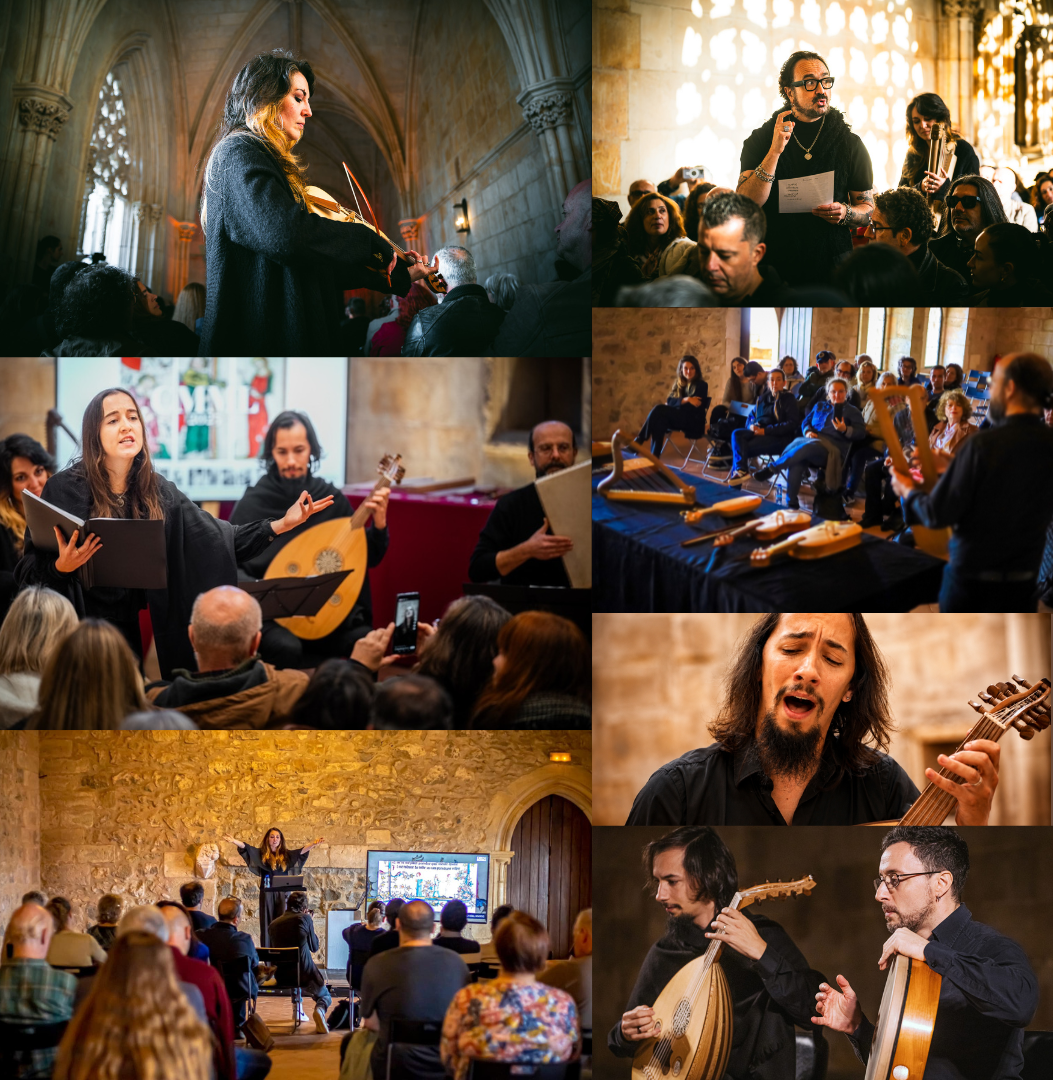
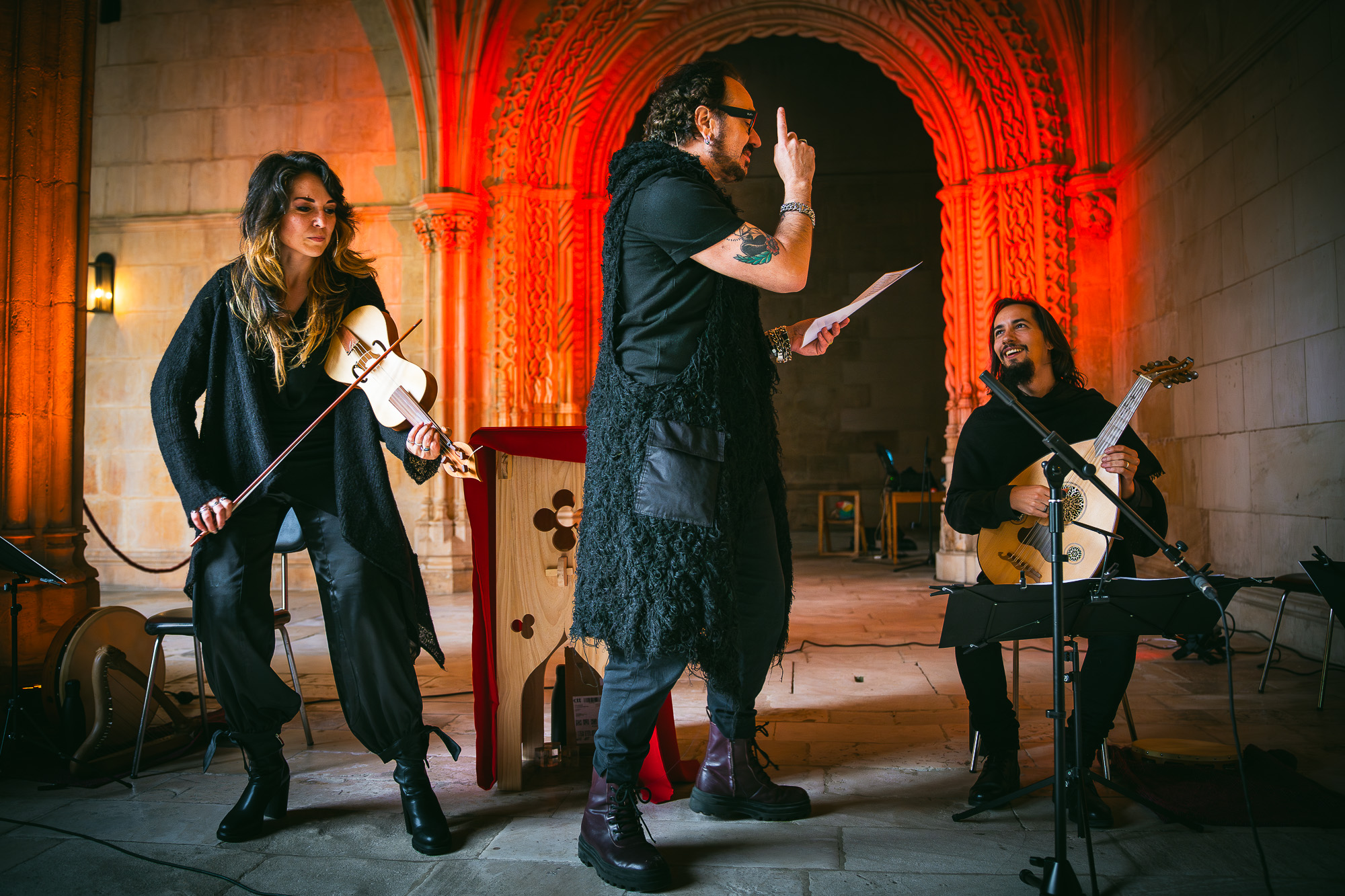
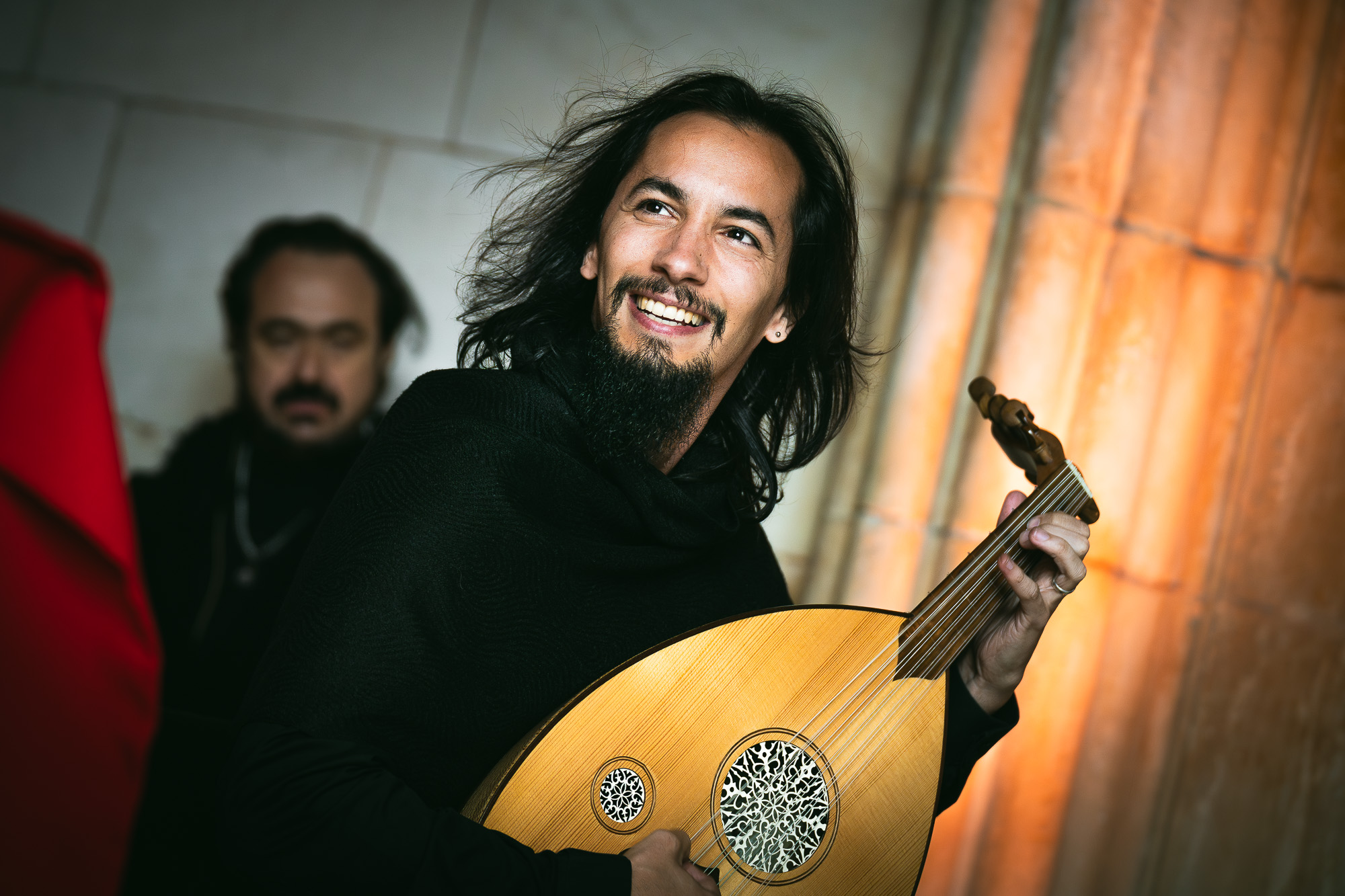
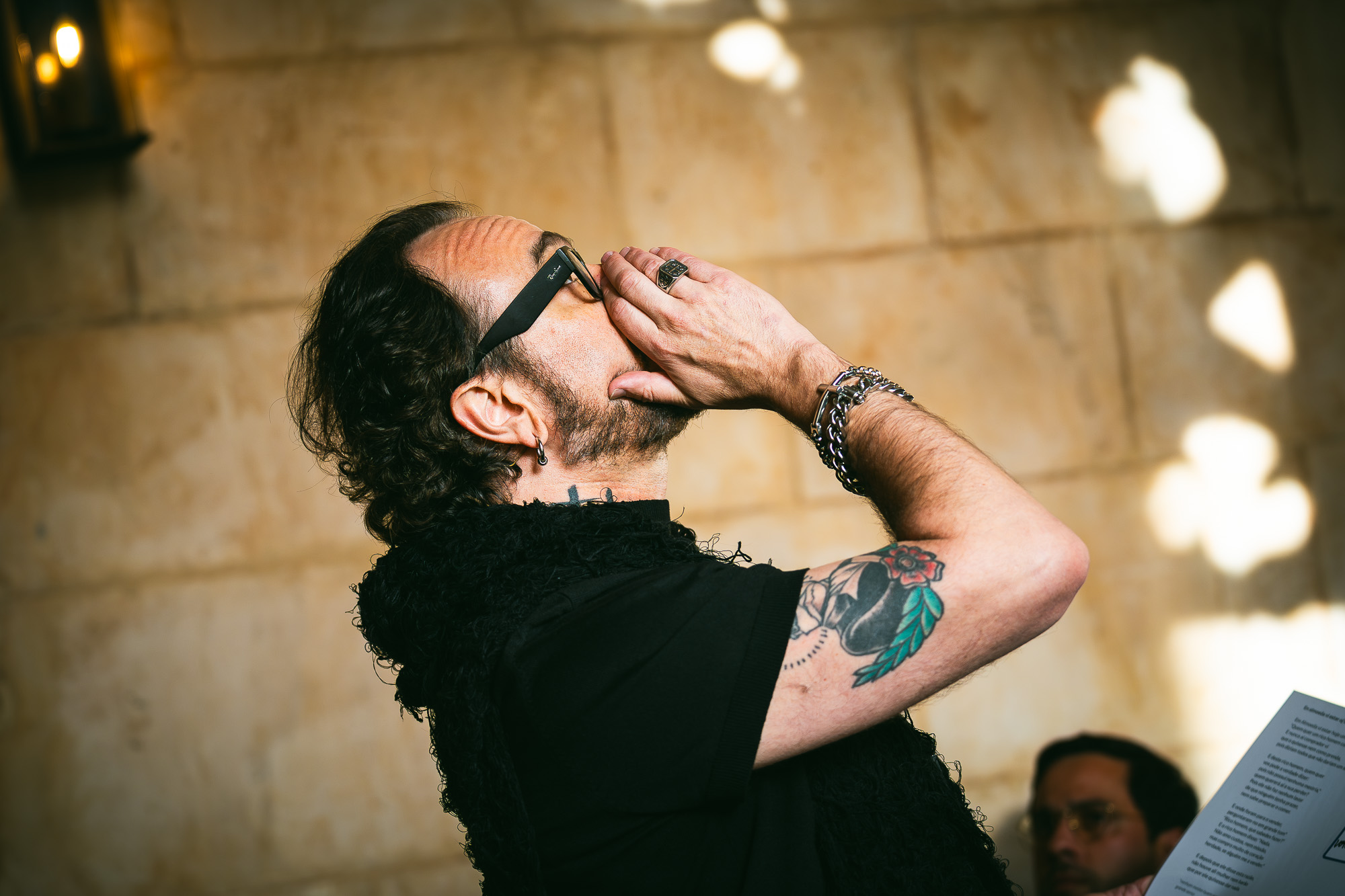
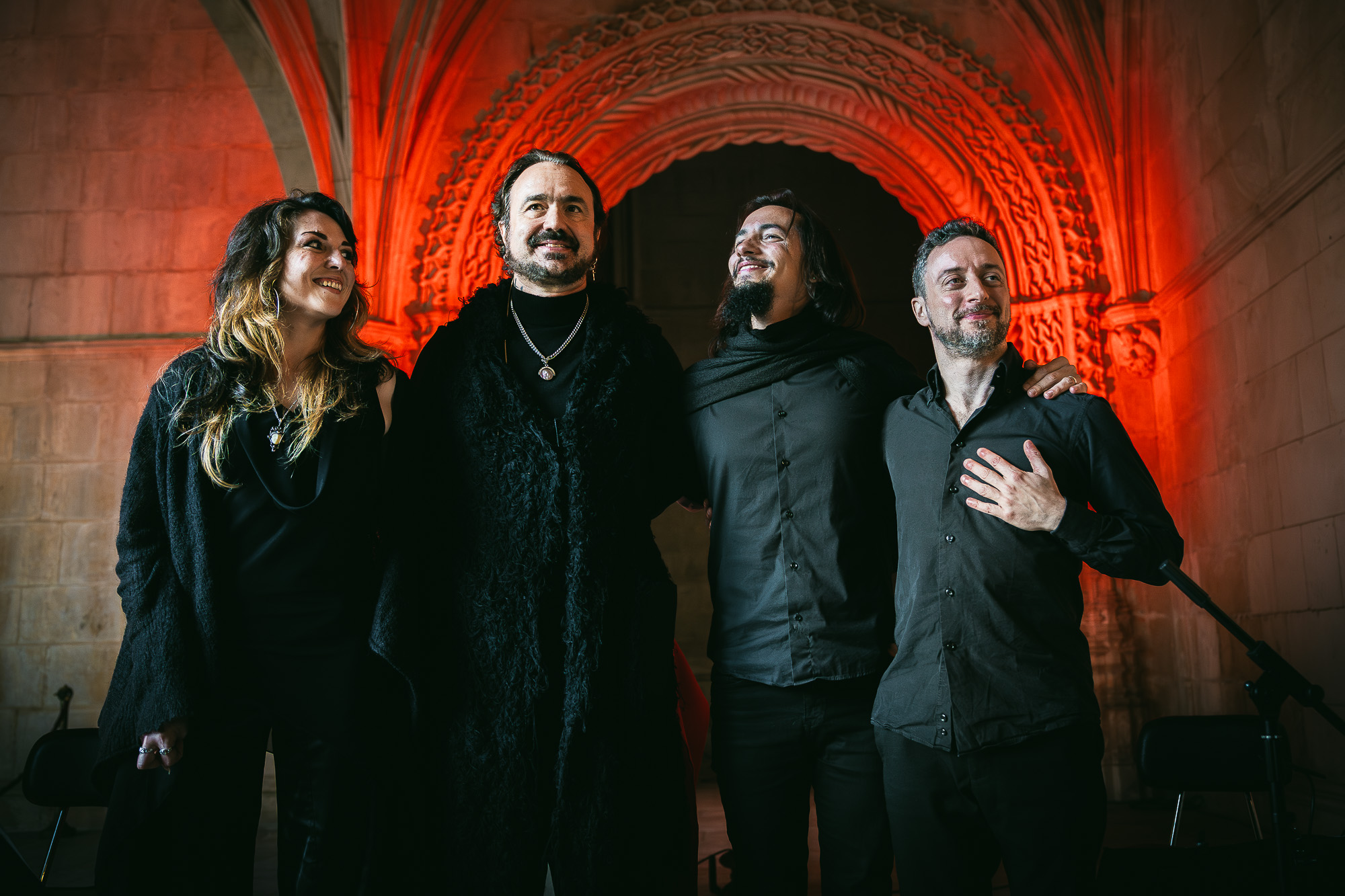
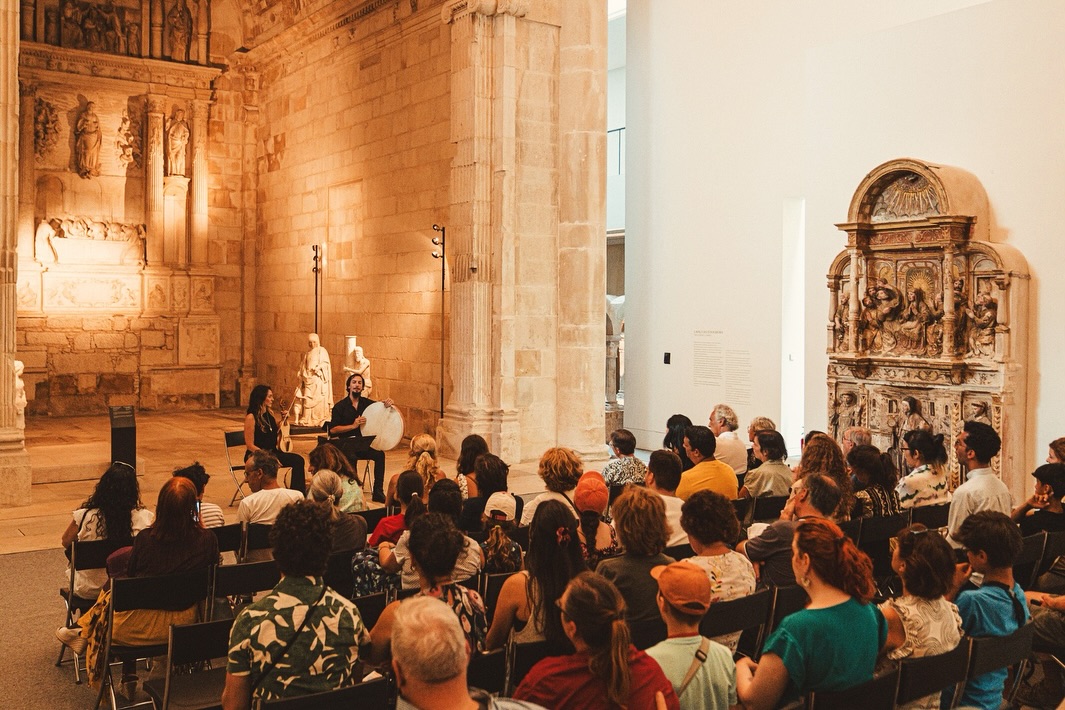
Moments from a concert

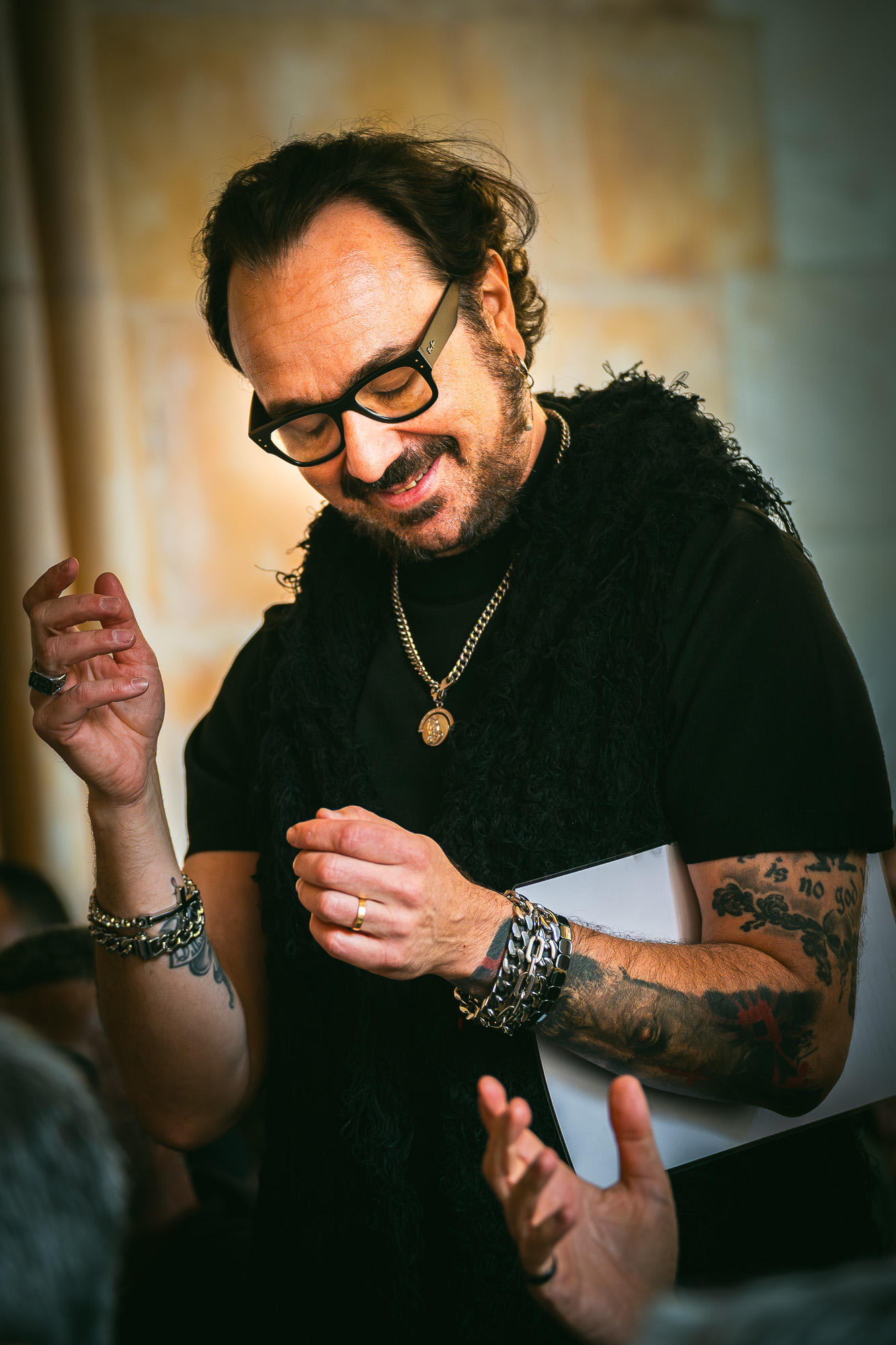
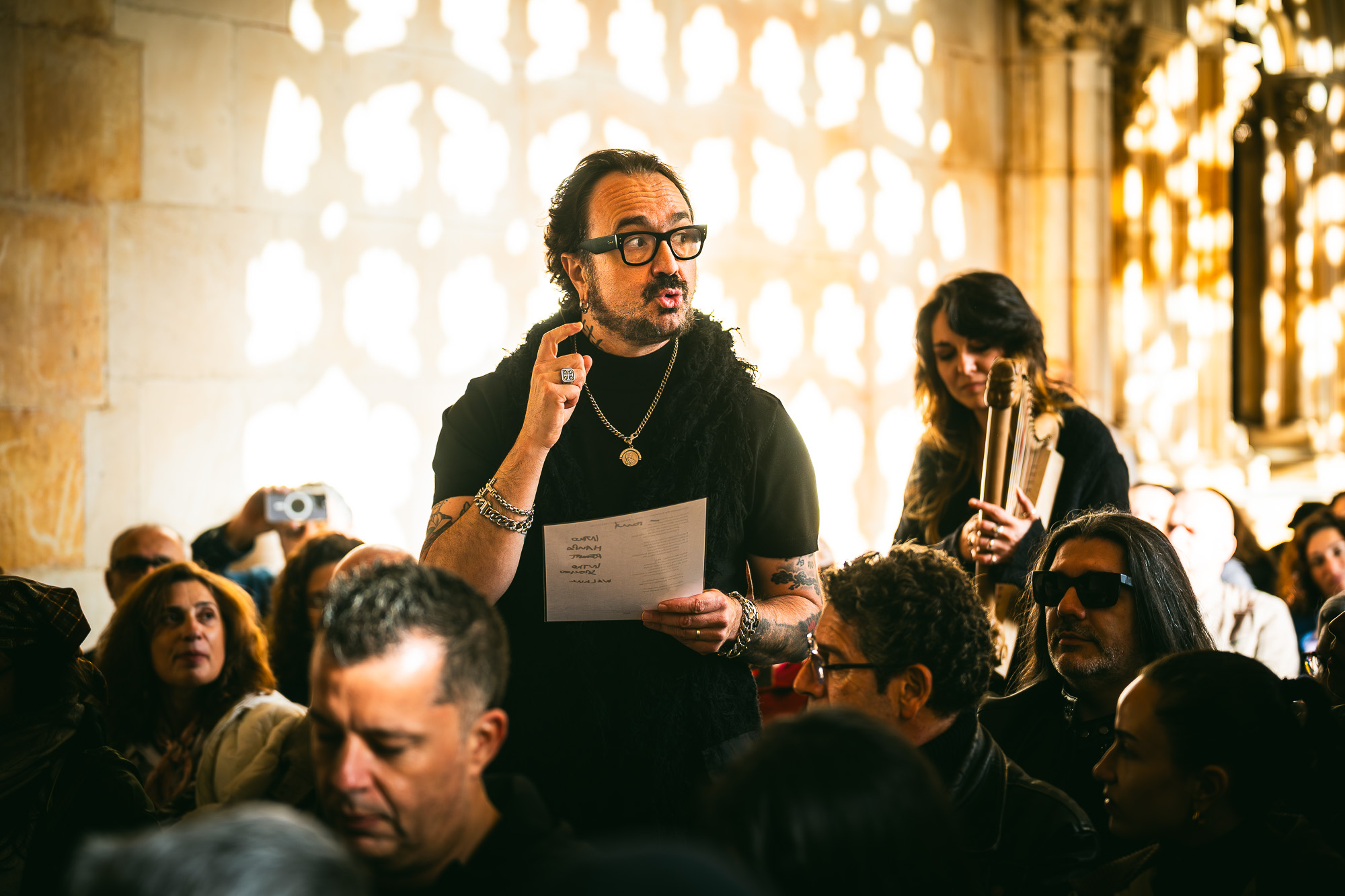
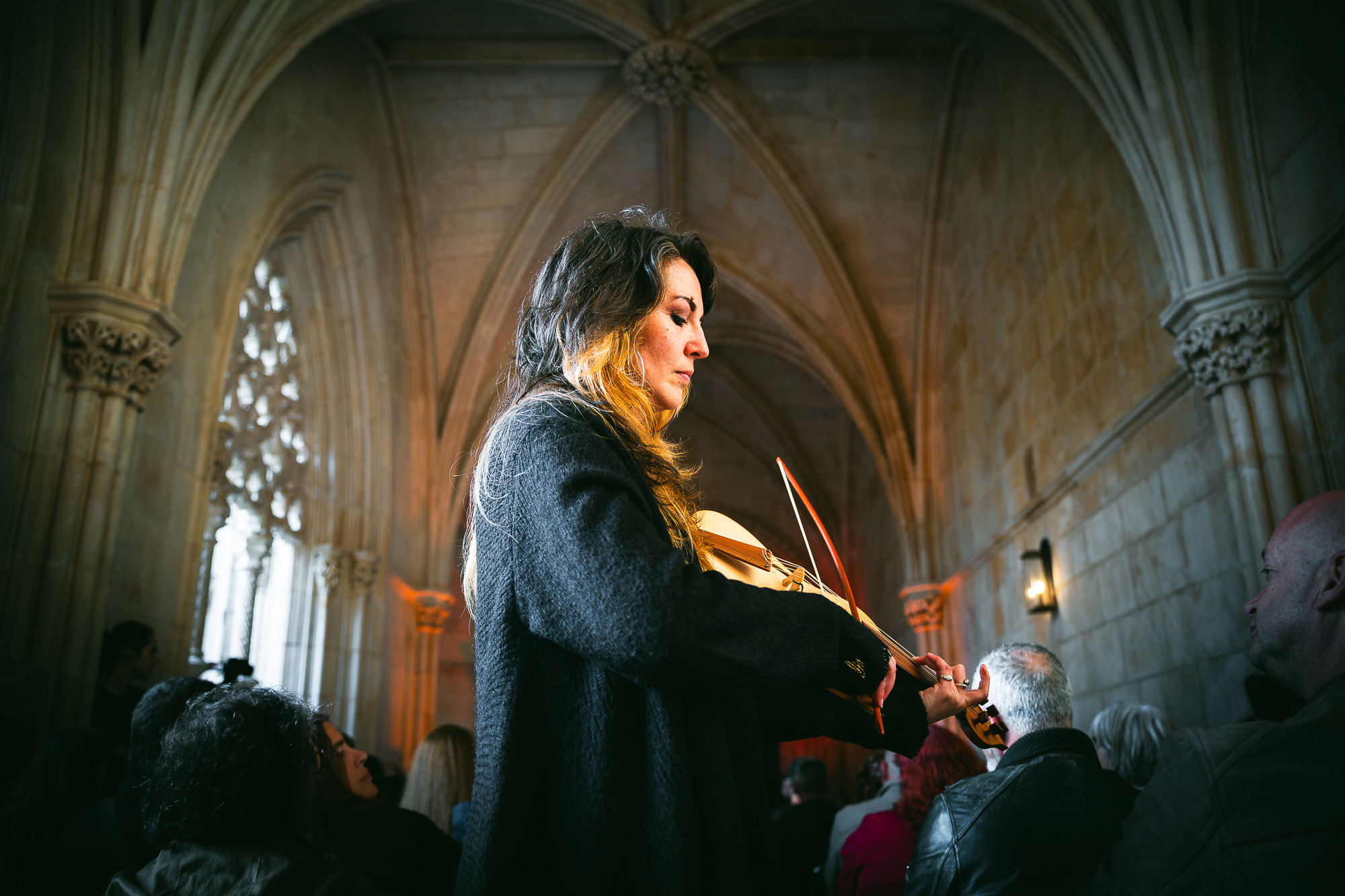
"Da esteyra vermelha cantarey"

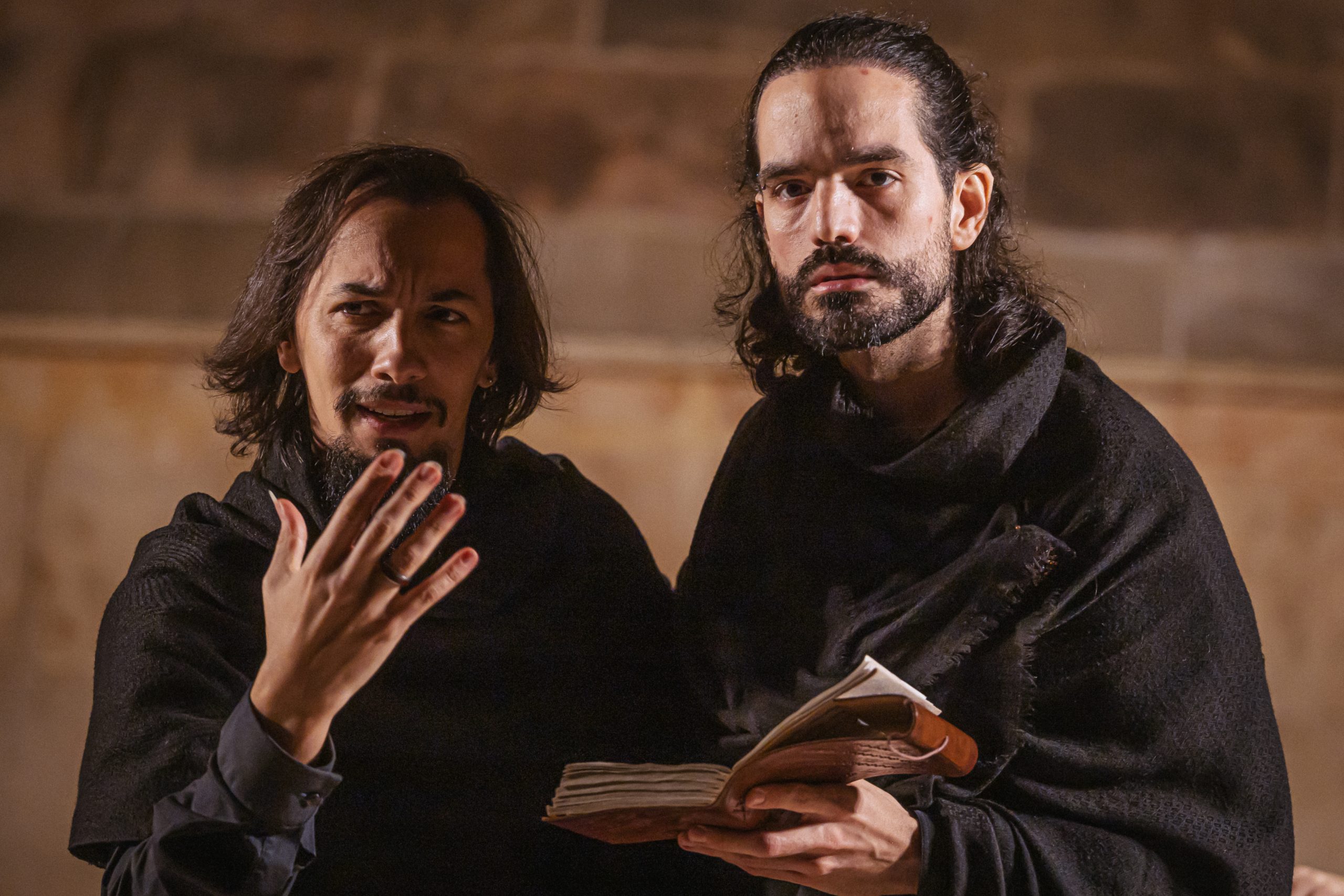
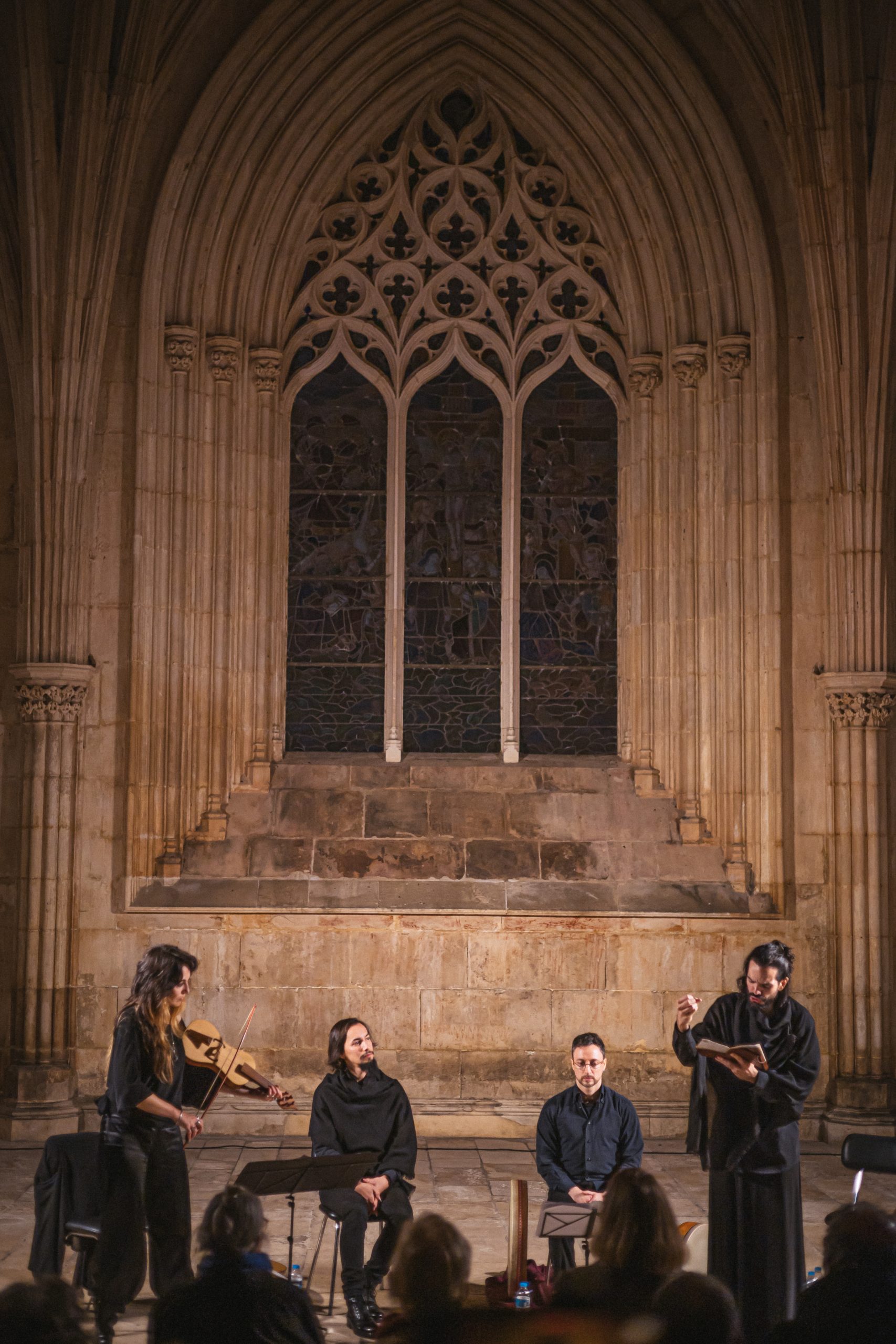
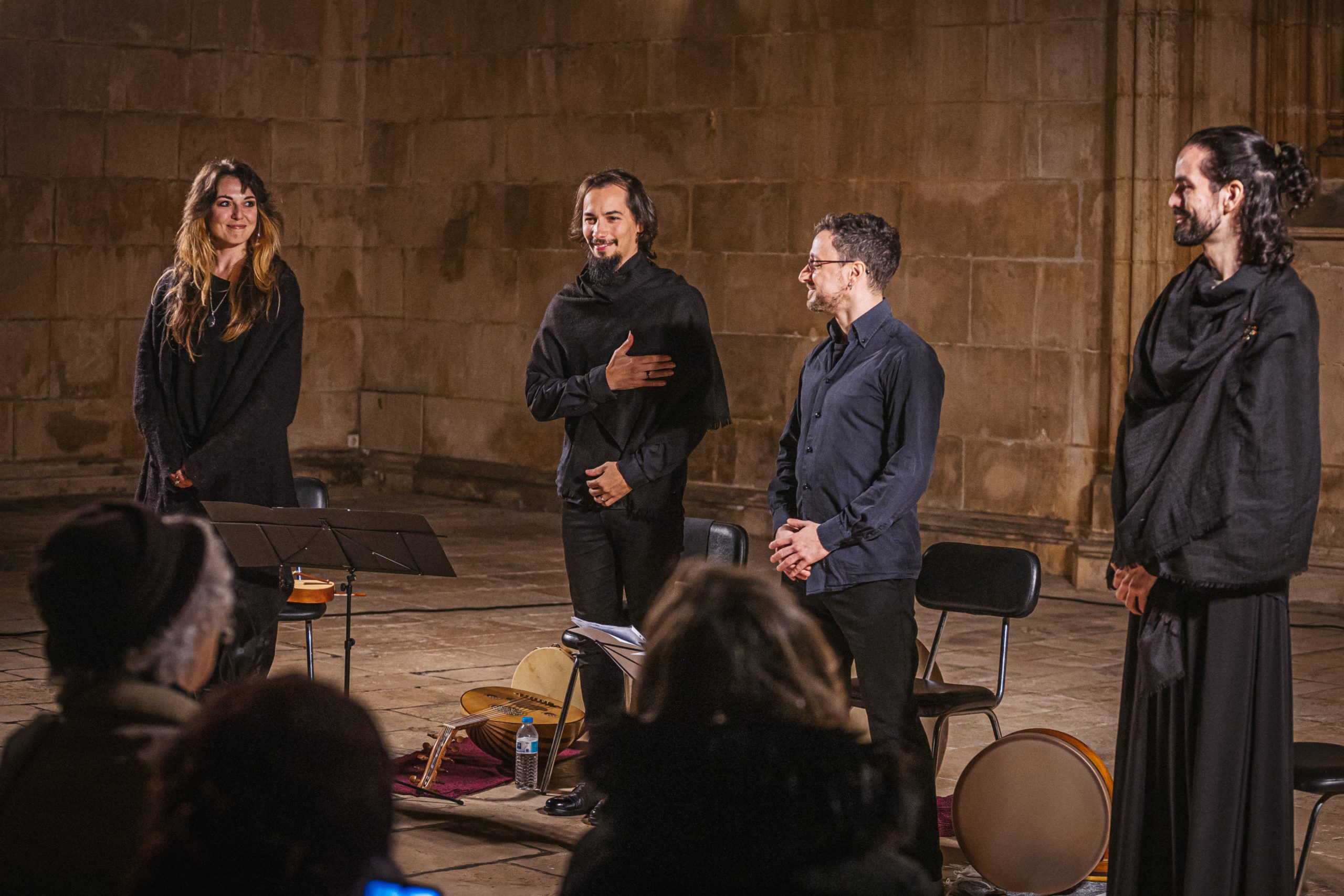
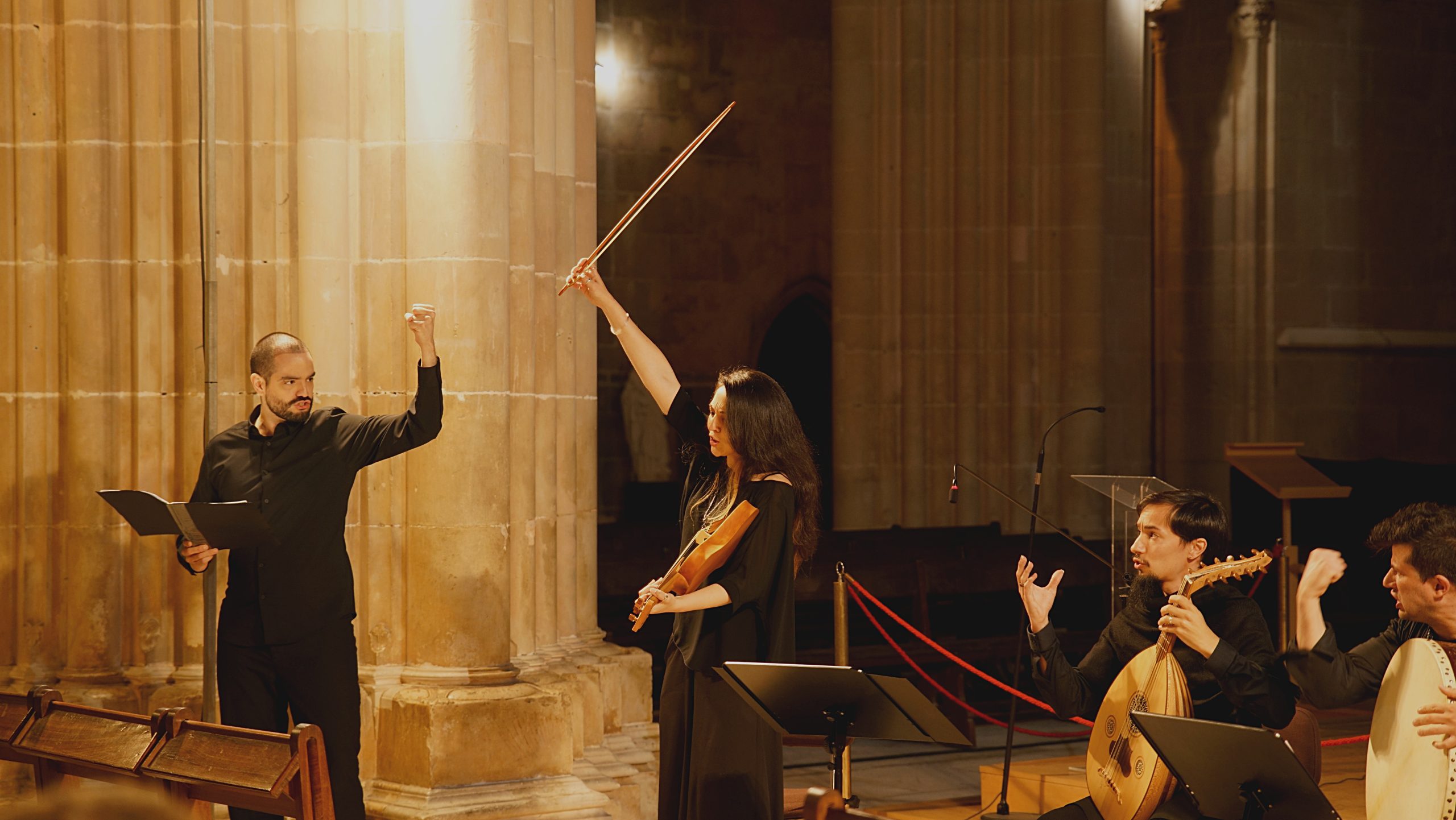
Mosteiro da Batalha

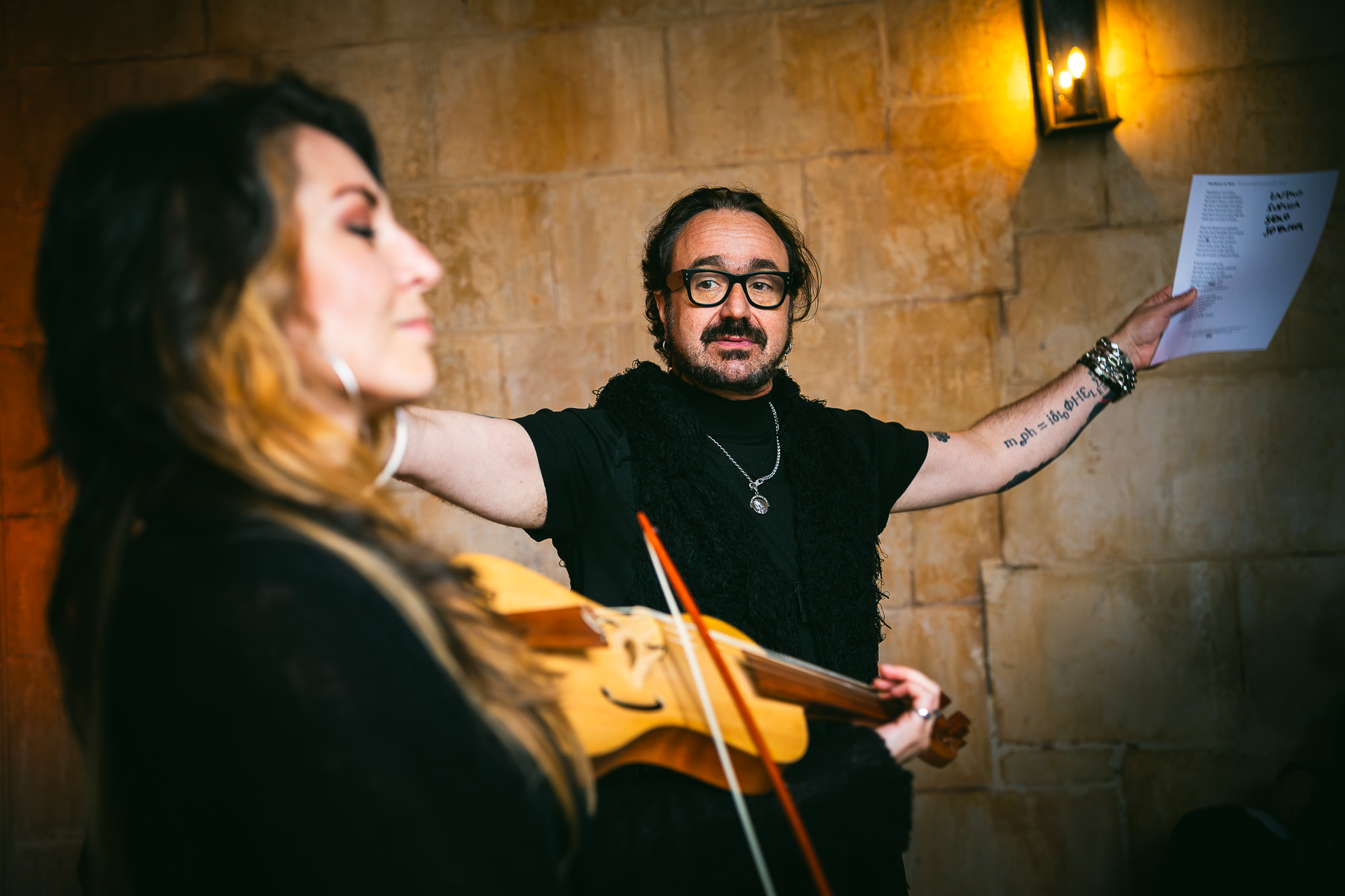
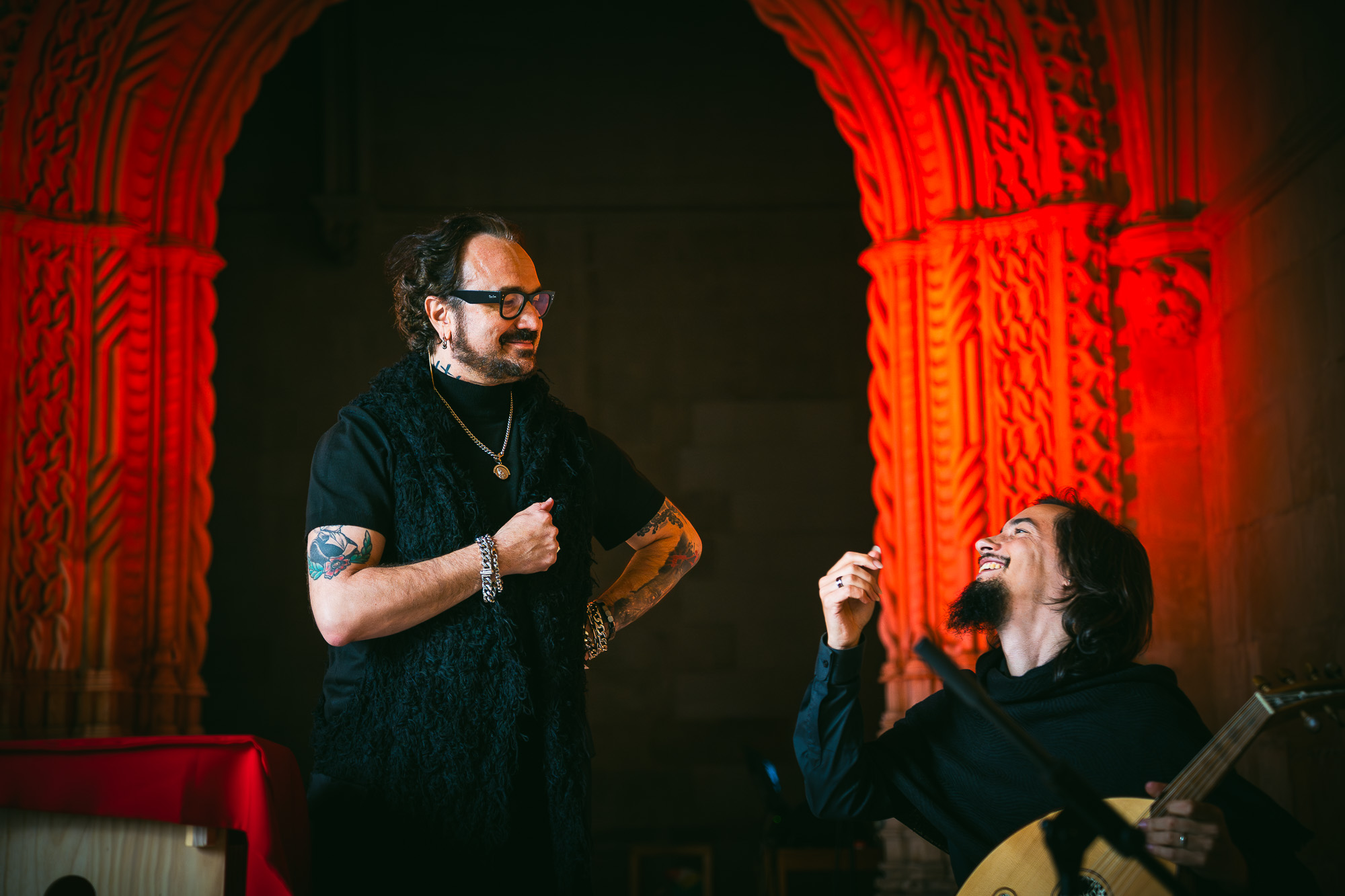
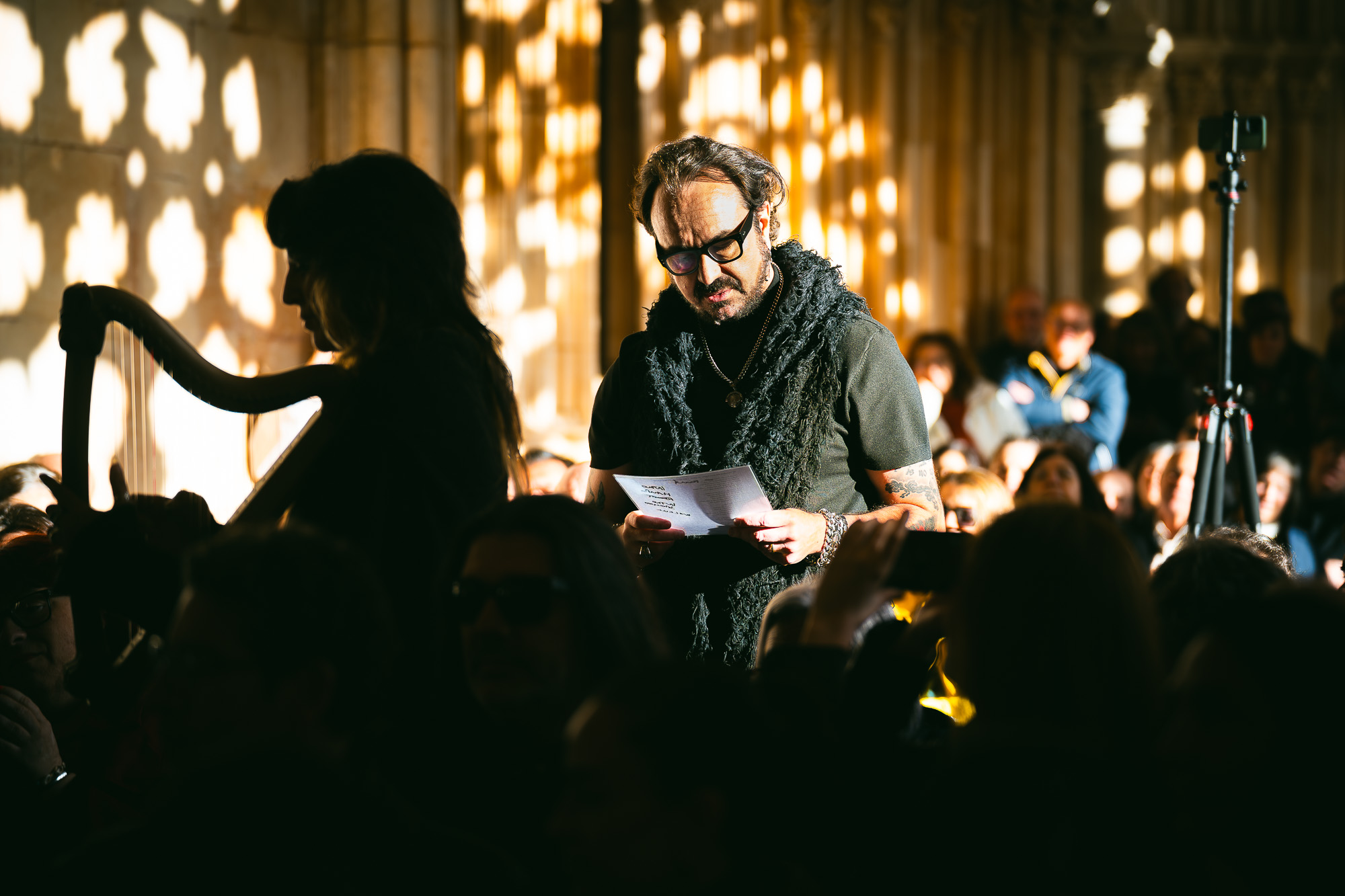
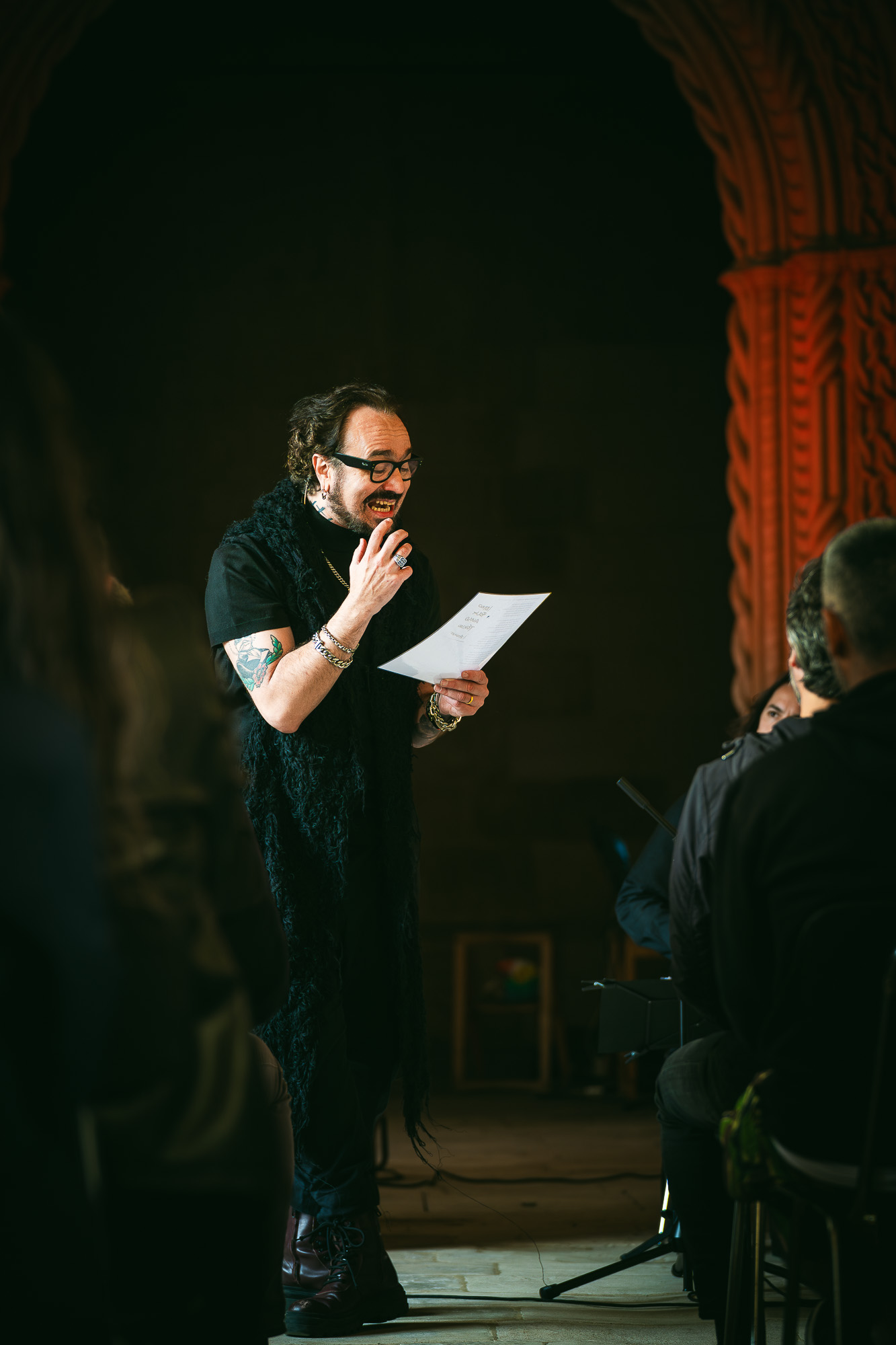
A unique performance where medieval music draws from the greatest voice of heavy metal in Portugal, Fernando Ribeiro.

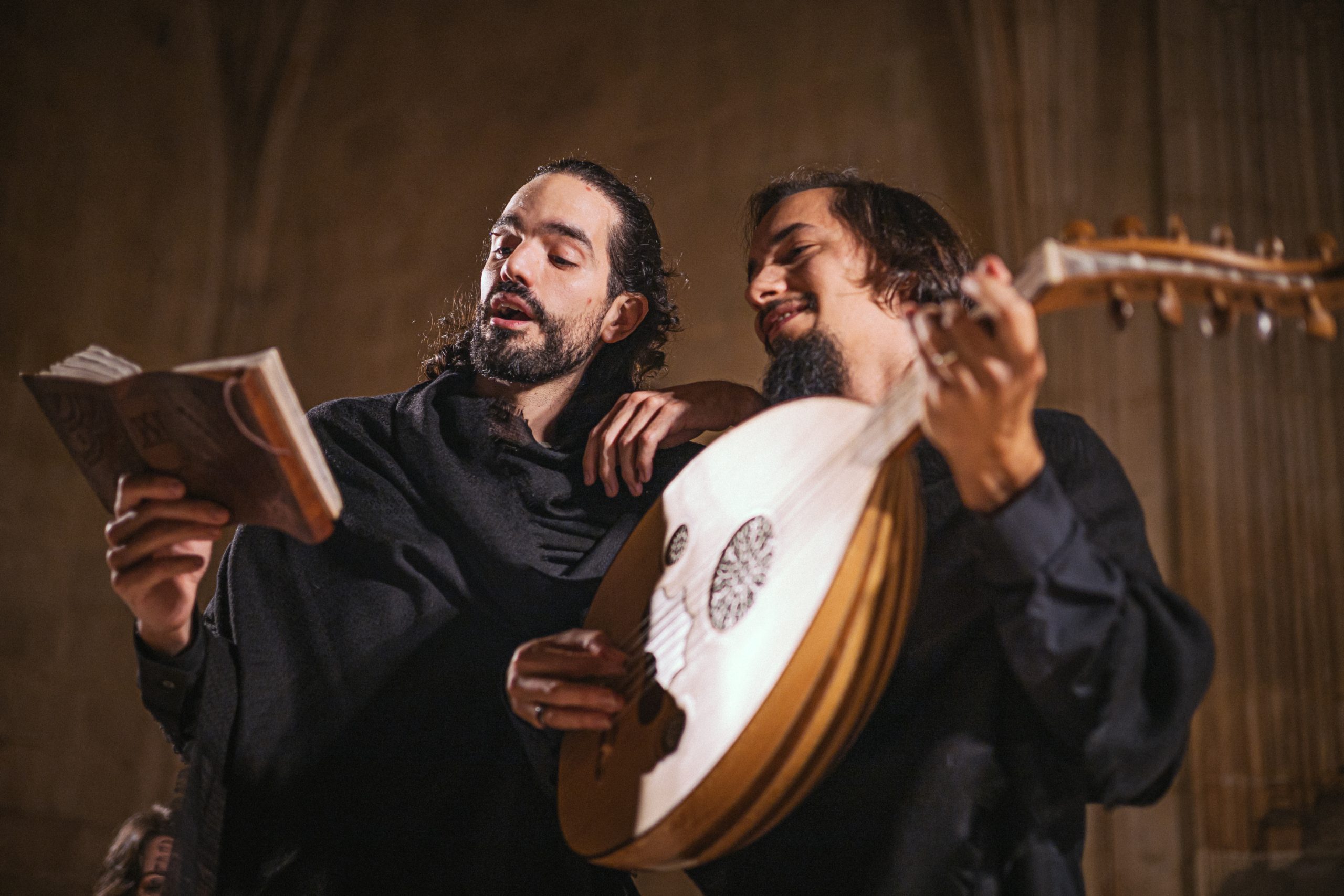
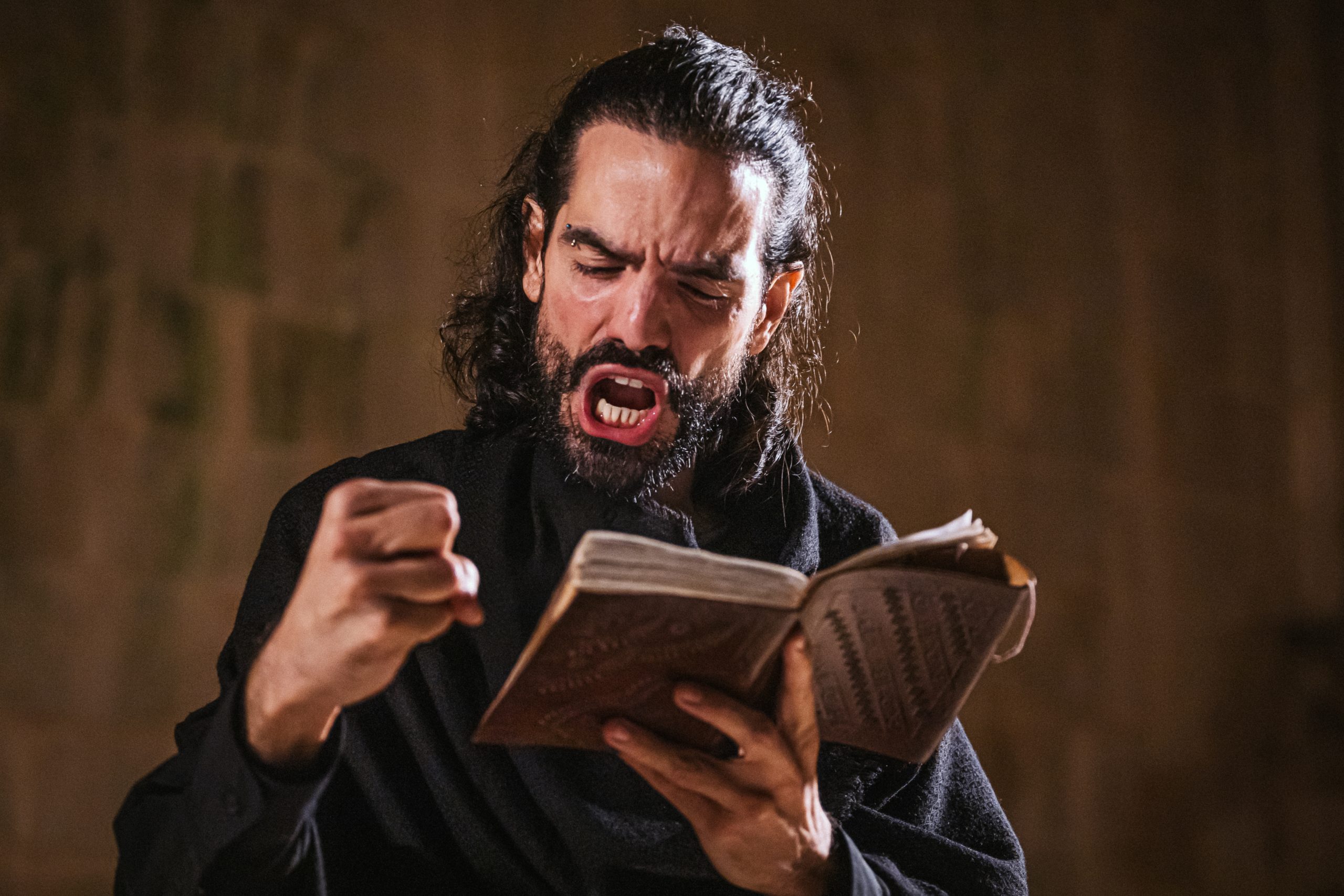
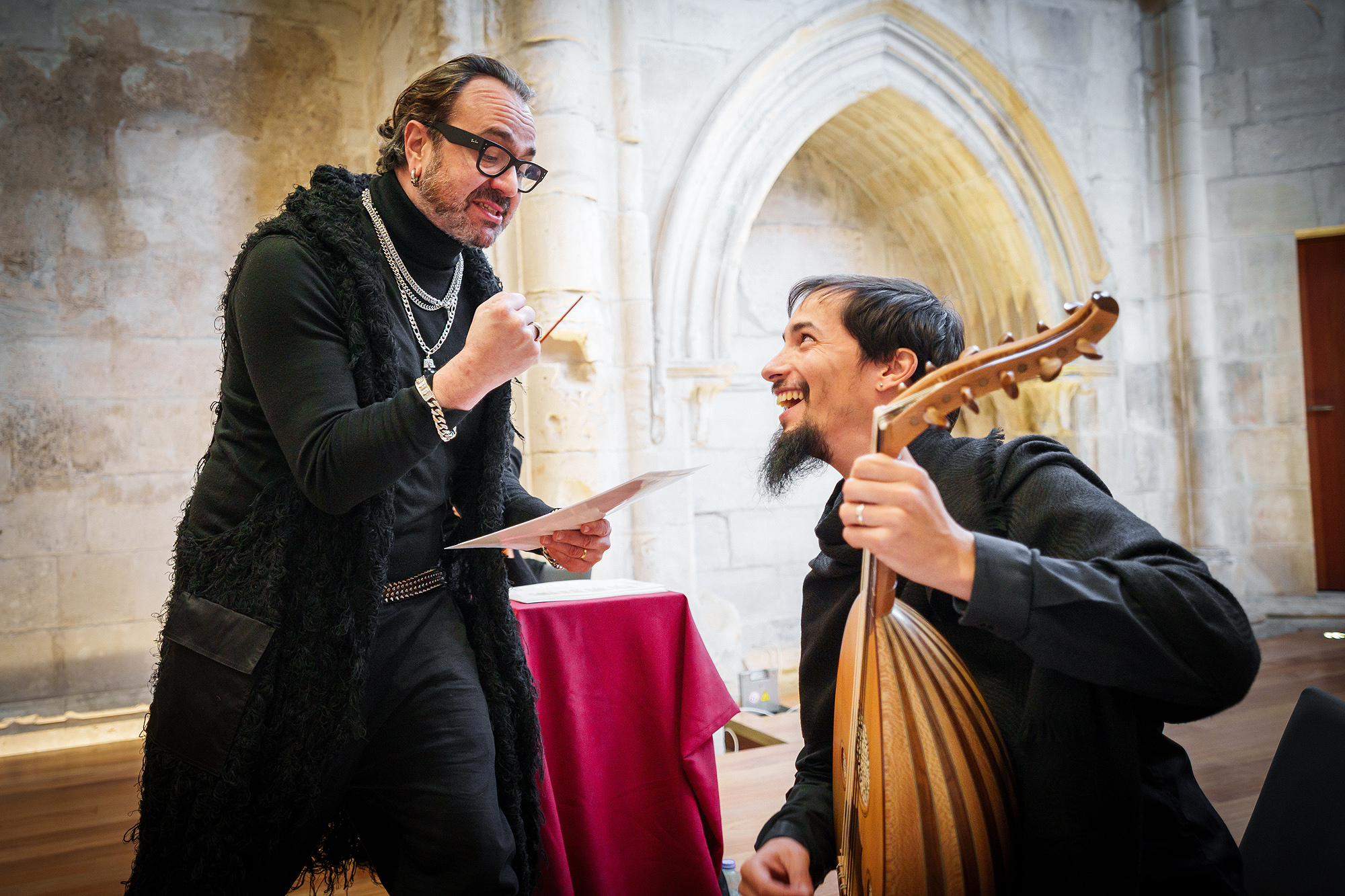
Dedicated to the Cantigas de Escárnio e Maldizer, “Da esteyra vermelha cantarey” blends medieval music with modern Portuguese poetic aesthetics, brought to life by The Wandering Bard of Esin Yardimli Alves Pereira and Ricardo Alves Pereira, joined by a very special guest, poet and writer Fernando Ribeiro, from Moonspell.

Together, the titan of metal and the ensemble of the two medievalists create a satirical and provocative performance, bridging troubadour tradition with the spirit of the 21st century, celebrating freedom of expression.

Photography: João Fitas

The Wandering Bard Live

Access full playlist by clicking here

Play Video

The Wandering Bard & Fernando Ribeiro – “Da Esteyra Vermelha Cantarey” – Mosteiro da Batalha, 2026

Play Video

The Wandering Bard with Eduardo Paniagua — “Que mui gram prazer que eu ey” — Castelo de Leiria, 2025

Play Video

The Wanderig Bard Quartet — Levantou-se a alva — Castelo de Leiria, 2025

Play Video

The Wandering Bard Sextet – Música do Rei Trovador – Quinta da Regaleira, Lisbon, 2025

Play Video

The Wandering Bard Quartet – Música do Rei-Trovador – Mosteiro da Batalha, 2025

Play Video

CMML2024 Visuals – The Wandering Bard – Con razon e d’averen gran pavor, CSM 144 (Eternally Stone)

Play Video

The Wandering Bard Trio – O Livro do Rei – Castelo de Leiria, 2026

Play Video

The Wandering Bard Trio & Coro Comunitário DMMB — Cantando em Comunidade no Mosteiro da Batalha — 2025

Play Video

The Wandering Bard Duo – Música do Rei Trovador – Museu Nacional Machado de Castro, 2025

Play Video

The Wandering Bard Quartet – O Livro do Rei – Mosteiro de Alcobaça, 2026

Play Video

Ricardo Alves Pereira – O Trovador – Legado de D. Dinis – Igreja de São Francisco, Leiria, 2025

Play Video

The Wandering Bard Quartet – O Livro do Rei – Mosteiro da Batalha, 2024

Educational Events

THE WANDERING BARD’S MISSION AND VISION

“Learning is sharing”

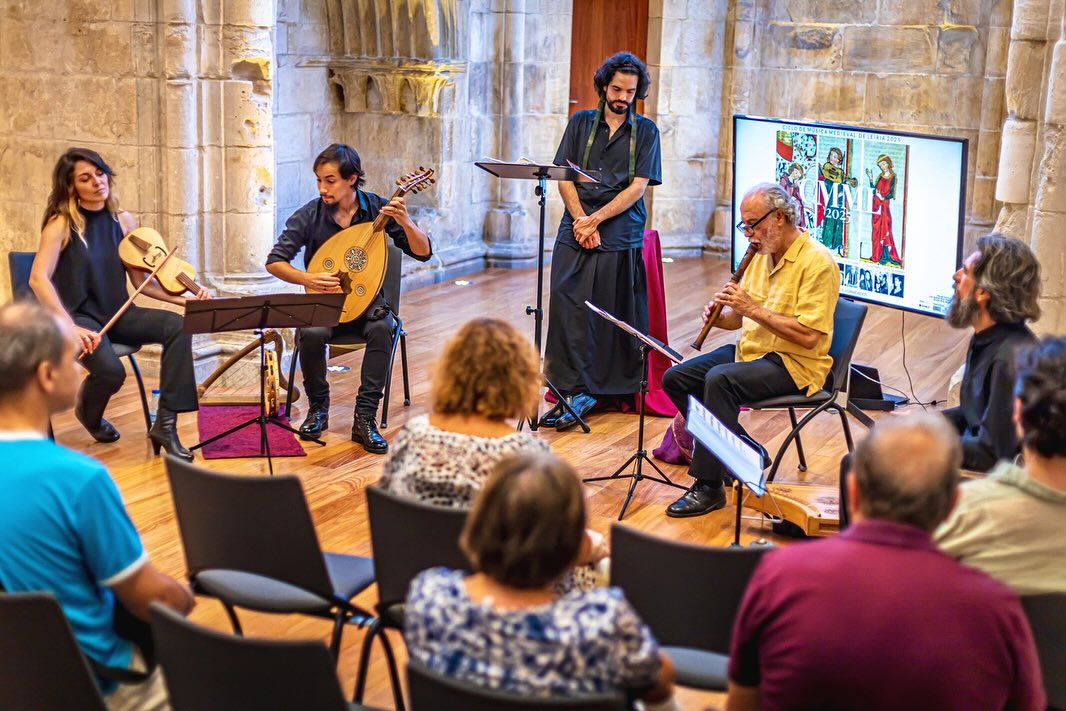
To strengthen the audience’s connection with the performance, one or two introductory sessions welcoming both specialists and curious listeners into the world of medieval Iberian music may be offered before each concert.

Both the participative workshops and presentations provide the historical, geographical and cultural context of the repertoire and the people who created it, and may develop into a dialogue among the participants.

Interactive instrument exhibitions show medieval instruments used in the performance and explores their sound, function and historical context where participants can touch and play most instruments available.

For The Wandering Bard, bringing audiences closer to the instruments, manuscripts and people behind this music is a way of sharing the ensemble’s enthusiasm for this world. Learning thus becomes a link between past and present, and a joy shared between.

Accessibility

During the concerts, brief contextual remarks between the pieces guide the audience through the poetry, manuscripts and interpretative choices.

In addition, the Galician-Portuguese transcriptions, modern translations, and visual materials prepared by the founders of The Wandering Bard can help international audiences follow the narratives conveyed through the vocal works, either through projections or printed concert programmes.

Meet and Greet: After the concert, an informal meeting with the artists may be arranged, giving audience members the opportunity to speak with the musicians, ask questions and deepen the connection established during the performance.

Previous Albums

Early
Music

In this collection, historically informed interpretations of original arrangements of the ensemble stay loyal to the performance style of renaissance and medieval music.

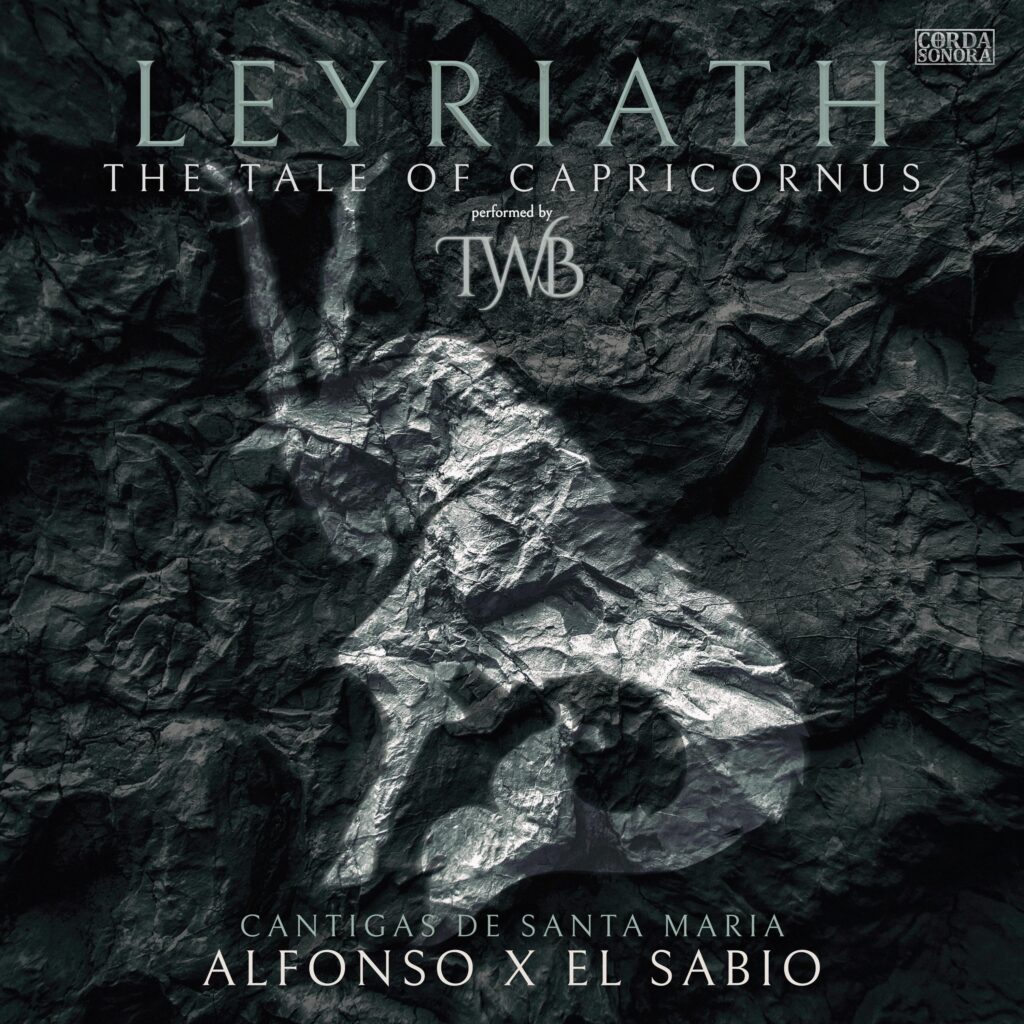
The Wandering Bard’s sixth album unites a collection from Cantigas de Santa Maria in their instrumental form, based on Codice de los musicos, with a heartfelt story of music, traditions and forgiveness.

Read the story related to the album here

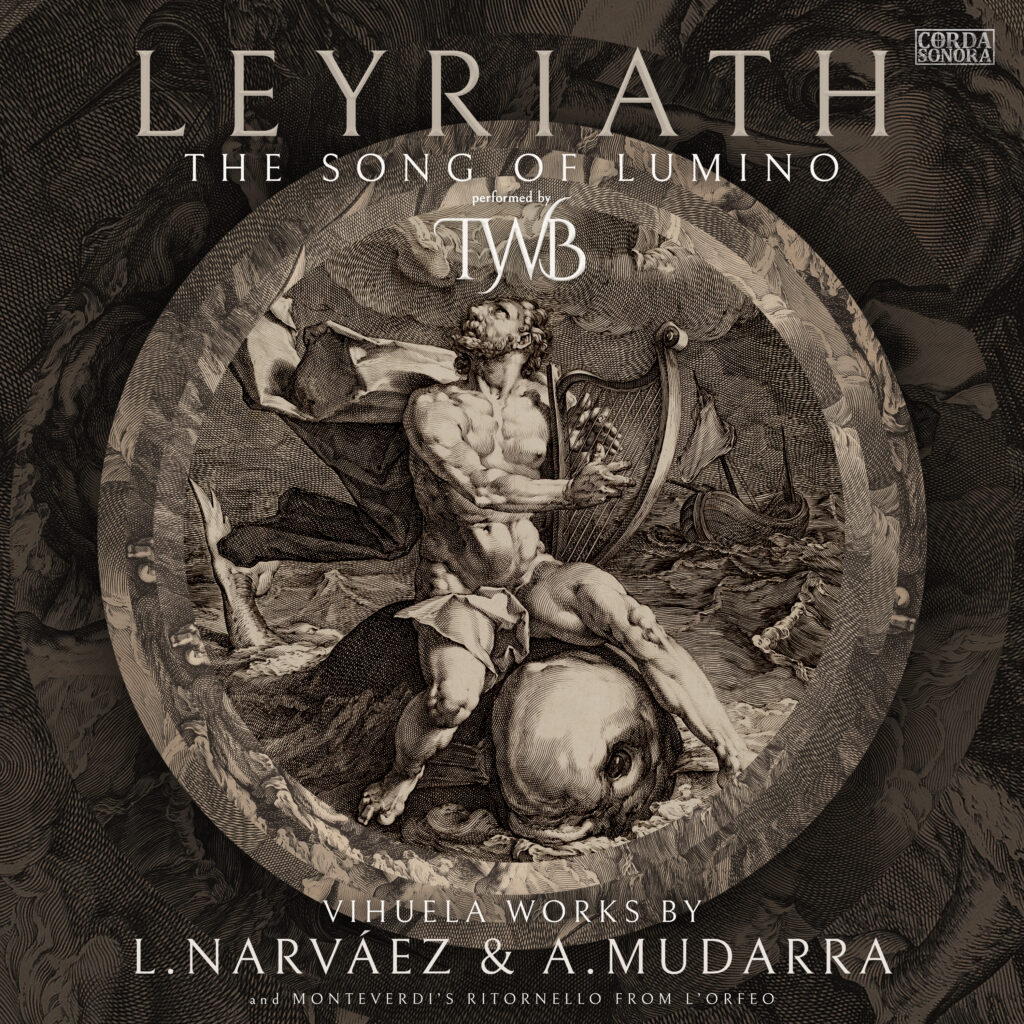
The Wandering Bard presents a musical narrative through repertoire from Renaissance Iberia, as well as listened in a storytelling style by the end of the album.

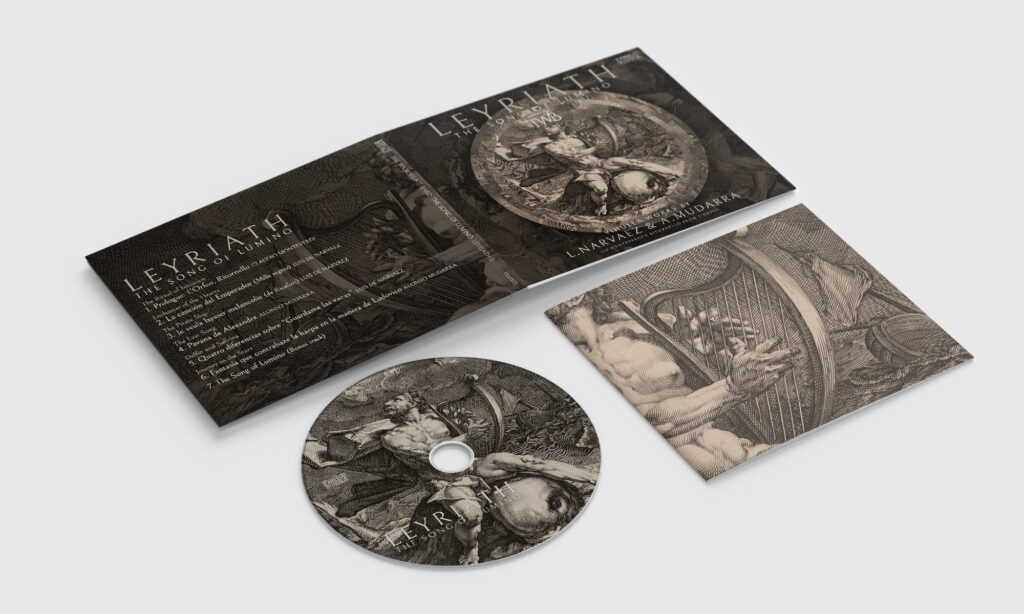
“The Song of Lumino” tells of companionship, magic, beauty and most importantly, power of music; what it can bring, as much as take away.

Read the story related to the album here

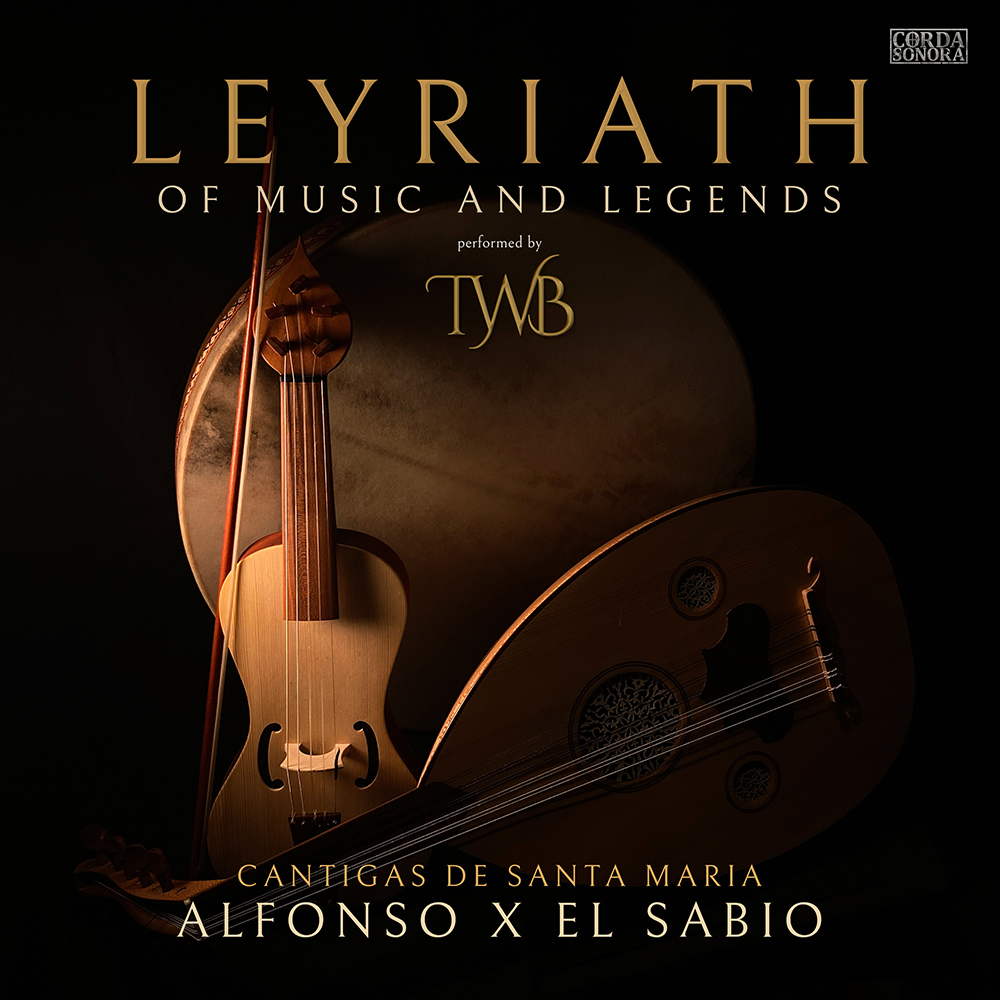
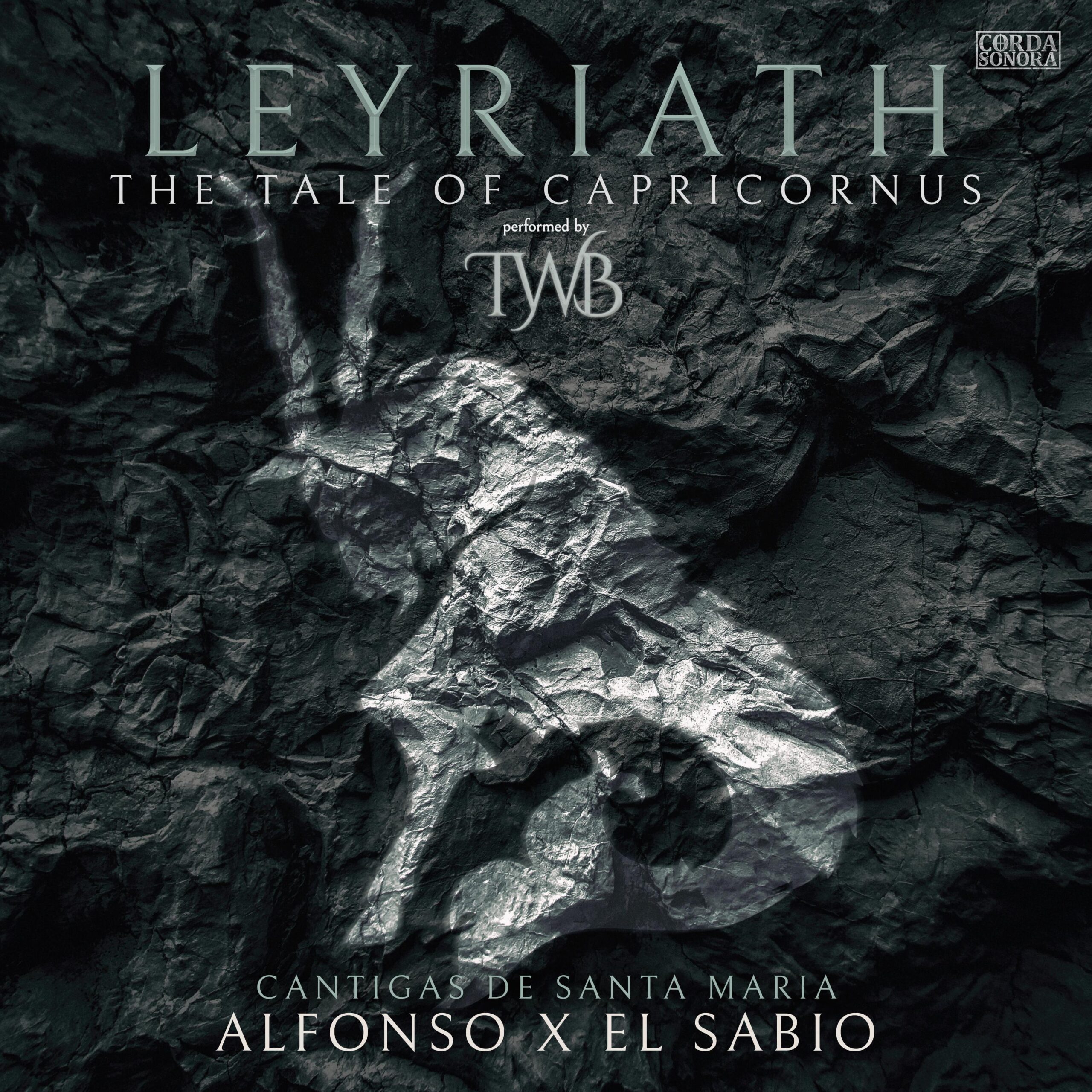
The Wandering Bard’s 4th album, released on the 800th year celebration of the birth of King Alfonso X El Sabio, brings the audience to medieval times with Cantigas de Santa Maria which are attributed to the king himself. At the end of the album a musical narrative is presented, inviting the audience to imagine through this music.

Read the story related to the album here

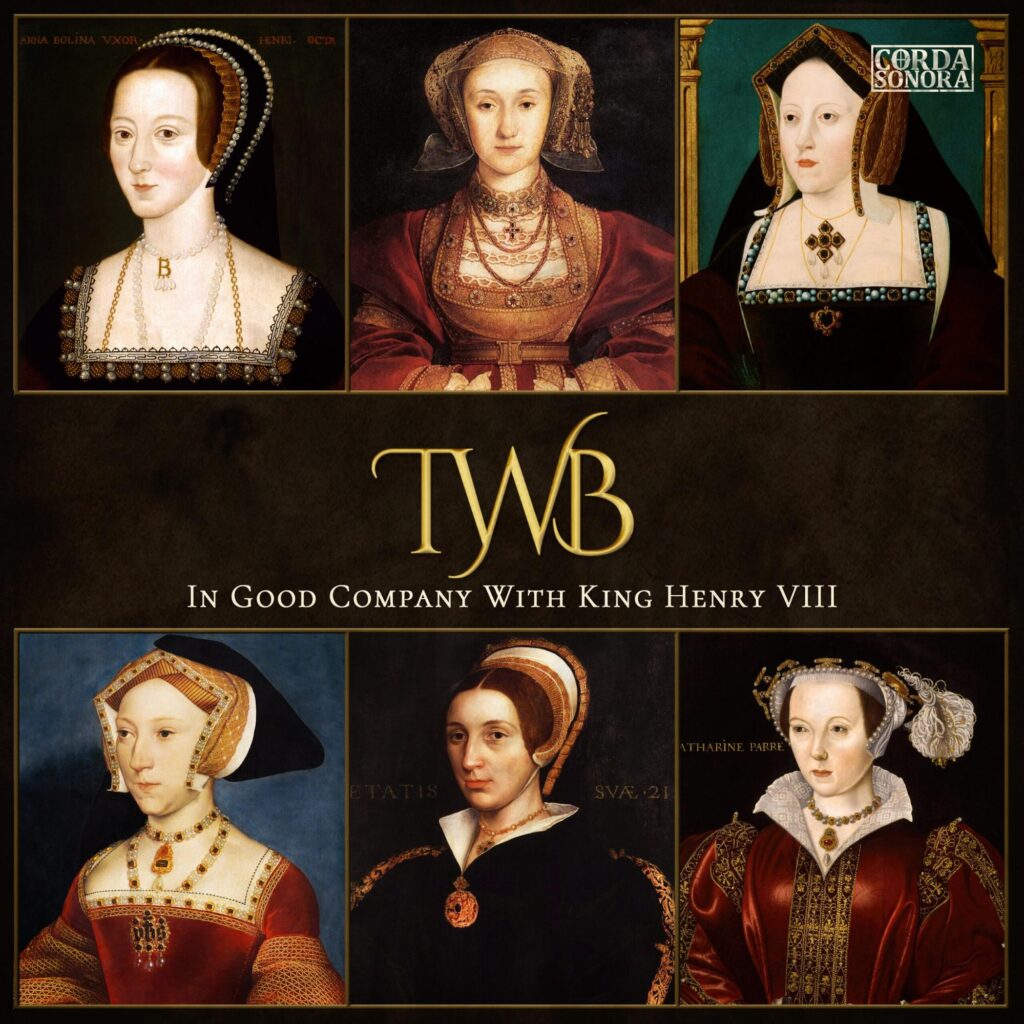
Narrating the history through the perspectives of his six wives with repertoire attributed to King Henry VIII himself, with In Good Company With King Henry VIII, the The Wandering Bard leads the audience to experience the passion, burden and beauty of the royal England.

Moments from a concert

Songs of D. Dinis, the Poet-King

Mosteiro da Batalha

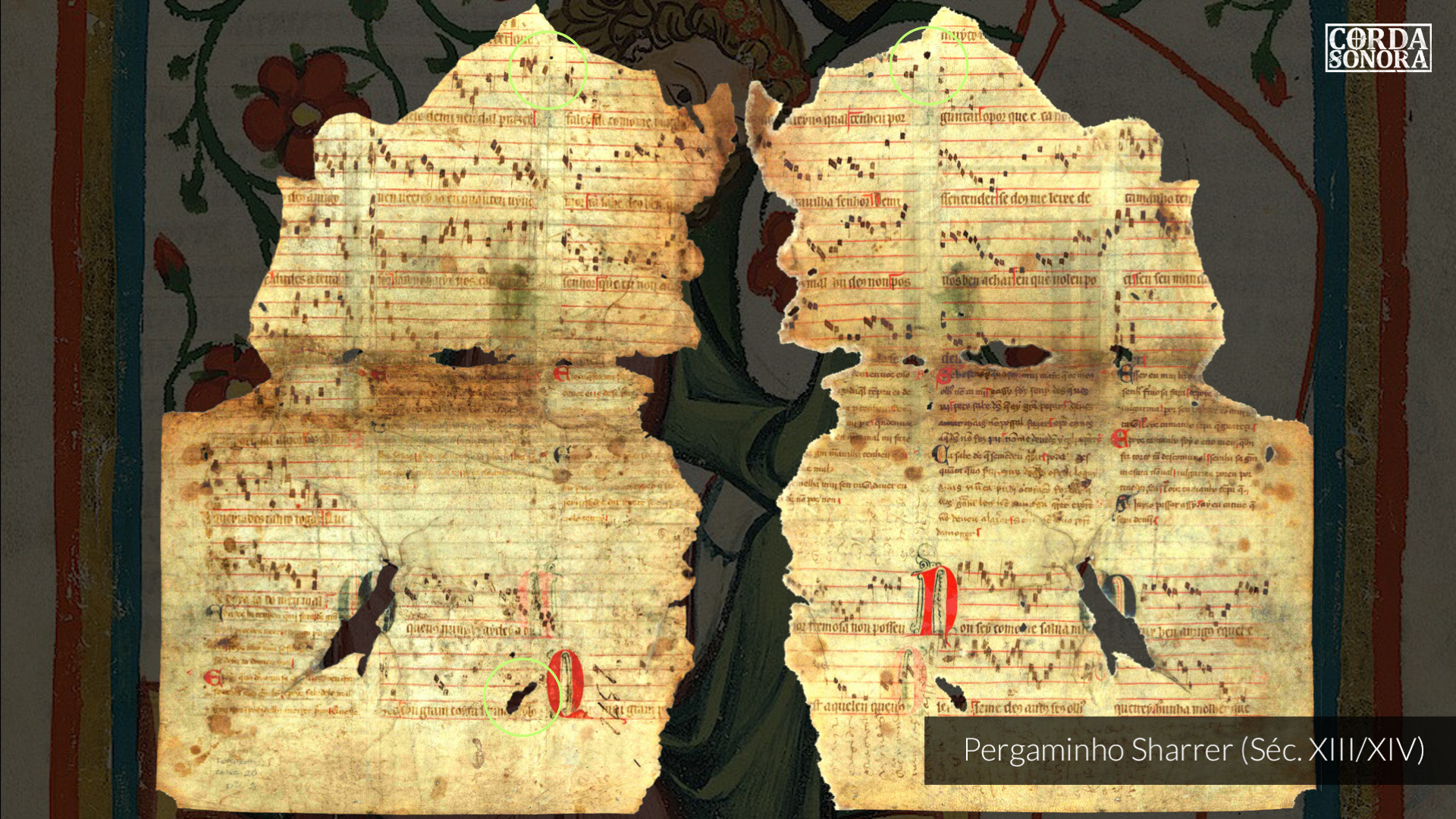
Performing the only known melodies of the cantigas de amor, moreover attributed to King D. Dinis of Portugal, The Wandering Bard brings a medieval Iberian treasure, the Sharrer Parchment, to life with historically informed performance techniques and instrumentation drawn from the illuminations of the era and region. Soon to be released as their eighth album, this project is the result of research rarely undertaken.

Discovered in 1990, and containing seven cantigas de amor (songs of love) of the medieval King D. Dinis of Portugal (1261-1325), Sharrer Parchment is considered to be the only surviving document with musical notation of a genre with thousands of poems resting in cancioneiros (songbooks) with no musical notation.

In order to render the work into a performable form for The Wandering Bard, Esin Yardimli Alves Pereira and Ricardo Alves Pereira deciphered the manuscript and reconstructed the lacunae directly from the surviving fragments.

Photography: Gil Lemos

Gallery

Contact for versions/sizes suitable for publications.

Commentaries

What They Say About
The Wandering Bard

“These artists are the medieval musicians of the 21st century”
— La Voz de Galicia
After multiple performances given at the Piantón Festival in Asturias, Spain, 2018

“There are no words to describe the moment that was experienced yesterday at Ricardo Alves Pereira’s concert. The Chapel was full and suddenly we were experiencing a universe of emotions touched by a singular sensitivity, coming from the sounding board of a unique instrument, echoing all the way to the Paredes beach valley. To everyone who was present, thank you very much.”
— Ricardo de Morais Martins (Organizer of the Festival de Musica Classica de Paredes a Capela 2023)
After a solo concert of Ricardo Alves Pereira presenting repertoire of The Wandering Bard

“It is a unique opportunity for the general public to familiarize themselves with the soul of music, offering this vision of this period in our history and the framework in which it lived, of relationships. Without a doubt, with these concerts we want to take a journey, a journey through time”
Anabela Graça, vereadora da Câmara de Leiria (counselor of Leiria Municipality)
Interview with TSF Radio about CMML2024; Medieval Music Cycle of Leiria organized by CordaSonora with The Wandering Bard performances

“I would like to thank Esin and Ricardo, The Wandering Bard, for the excellent work they do—not only musically but also (they don’t like this word, but I’m going to use it anyway) academically. They are great researchers of all medieval poetry and music. I have learned a lot from them. […] You’ve got a fan here. Thank you!”
Fernando Ribeiro
From his speech during the performance of “Da Esteyra Vermelha Cantarey” part of CMML2025

“We simply couldn’t add any more seats to the church…”
— Catarina Carvalho, Head of the Museums and Cultural Heritage Division of the Municipality of Leiria
I
nterview on Antena 2 radio about the Leiria Medieval Music Cycle (CMML2024). Programme: Império dos Sentidos, by Paulo Alves Guerra)

“The Wandering Bard is an adventure shared by Ricardo Alves Pereira and Esin Yardimli that acts at the intersection of music and narrative.”
— Jornal de Leiria (12.09.23)

“Leyriath [of Music and Legends, Cantigas de Santa Maria (Alfonso X)] has a full, professional sound, and its passion and power will take you by surprise.”
— W.K. Greyling (curator for Ancient FM), 2021

“My entire vocabulary feels too small to express what is in my soul.”
— Maria Antónia Varino Carreira,
Participant in the DMMB2025 Community Choir about her experience during the festival

“What a magical evening The Wandering Bard gave us at our intimate venue in Brighton! This unusual and talented ensemble seem to have been purpose-made for Bom-Bane’s. Their exquisite blend of folk, early music and story-telling delighted our spellbound audience who wouldn’t let them leave without encores of their natural virtuosity, and demanded I ask them back! Which of course I did…”
— Jane Bom Bane (Owner of Bom-Bane’s Concert Venue)
After multiple performances during Brighton Fringe 2018/19

“We have worked with TWB for over a year now and we love their approach to building a concert as one or two musical narratives. We found this idea particularly engaging in workshops, where you have time to explore the ideas behind a narrative. TWB have also been great in lockdown, giving us joy and musical energy in workshops over Zoom.”
— Andrew Robinson (BREMF Community Choir Director), 2020

“A journey to the heart of the medieval era”
— MusicaAntigua.com
About the ensemble’s 6th album, “Leyriath, The Tale of Capricornus: Cantigas de Santa Maria (Alfonso X)”)

Instruments

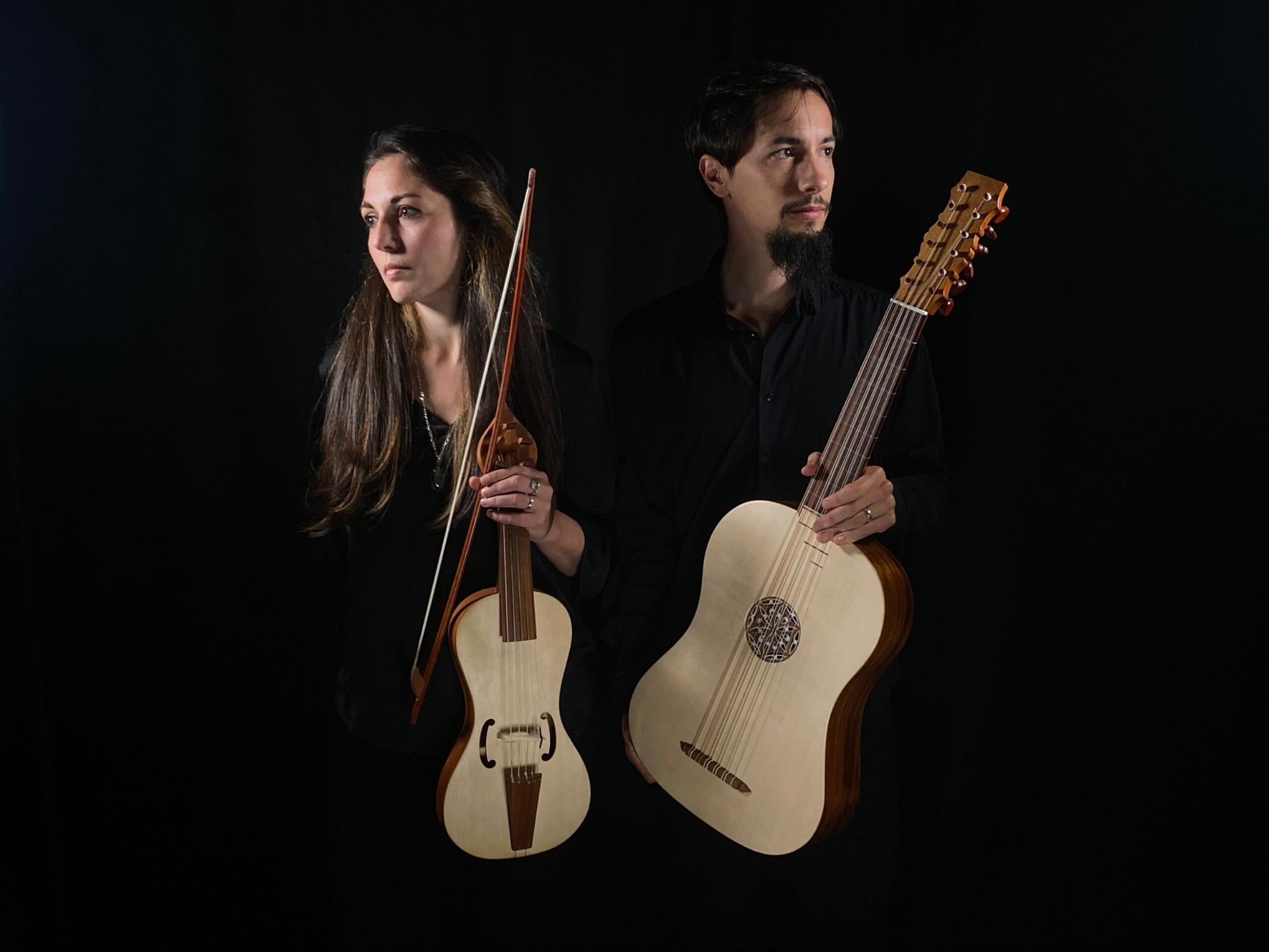
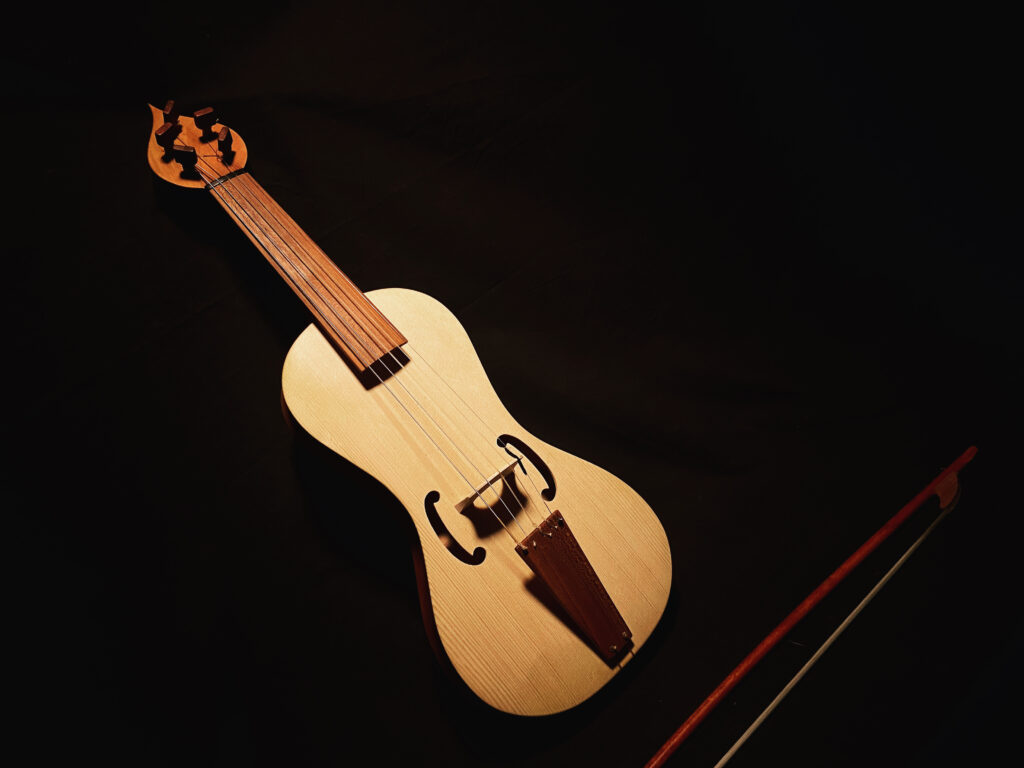
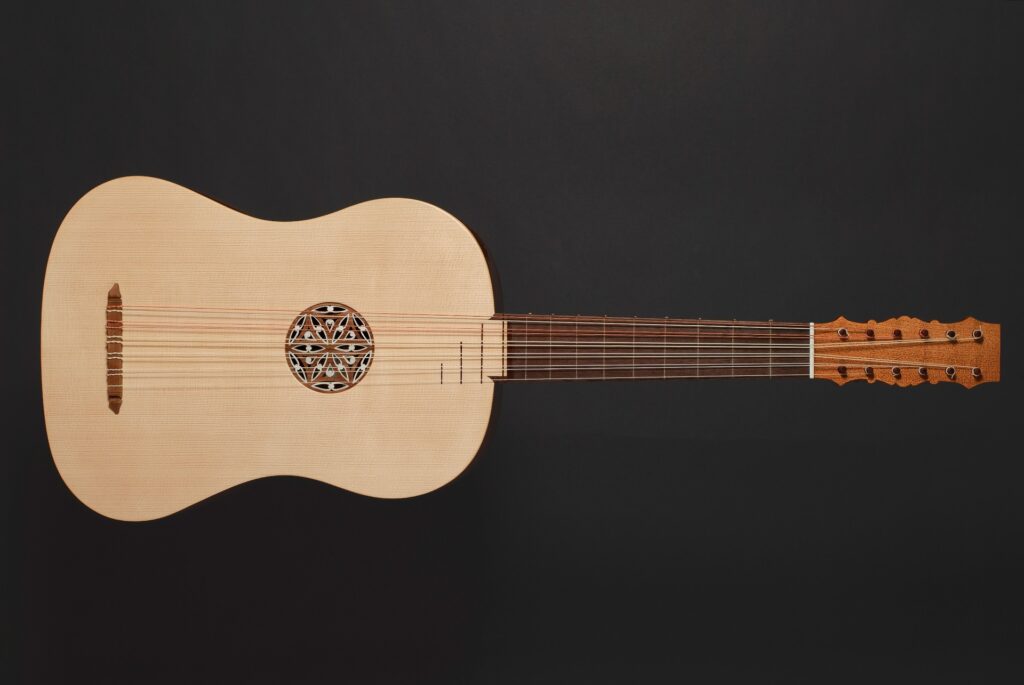
Venus the Vielle & Tiger Eye Vihuela

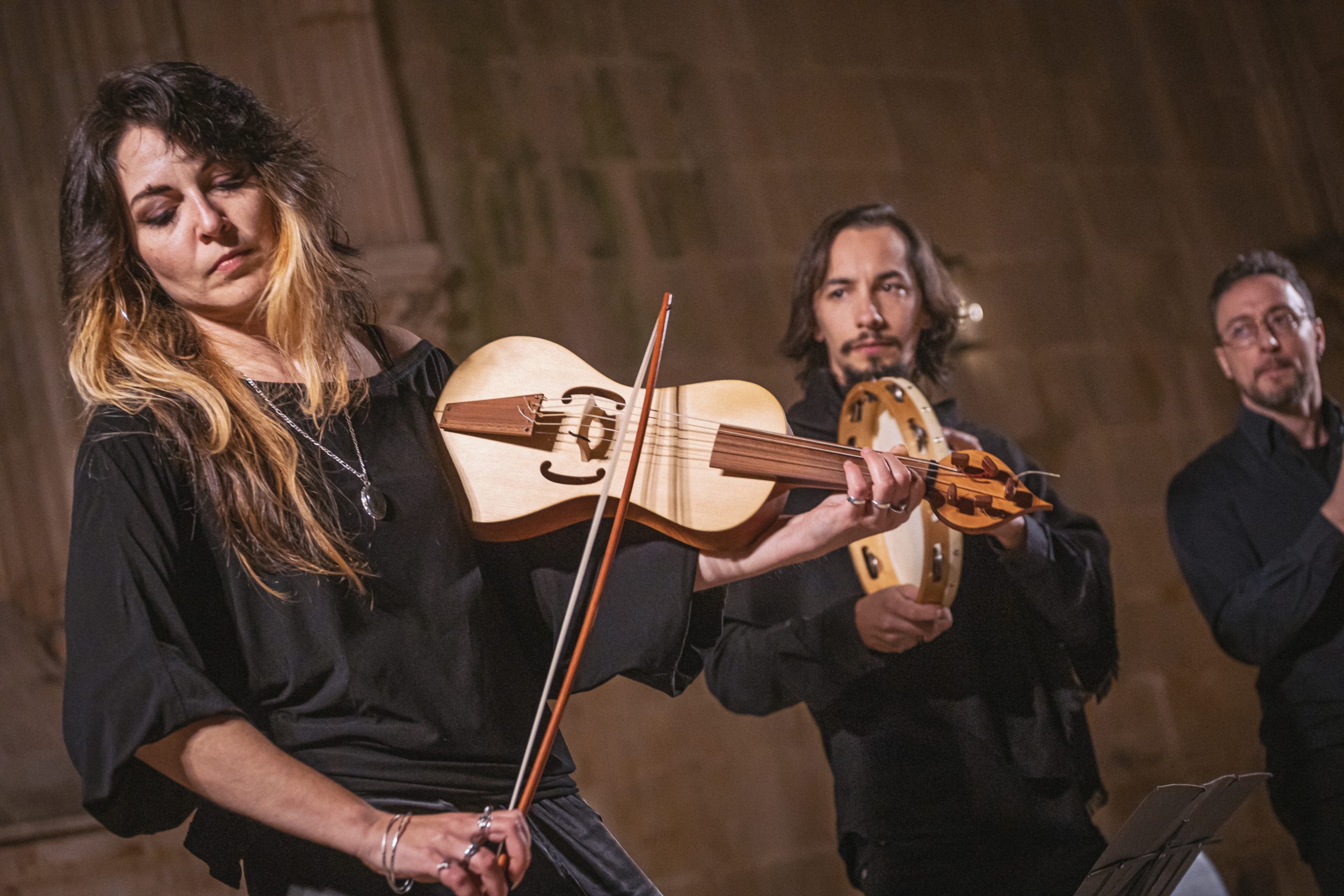
The Wandering Bard performs on instruments that follow the exact details of historical instruments build to perform late medieval and renaissance repertoire, crafted by Orlando Trindade who has dedicated himself to the construction and restoration of stringed instruments, with a special interest in early music instruments. Since 2000, he has collaborated with musicians, researchers, musicologists and other luthiers, always with the aim of carrying out the best possible work in the field of the historical reconstitution of this heritage. Primary instruments of Esin and Ricardo have been funded by a successful GoFundMe campaign the ensemble had held. Here are the donors that believed in The Wandering Bard, and contributed to making our dreams come true. We are ever grateful to the founding members of the CordaSonora Family;

Fiona Johnson, Paula Alves, Sara Pera, Bob Ahern, Mert Susur, Bahadır Noyan Coşkun, Kevin Anrich, T G, Sevil F, Ines Anonymous, Pedro Filipe, Ege Yardimli, Isabel Do Vale, Ali Kemal Yardımlı, Seyhan Has Yardimli, Metehan Köktürk, Ece Şermet, Ana Margarida Vieira Sousa, Ferran Bertomeu Castells, Alison Mitchell, Alessandro Valcepina, Michael Strain, Iván Nogueira, Annette Boyne, David Grimes, Toothfairy, Damla Us, Erica Johnson, Shirley Johnson, Keren Em, Nicholas Grimes, John Mansbridge, Tomaz Alves, Clara Silva, Maria Lurdes Alves Castanheira, Carlos Pereira, Bengi Yardımlı, Isabel Martinez, Glynis Johnson, Silver J. Bosch

Venus the Vielle

This instrument was made from one single wood piece of Linden tree (aside from a few parts that use cherry tree) which was the common practice since the medieval era. During this period, the linden wood was commonly used to carve wooden sculptures and musical instruments. Its soft touch allowed artists and luthiers to sclupt the most incredible artifacts, that is why the tree was known as the “sacrum lignum”, or the “sacred wood”.

Venus the Vielle is created based on various historical sources, though it mainly follows the model presented in the painting made by Giovanni Ambrogio Pedris; a painter that collaborated with Leonardo da Vinci to create this masterpiece.

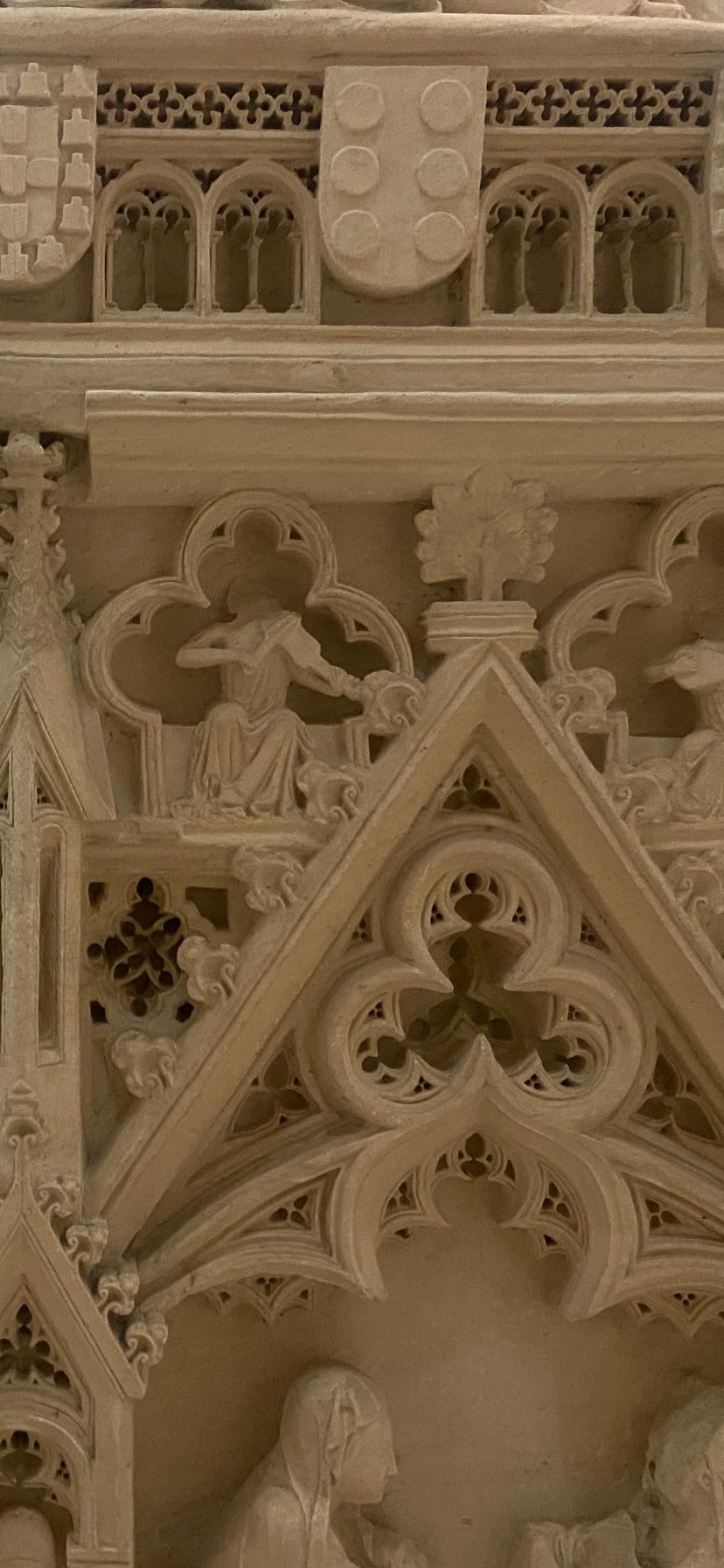
If you look closely enough, you can see the similarities between the head pieces of the instruments in their teardrop form commonly found in medieval and renaissance era instruments; the C holes facing the inner part of the instrument; the sides of the sound box having the inwards curve and the presence of five strings on both of the instruments.

Angel in Green With a Vielle, by Ambrogio de Giovanni Pedris, c.1490

Túmulo de D. Inês de Castro from Alcobaça Monastery (1358-1367)

Tiger Eye Vihuela

There are only three known surviving vihuelas from the 16th century in the entire world. Orlando Trindade has reproduced to the tiniest detail one of these instruments, known as ‘Vihuela Chambure’.

Originally tagged as a classical guitar, this instrument was “re-discovered” in 1990, in the music instrument collection in the Cité de la Musique, after being moved from the old Conservatory museum in Paris. Further research on the instrument reached the conclusion that it was an instrument built for a musician of high performance level. In general, expensive instruments were made for wealthy amateurs, who invested in the beautiful decorations and not necessarily in the sound quality of the instrument.

The simplicity of its design and the carefully measured proportions of the vihuela chambure make it ideal to perform with the highest quality possible. Tiger Eye Vihuela got its name from the Tigerwood used on the sides and back of the instrument.

The gravur below belongs to the vihuela book titled “El Maestro” written by Luis Milan in 1536, and it shows Orpheus playing on a vihuela.

Orpheus Playing the Vihuela, Unknown Author, 1536

THE WANDERING BARD'S APPROACH TO THEIR MUSIC

The Why and The How

The Wandering Bard began their journey with a goal and, as it happens to all long-lasting establishments, that goal evolved as the ensemble evolved.

The goal was simple: to make their music high-quality and sophisticated, yet approachable and appreciable.

The earliest works of the ensemble were built on the idea of merging the qualities of Renaissance and folk music, with the desire to reach audiences that otherwise might not have heard the other side of the coin. The ensemble would approach either side with equal respect and passion, blending their distinct elements to create a new sound that was suitable for churches and concert halls as much as small theatres and cultural gathering spaces, all at once.

This was a success. The Wandering Bard went on to give concerts internationally in all of these spaces; at times to hundreds of people, and at times to a handful. Both types of concert had the unique outcomes the ensemble had desired all along: concert halls would amplify the depth and seriousness of their work, while small gatherings would create the magical atmosphere set by that “fireside bard” feeling, where the audience would carry home not just memories of an amazing concert, but of one of those unique nights where drink is shared and stories are told.

Both classical and folk-music audiences enjoyed the ensemble’s setlists, enriched by repertoire they were not accustomed to hearing in their own musical environments. This was because the arrangements would nevertheless be approached in the same way, regardless of whether the source repertoire came from written or oral tradition: musically presenting the narrative told between the pieces to create an arc over the selected repertoire; hinting at elements of that narrative through melodic and dynamic motives; thus, the musical language of The Wandering Bard was born.

As the years went by, the members began to realise that what connected the dots between both audiences was more than just the blend of repertoires, and that medieval repertoire on its own was reaching both places at once.

And so it began. The manuscripts. The era-appropriate instruments. The research. Countless days and nights with bent backs over scans of songbooks and parchments and dictionaries. Combined with the troubadour-like storytelling the ensemble had been doing since the beginning.

This was a success too, as thousands of people (academics of history to musicologists to fantasy fiction literature fans) began enjoying The Wandering Bard in online platforms, just the way ensemble had desired.

And now The Wandering Bard performs and teaches medieval music with a historically informed yet still unique approach. Results of their research is presented in distinctive arrangements based on the manuscripts, while reflecting elements of the musical narratives they perform during their concerts and on their albums. Their passion for reaching different audiences and connecting with them found a new home in their open-to-everyone presentations and workshops, where participants get to see the sources and learn about the very tangible magic behind this music through historical manuscripts; a fruit of the ensemble’s desire to contribute to the democratisation of culture and knowledge.

Production details & Booking

FLEXIBLE LINE-UP · 2–8 MUSICIANS
Aside from the program “Da Esteyra Vermelha Cantarey”, the line-up of The Wandering Bard can be adapted, taking into consideration the size and characteristics of the concert setting and the budgetary framework of the organisations supporting and hosting the event, while preserving the integrity of the repertoire.
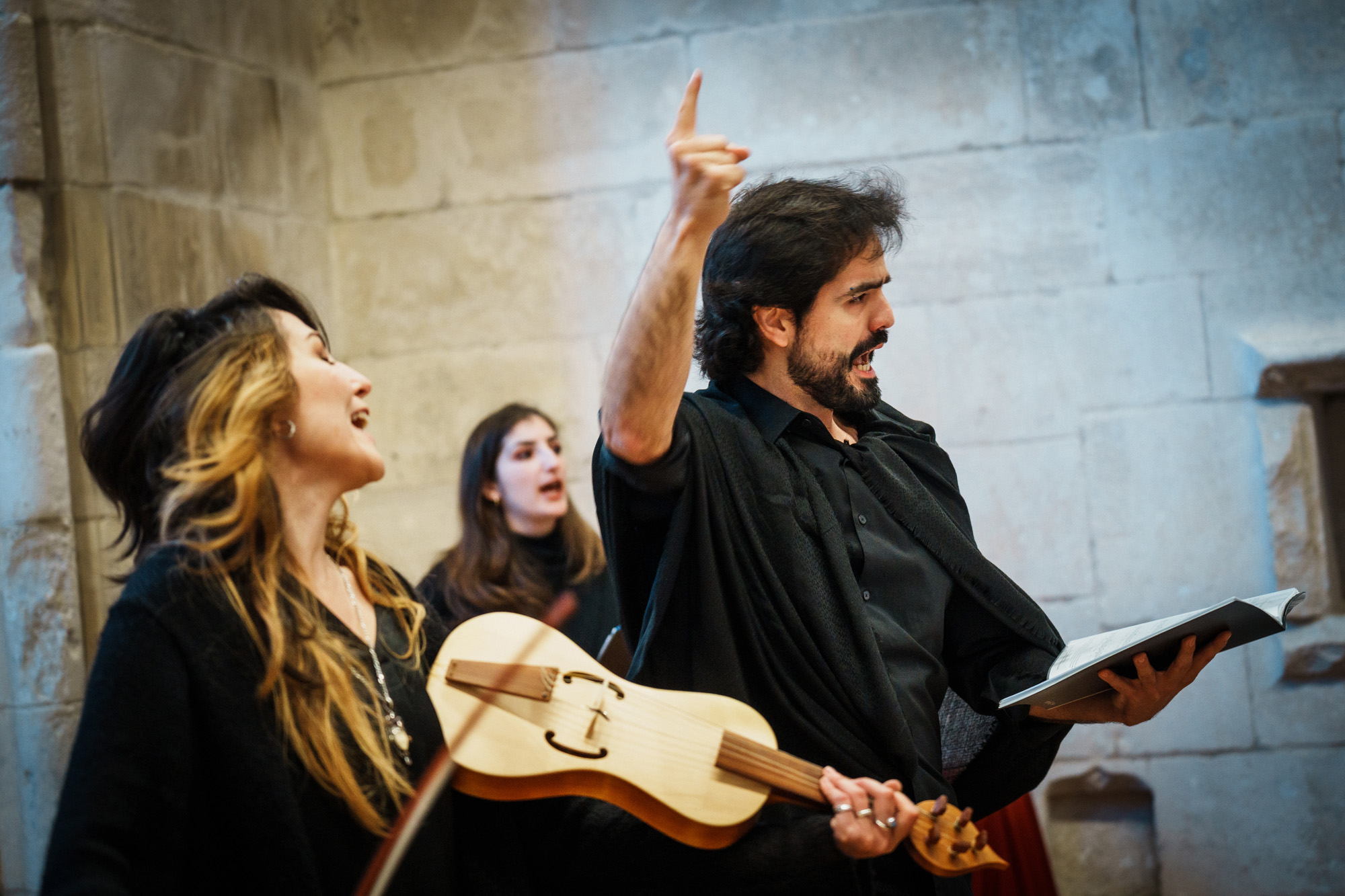
ACOUSTIC OR AMPLIFIED FORMATS
Acoustic for around 200, or larger audiences in acoustically favourable venues; amplification available where required, with a rider tailored to each production.
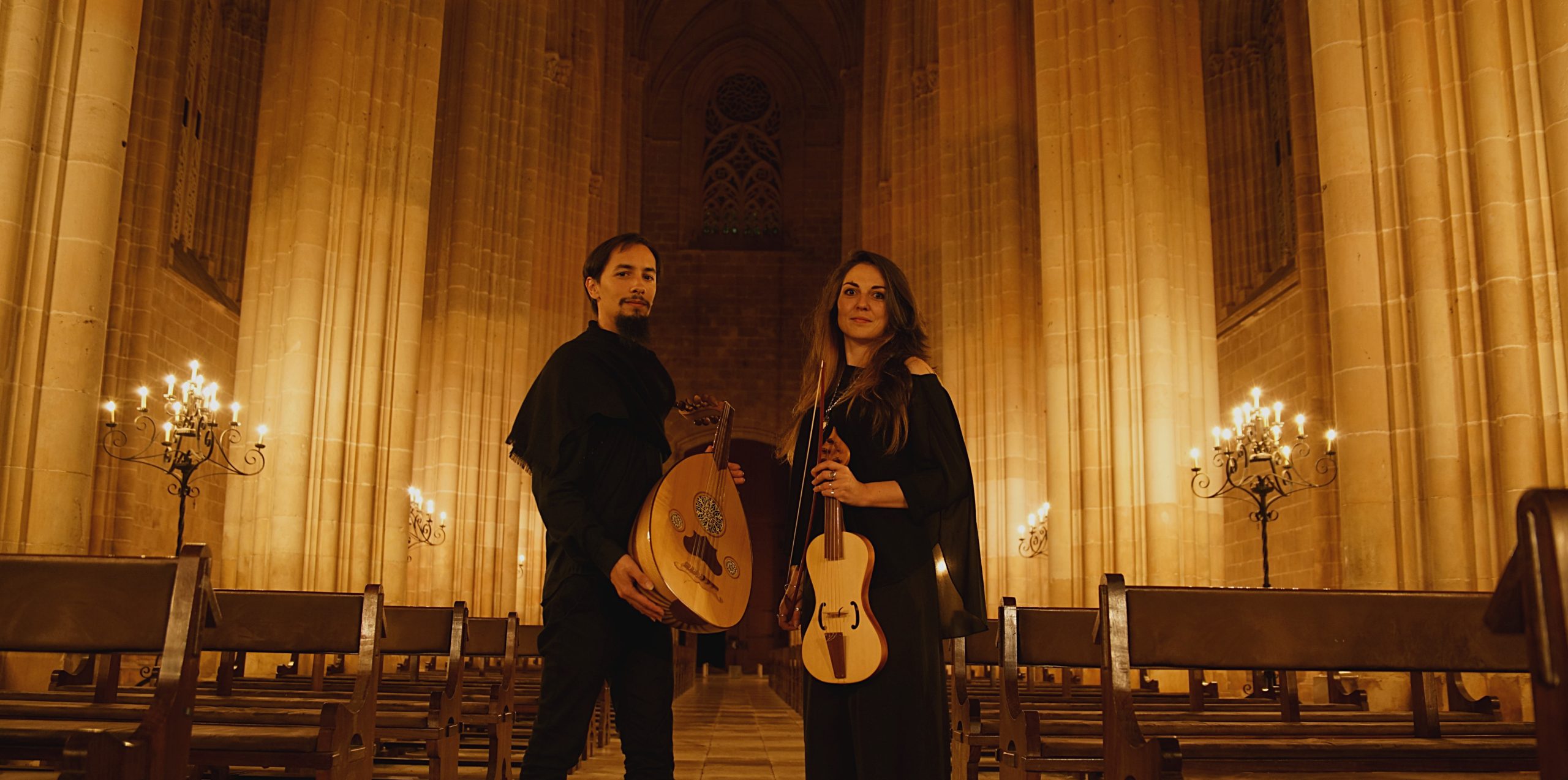
AVAILABLE ON REQUEST
Live video/photography team, light designer & equipment, print-ready bilingual programs and other press assets.

BOOKING
Marta Almeida
booking@cordasonora.com

Cordasonora pRESENTS

Printed
Editions

AVAILABLE DURING CONCERTS AND IN CORDASONORA ONLINE STORE

The Wandering Bard
Leyriath: The Path of Moonlight, Cantigas de Santa Maria (Alfonso X)
Music CD with 12 page booklet

The Wandering Bard 
Leyriath: The Song of Lumino (Vihuela Works by L.Narvaez&A.Mudarra and Monteverdi’s Ritornello from l’Orfeo)
Music CD with 12 page booklet

The Wandering Bard 
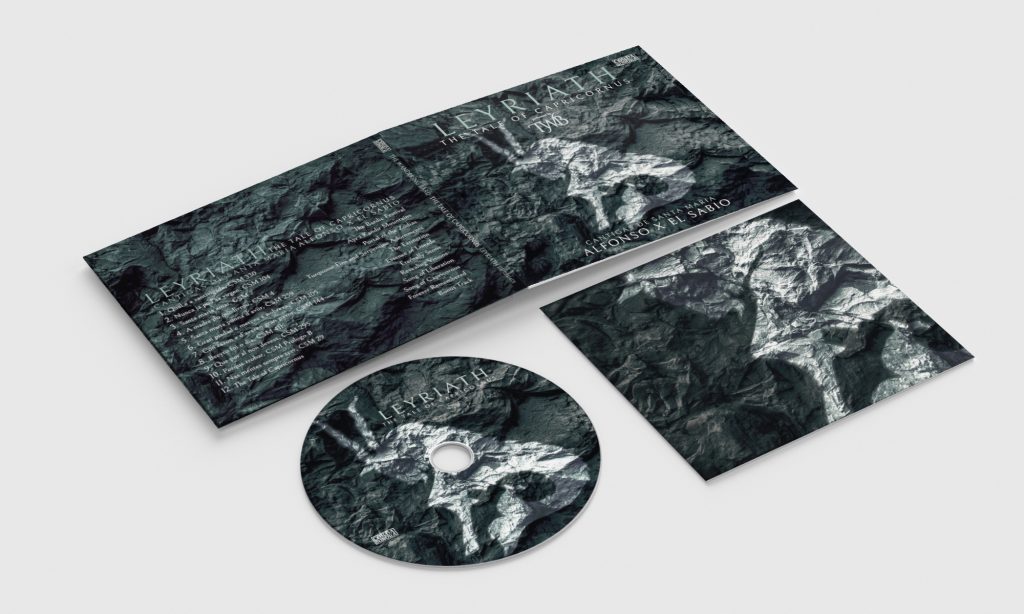
Leyriath: The Tale of Capricornus, Cantigas de Santa Maria (Alfonso X)
Music CD with 12 page booklet

The Wandering Bard 
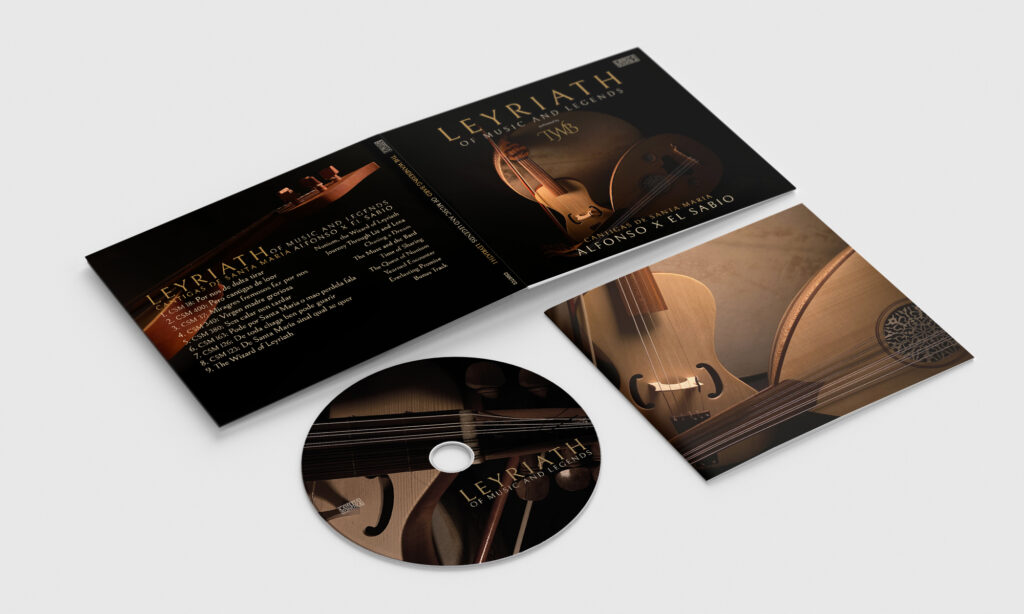
Leyriath: Of Music and Legends, Cantigas de Santa Maria (Alfonso X)
Music CD with 12 page booklet